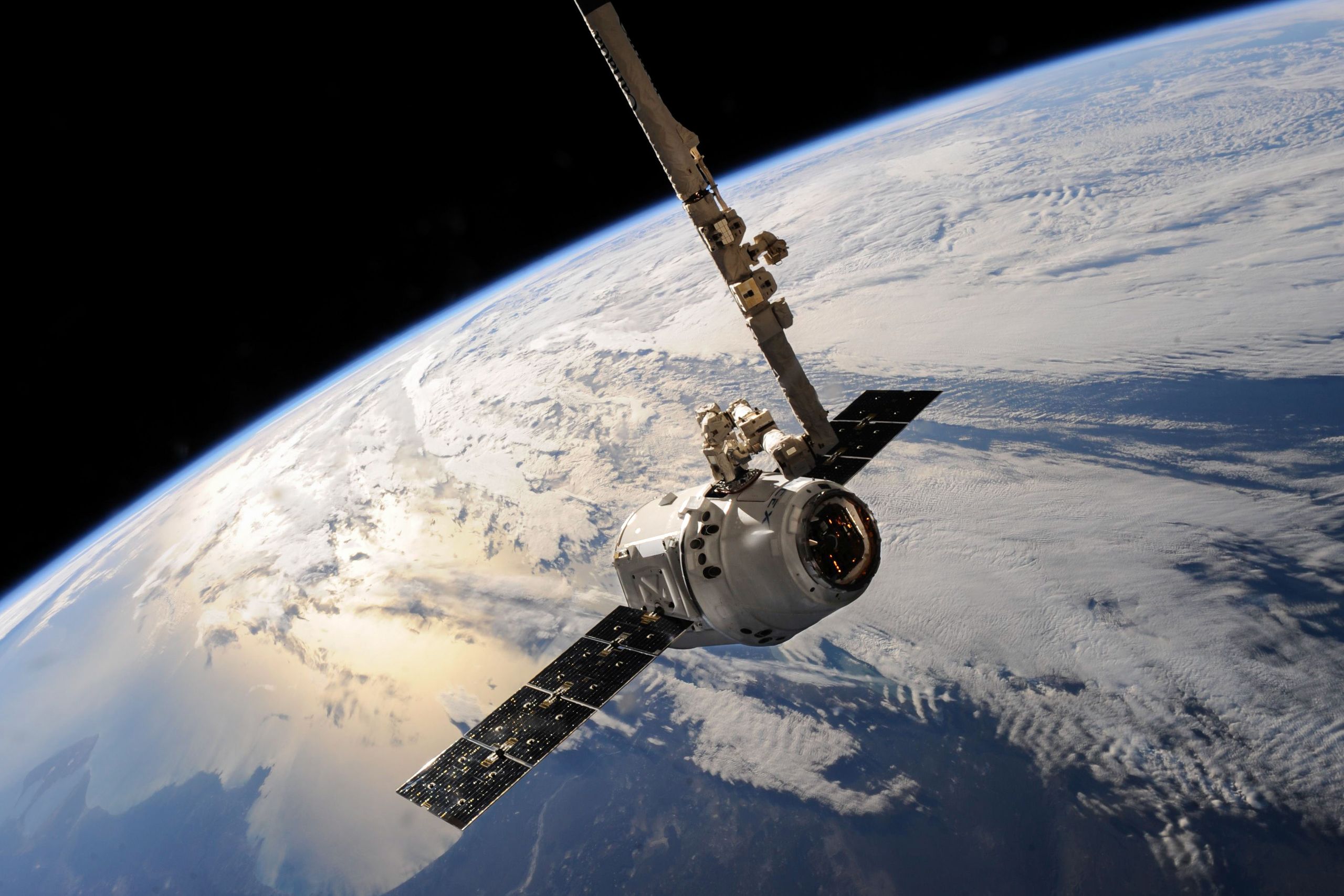
A spacecraft with solar panels and a robotic arm above the curved edge of Earth, with white cloud below.

For satellite operators, launch and ground segment providers, space agencies and their suppliers: CISOs, mission assurance leads, ground segment architects, programme directors and boards

Quantum risk in space

Be ready when the mission assurance board, the regulator or your anchor customer asks.

In fifteen minutes you will know which telecommand keys, payload data and customer traffic are already exposed to harvest now, decrypt later collection, what the EU Space Act proposal, NIS2, SPD-5 and CNSA 2.0 expect of each segment, which spacecraft can still change their cryptography and which cannot, and the first 90 days of a plan your board can sign.

  • A fleet and ground segment view of which keys, data and links are exposed today and for how long
  • The mandates by segment: NIS2 and the EU Space Act proposal on the ground, SPD-5 and CNSA 2.0 on the link, NATO and CCSDS on the standards
  • A 90-day plan with the design freeze, the supplier questionnaire and the first hybrid pilot in it
  • The right course for your board, your security team and your ground segment architects
1,500+
professional members
900+
organisations represented
40+
countries
Vendor-neutral
based on evidence, not hype

Proud to recommend our expert members

Qrypto Cyber
Eclypses
Arqit
QuantBond
Krown
Applied Quantum
Quantum Bitcoin
Venari Security
QuStream
BHO Legal
Census
QSP
IONQ - ID Quantique
Patero
Entopya
Belden
Atlant3D
Zenith Studio
Qudef
Aries Partners
GQI
Upperside Conferences
Austrade
Arrise Innovations
CyberRST
Triarii Research
QSysteme
WizzWang
DeepTech DAO
Xyberteq
Viavi
Entrust
Qsentinel
Nokia
Gopher Security
Quside
QIZ
Global Quantum Intelligence
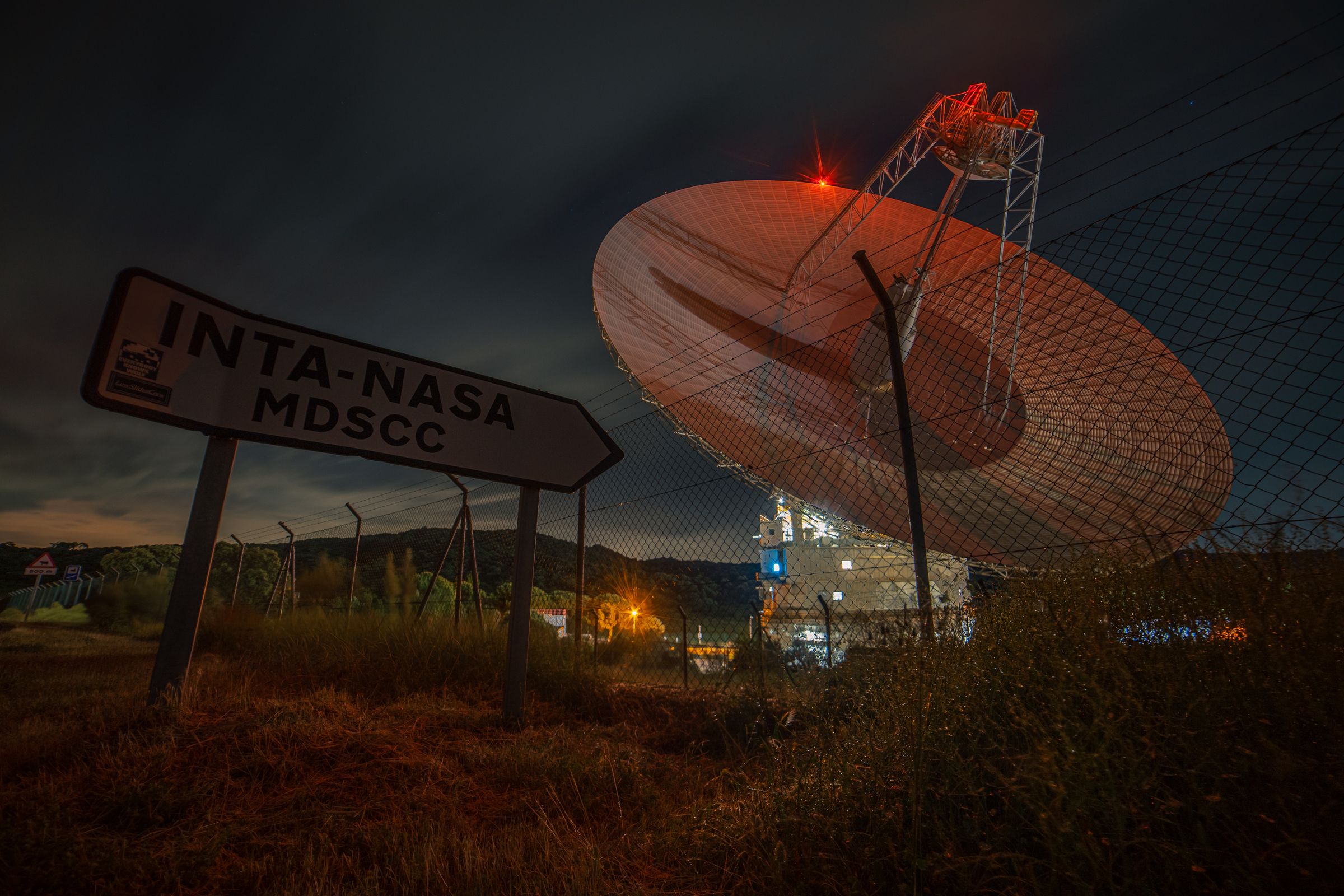
A large radio dish at night with a roadside sign in the foreground and a red light on its feed arm.
Loaded before launch. Flying for fifteen years.

Step 1 of 5

Know which keys and data are already exposed

A satellite cannot be recalled for a cryptographic upgrade. The keys and authentication scheme loaded before launch protect the telecommand link for the whole mission, and a geostationary spacecraft launched in 2027 is still working in 2042. Anyone recording the uplink, the downlink or the customer traffic riding on it can afford to wait. In this sector, harvest now, decrypt later is not a scenario to debate. It is the default assumption for any link that will still be in service when a cryptographically relevant quantum computer exists.

Space sector keys and data that must stay confidential beyond the post-quantum deadlines
Data typeHow long it stays sensitiveConfidential until, for a mission launched in 2027
Telecommand and telemetry keys and authentication material loaded before launchThe spacecraft's service life: about 15 years for GEO, 5 to 7 for LEO, often extended2042 for a GEO satellite, longer if life-extended
Earth observation imagery and payload data tasked by a governmentClassified under the customer's rules: 25 years by default in the US (EO 13526), exemptions to 502052, or 2077 if exempted
Customer traffic carried over satellite links: government, maritime, aviation, enterpriseAs long as the content stays sensitive; the capacity provider cannot see the retention its customer owesSet by each customer's regime, often 2040 and beyond
Ground network configurations, antenna control and mission control credentialsUntil the ground station or control centre is re-engineered, typically 10 to 20 years2037 to 2047
Mission design, spacecraft technical data and export-controlled technical dataThe life of the product family; export control sensitivity does not expire with the mission2050s

Mission lives are typical, not statutory. Classification periods from Executive Order 13526. SPD-5 asks for command, control and telemetry protection designed to remain secure against existing and anticipated threats during the entire mission lifetime. Map your own fleet, contracts and retention schedules.

Where your exposure sits, and what you will know

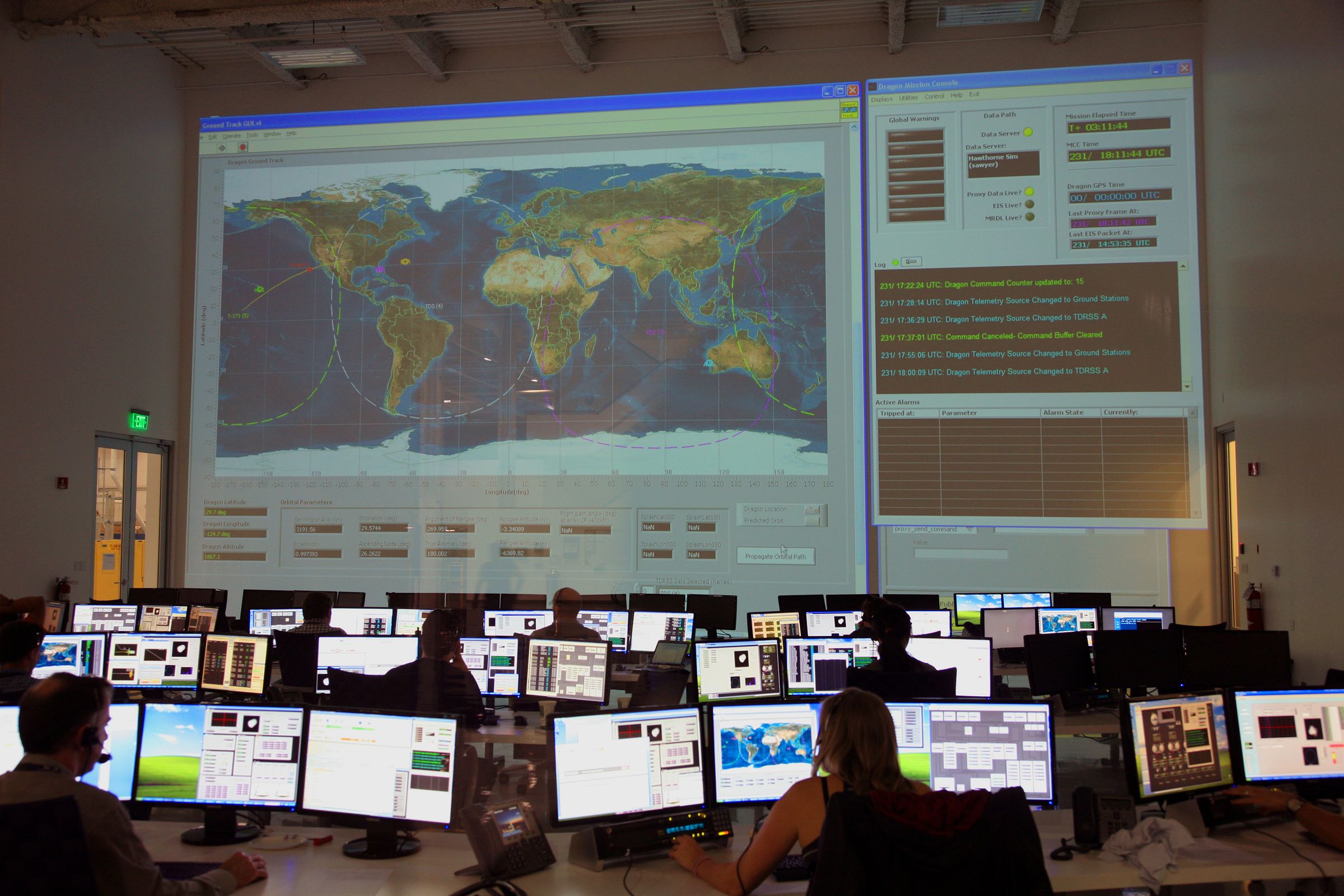
Operators at rows of monitors in a mission control room with a world map on a large screen.

The space segment

On-board cryptographic units, key loading and firmware signing were fixed at integration. Many space-qualified processors cannot run a lattice-based key exchange at the rate a telecommand link needs, and changing a signature scheme on orbit means a firmware update signed with the very key you want to retire.

You will know which spacecraft in your fleet and your order book can change their cryptography after launch, and which will need compensating controls on the ground for the rest of their lives.

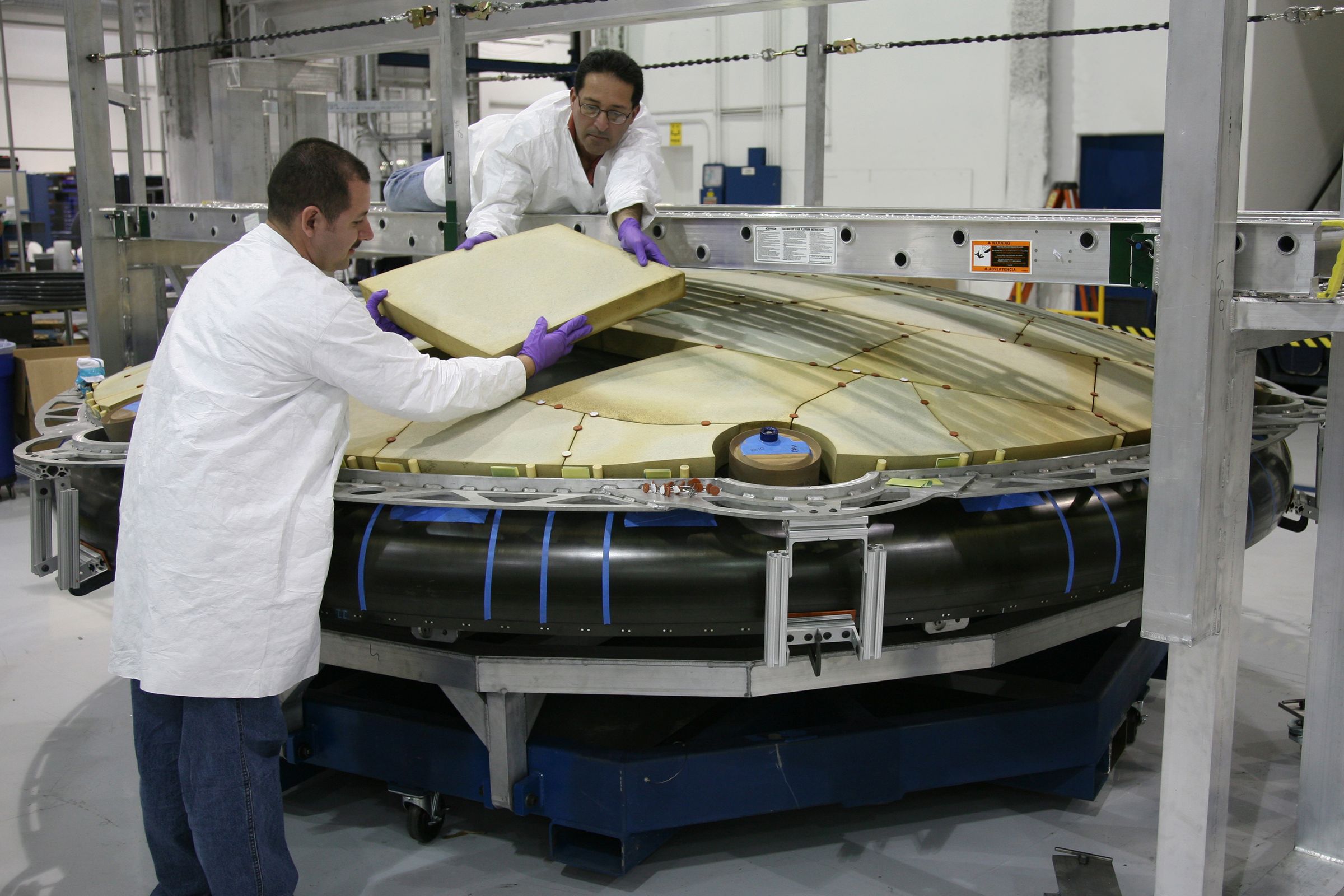
Two technicians in white coats lifting a panel on a large spacecraft structure in a hangar.

The ground segment: TT&C, mission control, teleports

This is where NIS2 and the EU Space Act proposal land: the ground-based infrastructure that supports space services. It is also the one segment you can migrate on your own timetable, which makes it the first place a regulator or a customer will look.

You will know which ground systems carry which algorithm, which can move to hybrid key exchange this year, and what evidence NIS2 Article 21 and SPD-5 ask you to show.

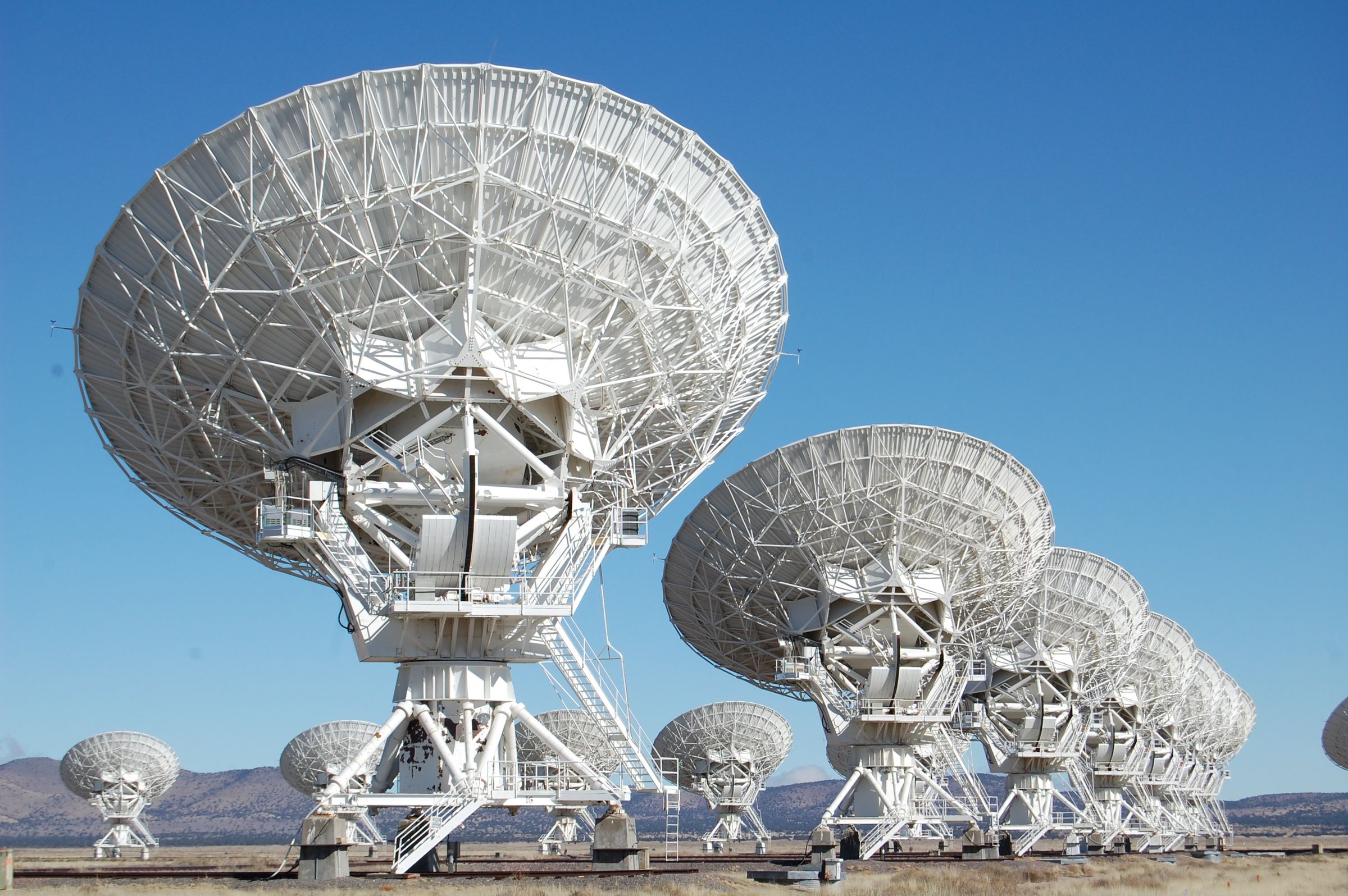
A row of large white radio telescope dishes in a dry landscape under a clear blue sky.

The user and service segment: customer links, PNT, data distribution

Customer terminals, VPNs riding over your capacity, PNT signals and data distribution platforms each have another party at the far end. In 2022 CISA and the FBI told SATCOM customers to run their own encryption over leased links rather than rely on the provider's.

You will know where the other end of each service stands, which customers will ask for PQC in the next contract cycle and how to answer them.

Free readiness check

Score your programme in two minutes

Eight questions mapped to what a mission assurance board, a NIS2 competent authority, an anchor customer or a government user will ask. You get a score, your top three priorities and the next step that closes your biggest gap. Nothing is sent anywhere.

Start the check
1Do you have a cryptographic inventory that covers all three segments: on-board cryptographic units and key loading, the ground segment, and the services you deliver to customers?

Every mandate starts here. NIS2 Article 21 asks for policies on cryptography, CNSA 2.0 planning works by product category and the EU roadmap asks Member States to begin with an inventory.

2Have you mapped how long each data type stays sensitive, including mission life, imagery caveats and customer retention, against the algorithms protecting it today?

A GEO spacecraft launched in 2027 is still flying in 2042, and government-tasked imagery can stay classified for 25 years. Traffic recorded now falls inside both windows.

3For each spacecraft in design or production, is there a documented way to change the telecommand authentication and key management after launch?

SPD-5 asks for protection that stays secure for the entire mission lifetime. If the only way to change the algorithm is a firmware update signed with the key you want to retire, you need to know that before the design review, not after.

4Have you placed your ground stations, mission control and teleports against NIS2 Annex I, SPD-5 and the EU Space Act proposal, and recorded which obligations apply where?

NIS2 names operators of ground-based infrastructure supporting space services as a sector of high criticality. The Space Act proposal would add tailored cybersecurity requirements for EU and non-EU operators serving Europe.

5Have you asked your bus, payload, ground software and cryptographic module suppliers for their PQC roadmaps, and written flow-down into the next contract?

A handful of radiation-hardened processor and crypto unit vendors set the pace for the whole sector. The gap surfaces at integration, not at contract award.

6Is there a named owner and a budget line for post-quantum migration across the fleet and the ground segment?

Programmes without an owner stall at the inventory stage and miss the next design freeze.

7Has your board or mission assurance board been briefed on quantum risk in the last 12 months?

Boards sign off spacecraft that will fly for 15 years. The EU roadmap asks for national plans by the end of 2026 and US agencies had 30 days from June 2026 to name a PQC migration lead.

8Do you know where the other end of each link stands: partner ground stations, hosted payload customers, government users and the customers running traffic over your capacity?

A link migrates when both ends do. Government users on CNSA 2.0 dates and enterprise customers under NIS2 will set your timeline for you if you do not set it first.

Step 2 of 5

Know what the EU Space Act proposal, NIS2, SPD-5, CNSA 2.0 and NATO will expect, and when

  1. 2020

    Principles set

    Space Policy Directive 5 of 4 September 2020 sets US cybersecurity principles for space systems: command, control and telemetry links protected by authentication or encryption designed to stay secure for the entire mission lifetime.

  2. 2022

    Standards and the clock start

    CCSDS issues the Space Data Link Security Protocol, 355.0-B-2, in July. NSA publishes CNSA 2.0 in September with algorithms and dates. NIST IR 8401 applies the Cybersecurity Framework to satellite command and control in December, the month the EU adopts NIS2 with space in Annex I.

  3. 2025

    Proposals and first dates

    NIS2 has applied in Member States since October 2024. The UK NCSC publishes its timeline in March, the EU its coordinated PQC roadmap on 23 June and the Commission the EU Space Act proposal on 25 June. The first CNSA 2.0 support-and-prefer dates pass.

  4. 2027

    Design freezes carry PQC

    EU national PQC roadmaps due by the end of 2026. New US national security system acquisitions must be CNSA 2.0 compliant. Eagle-1, Europe's first space-based QKD system, is due to launch in late 2026 or early 2027. NATO schedules its industry readiness study for quantum-resistant cryptography for Q2 2027.

  5. 2030

    High-risk systems migrated

    EU high-risk use cases, including critical infrastructure, migrated by the end of 2030. Software and firmware signing and networking equipment use CNSA 2.0 only. US high value assets use PQC key establishment. NIST deprecates RSA and ECC.

  6. 2035

    RSA and ECC disallowed

    NSM-10 completion target. NIST disallows quantum-vulnerable algorithms. The UK NCSC timeline and the EU roadmap end here, and a GEO satellite launched in 2027 still has seven years of service ahead of it.

Key facts for the space sector, checked 30 October 2026

  • The Commission Recommendation of 11 April 2024 (C(2024) 2393) asks every Member State to adopt a national post-quantum strategy and to deploy post-quantum cryptography, hybrid where needed, across public administration systems and critical infrastructure. European Commission
  • The EU Coordinated Implementation Roadmap, published through the NIS Cooperation Group on 23 June 2025, asks Member States to start the transition and have national roadmaps in place by the end of 2026, to migrate high-risk use cases by the end of 2030 and as many systems as feasible by the end of 2035. European Commission
  • Securing Tomorrow, Today, the joint statement of cyber security agencies from EU Member States first issued in November 2024 and re-issued with further signatories in July 2025, treats the quantum threat as part of cyber security risk management now and calls for hybrid post-quantum deployment. BSI
  • NIS2, Directive (EU) 2022/2555, lists space in Annex I as a sector of high criticality: operators of ground-based infrastructure, owned, managed and operated by Member States or by private parties, that support the provision of space-based services, excluding providers of public electronic communications networks. Article 21 requires policies and procedures on the use of cryptography and encryption. European Commission
  • The EU Space Act proposal, COM(2025) 335 of 25 June 2025, is a proposed Regulation on the safety, resilience and sustainability of space activities in the Union. Its resilience pillar brings tailored cybersecurity requirements for EU and non-EU operators providing space services in Europe, scaled by company size and risk profile. It is under negotiation in the ordinary legislative procedure and is not yet law. European Commission, DG DEFIS
  • EuroQCI, launched by the 2019 EuroQCI Declaration and now joined by all 27 Member States, combines a terrestrial segment of fibre networks linking strategic sites with a space segment developed with ESA. The prototype satellite Eagle-1 is due in late 2027 on the Commission's page, and future activities will be planned and funded under IRIS². European Commission
  • IRIS², the EU's secure connectivity constellation under Regulation (EU) 2023/588, will use 348 satellites across low and medium Earth orbit and provide secure, encrypted communications for EU institutions, ministries and embassies. European Commission, DG DEFIS
  • ESA inaugurated its Cyber Security Operations Centre on 27 May 2025, a distributed facility across ESOC in Germany and ESEC in Belgium that monitors ESA's digital assets from satellites in space to ground stations and mission control systems on Earth. ESA
  • Space Policy Directive 5 of 4 September 2020 asks space system owners and operators to safeguard command, control and telemetry links using effective and validated authentication or encryption measures designed to remain secure against existing and anticipated threats during the entire mission lifetime, and to manage supply chain risk. The White House
  • NIST IR 8401 (December 2022) applies the Cybersecurity Framework to the ground segment of space operations, with an emphasis on the command and control of satellite buses and payloads. NIST IR 8270 (July 2023) introduces cybersecurity for commercial satellite operations. NIST
  • CISA's Space Systems Critical Infrastructure Working Group is the primary mechanism for DHS to coordinate on space security policy, and CISA notes that all 16 critical infrastructure sectors rely on positioning, navigation and timing from space systems. Its June 2024 landscape paper examines where zero trust principles apply across space infrastructure. CISA
  • The joint CISA and FBI advisory AA22-076A of 17 March 2022 told SATCOM network providers and customers to use independent encryption across all communications links leased from or provided by the SATCOM provider, and to use secure authentication, least privilege and boundary monitoring. CISA
  • CNSA 2.0, published by NSA in September 2022, names ML-KEM-1024, ML-DSA-87, LMS and XMSS for signing, AES-256 and SHA-384 or SHA-512 for national security systems, with exclusive-use dates of 2030 for software and firmware signing and networking equipment and 2033 for the rest. NSA
  • NATO's Quantum Technology Roadmap of 29 September 2026 lists the adoption of post-quantum cryptography standards as ongoing, schedules the Quantum Zero Beacon pilot between NATO HQ and SHAPE for Q4 2027, an industry readiness study for quantum-resistant cryptography for Q2 2027 and a refreshed action plan on the quantum threat to cryptography for Q3 2027. NATO
  • CCSDS 355.0-B-2, the Space Data Link Security Protocol of July 2022, provides authentication and encryption of transfer frames at the data link layer, and CCSDS 352.0-B-2 of August 2019 specifies the algorithms: AES, HMAC, cipher-based and digital signature authentication. Neither Blue Book names a post-quantum algorithm. CCSDS
  • The final NIST IR 8547, published 27 October 2026, deprecates quantum-vulnerable public-key cryptography after 2030 and disallows it after 2035, and says that window does not alter the earlier deadlines for high value assets. NIST
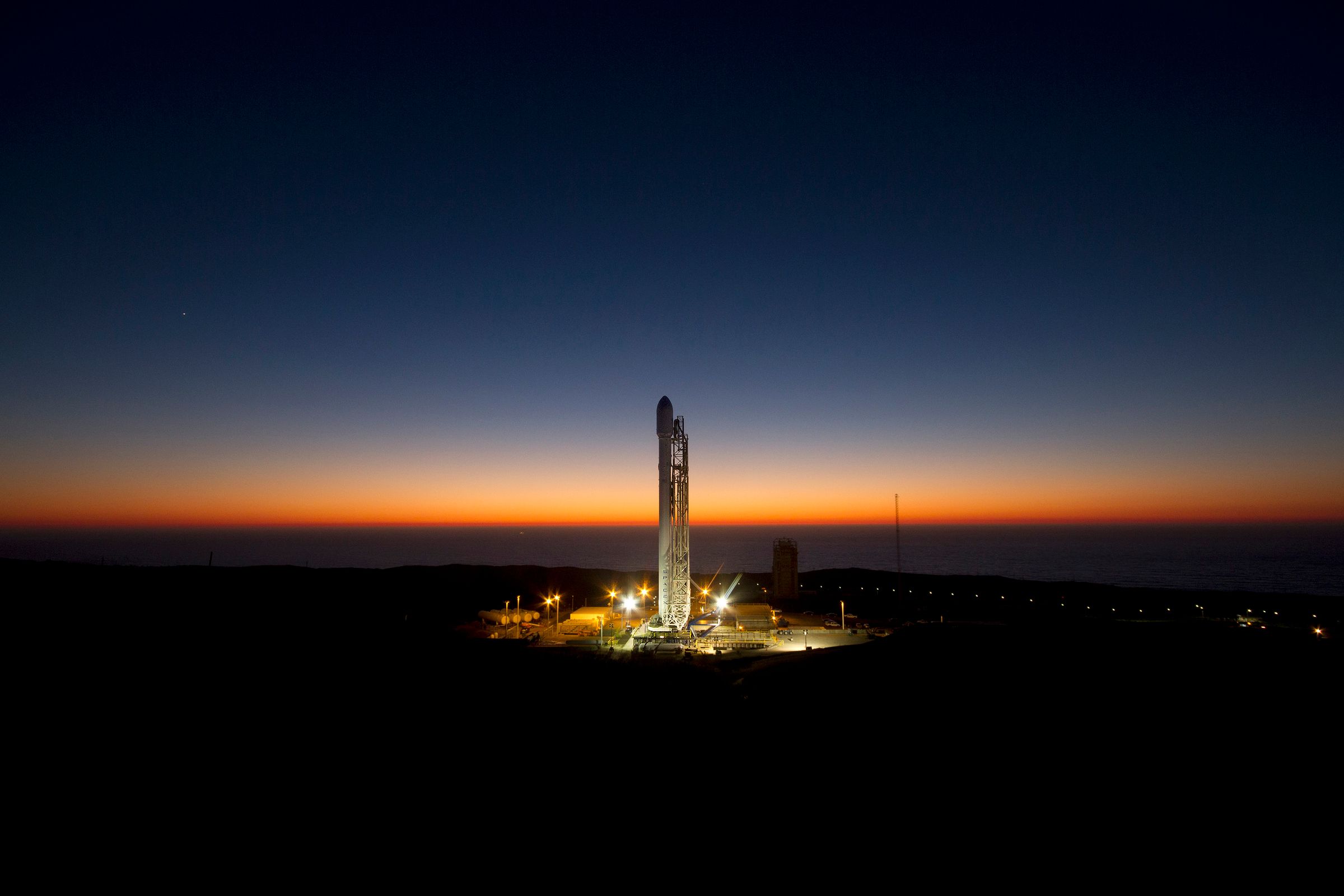
A rocket standing on a lit launch pad against an orange horizon at dawn.

The evidence you will be able to show

NIS2 Article 21 and the EU Space Act proposal

Each ground site mapped to its obligations

You show: A register of ground stations, mission control centres and teleports with the mandate that applies to each, the cryptography it runs and the evidence the competent authority can ask for.

SPD-5 and CCSDS SDLS

A fleet register that says which spacecraft can change

You show: Each spacecraft in orbit, in production and in design, with its telecommand authentication scheme, its key management and whether the cryptography can be changed on orbit.

EU roadmap, CNSA 2.0 and NSM-10

A named migration lead and a plan

You show: A PQC migration lead, a cryptographic inventory across the three segments and a transition plan with the EU's end-2026 and 2030 milestones and the CNSA 2.0 dates for anything serving a government payload.

CISA SATCOM advisory and supplier contracts

Suppliers and customers who have answered

You show: PQC roadmaps on file from bus, payload, ground software and crypto module vendors, and migration timelines from the government users and customers at the far end of each link.

A large radio dish at night with a roadside sign in the foreground and a red light on its feed arm.

UK operators and suppliers. The UK Space Agency's Cyber Security Toolkit, first published in May 2020, takes space organisations through a step-by-step assurance process built around supply chain weaknesses and a risk matrix. The NCSC timeline sets the pace for cryptography: discovery and a plan by 2028, highest-priority migration by 2031, complete by 2035. A GEO spacecraft ordered today will be mid-life at every one of those dates. Read the NCSC position explained.

EU operators: NIS2 now, the Space Act later

NIS2 already applies. Annex I lists space among the sectors of high criticality, defined as operators of ground-based infrastructure that support the provision of space-based services, and Article 21 asks those operators for policies on the use of cryptography and encryption. The EU Space Act proposal of 25 June 2025 would add tailored cybersecurity requirements for EU and non-EU operators providing space services in Europe, scaled by size and risk profile. It is a proposal under negotiation in the ordinary legislative procedure, not yet law, so build to NIS2 today and keep the Space Act text in view. Read the NIS2 analysis.

US commercial operators: SPD-5, NIST and CISA

SPD-5 is policy rather than regulation, but it sets the expectation a federal customer writes into a contract: command, control and telemetry links protected for the entire mission lifetime. NIST IR 8270 introduces cybersecurity for commercial satellite operations and IR 8401 applies the Cybersecurity Framework to the ground segment and satellite command and control. CISA's Space Systems Critical Infrastructure Working Group and its June 2024 zero trust landscape paper set the direction of travel. Treat the cryptographic inventory as the evidence each of them will ask for.

Defence and governmental space: CNSA 2.0 and NATO

A payload, ground station or link that serves a US national security system meets the CNSA 2.0 dates for its category, which puts firmware signing on 2025 support-and-prefer and 2030 exclusive use. NATO's 2024 strategy commits the Alliance to quantum-safe cryptography across the space domain and its 2026 roadmap puts an industry readiness study for quantum-resistant cryptography in Q2 2027. IRIS², the EU's 348-satellite secure connectivity constellation, and EuroQCI add a European governmental customer with requirements of its own. Read what changed between CNSA 1.0 and 2.0.

What agencies and programmes have put on the record

Public work in the sector, so you can benchmark where your organisation stands.

March 2022

CISA and FBI

Issued advisory AA22-076A telling SATCOM network providers and customers to run independent encryption across all leased links, use secure authentication and monitor ingress and egress points.

Source: CISA →
June 2024

CISA National Risk Management Center

Published Space Systems Security and Resilience Landscape: Zero Trust in the Space Environment, examining where zero trust principles apply across space infrastructure.

Source: CISA →
May 2025

ESA

Inaugurated a Cyber Security Operations Centre across ESOC in Darmstadt and ESEC in Redu, monitoring assets from satellites in orbit to ground stations and mission control.

Source: ESA →
June 2025

European Commission

Published the EU Space Act proposal, with a resilience pillar of tailored cybersecurity requirements for EU and non-EU operators providing space services in Europe.

Source: DG DEFIS →
October 2026

NATO

Published a position paper on quantum key distribution setting out why QKD does not yet meet the bar for classified traffic, a month after its Quantum Technology Roadmap.

Source: NATO, via BSI →
Late 2026 to early 2027

ESA and SES Techcom

Eagle-1, the first European space-based QKD system, is due to launch and then complete three years of in-orbit validation supported by the European Commission.

Source: ESA →

Step 3 of 5

Build a plan your board can sign off in 90 days

By day 30

It has an owner and a scope

  • A PQC migration lead and an accountable sponsor on the board or mission assurance board.
  • Inventory scoped to telecommand authentication, key loading, firmware signing, the ground segment and customer-facing services.
  • Data types mapped to mission lives, caveats and customer retention, and to the algorithms in use today.
By day 60

You have the evidence

  • Discovery running across the ground segment and the cryptographic inventory started, with each system placed against NIS2, SPD-5 or CNSA 2.0.
  • A PQC questionnaire with every bus, payload, ground software and crypto module supplier.
  • Dependencies on partner ground stations, government users and customers at the far end of each link recorded.
By day 90

Your board has a plan to approve

  • Spacecraft and ground systems ranked by data lifetime, exposure and whether the cryptography can change on orbit.
  • Hybrid ML-KEM key exchange piloted on one ground-to-ground or TT&C test link.
  • A roadmap with the next design freeze, 2027 and 2030 milestones, ready for sign-off.
Who will deliver it? See step 4 →

The five numbers to show your board

  1. Inventory coverageThe share of spacecraft, ground systems and customer services with a completed cryptographic inventory.
  2. Fixed on orbitHow many spacecraft in service cannot change their telecommand cryptography, and the years of service left on each.
  3. Exposed dataThe data types, and volumes, that must stay confidential beyond 2030 and still sit behind RSA or ECC.
  4. Supplier and customer readinessHow many suppliers, partner ground stations and government users have a PQC roadmap on file.
  5. Plan statusBudget committed and milestones met against the next design freeze and the 2027 and 2030 dates.

How to phase the spend, 2026 to 2035

  1. 2026Discover and mapOwner, inventory across the three segments, data-lifetime map, mandate mapping for each ground site and the supplier questionnaire, before the EU's end-2026 roadmap date and the 2027 US acquisition rule.
  2. 2027Design freezes and contractsCrypto-agility and an on-orbit update path required at every design review. PQC flow-down in supplier contracts. Hybrid pilots on one ground link. CNSA 2.0 compliance for anything entering a US national security system.
  3. 2028 to 2030Ground segment and new buildsMission control, TT&C and teleports migrated, firmware signing on CNSA 2.0 only where it applies, new spacecraft launched with post-quantum or hybrid telecommand authentication. EU high-risk use cases complete by the end of 2030.
  4. 2031 to 2035The fleet already in orbitCompensating controls, re-keying and ground-side protection for spacecraft that cannot change, customer links and data distribution migrated with their counterparts, everything else before RSA and ECC are disallowed in 2035.

Dates from the EU roadmap, the CNSA 2.0 FAQ and NIST IR 8547. For budget ranges, see our PQC migration cost benchmarks.

Free tools to do it this quarter

Need help delivering the plan? Our expert members are peer-reviewed suppliers, integrators and advisers. Meet the expert members →

Step 4 of 5

Equip the people who will deliver it

A migration succeeds or stalls on people. Match each role to the outcome you need from them.

For your programme lead

Your programme lead can run the migration across the fleet and the ground segment

  • Inventory and CBOM auditing for spacecraft, ground segment and customer-facing systems
  • Risk prioritisation by mission life, data exposure and whether the cryptography can change on orbit
  • Crypto-agile architecture and GRC integration for NIS2, SPD-5 and CNSA 2.0 evidence
  • Supplier management and a tabletop exercise with your scenario

CPQCPM, Certified Post Quantum Cryptography Programme Manager. Ten hours live online over five weeks, small cohorts, delivered by Chris Basener of Argus Advisory and certified by QSECDEF. See the full course →

$1,450 a seat · $1,087.50 for members

QSECDEF training · CPQCPM

Watch the overview, then get the brochure, dates and costs

Your brochure, the next cohort dates and the costs are ready on the next page.

We use your email to send QSECDEF updates and news. See our privacy policy.

Directors, programme boards and mission assurance boards

Your board can challenge the plan and approve the budget with confidence.

Certified Quantum Business Professional

Self-paced, no physics background. Covers PQC, policy and PQC risk and migration management.

Free first session · included in membership

Get Session 1 free
Security, ground segment and mission operations teams

Your teams understand the threat, the NIST standards and the deadlines before they start.

Introduction to Quantum Cyber Security

Six modules, 4 to 5 hours, certificated.

Free first module · included in membership

Get Module 1 free
Ground segment architects and mission assurance leads

Your telecommand and telemetry links have a quantum-safe migration path that fits space-qualified hardware and 15-year mission lives.

PQC for Ground-to-Satellite Command and Control

Full day (6 hours), professional level. Covers PQC migration for telecommand, telemetry and control protocols, CCSDS SDLS integration, the performance of PQC algorithms on radiation-hardened processors and cryptographic lifecycle planning for 15 to 20 year missions.

Dates and pricing on the course page

See the course
Operators at rows of monitors in a mission control room with a world map on a large screen.

Training the whole programme team? Put everyone on one plan.

Team membership brings your board, programme lead, ground segment and security teams up to speed together, tracks what each person has completed and certifies across the group. The courses above are included, plus 170+ expert lectures and the weekly call, and members pay less for CPQCPM.

See team membership

Step 5 of 5

Compare notes with peers flying the same constraints

A members-only structured Q&A for CEOs, CTOs, CISOs and programme directors at satellite operators, launch providers, ground segment operators, space agencies and new space ventures. It runs under the Chatham House Rule and is facilitated by Anna Beata Kalisz Hedegaard, Founder of QSECDEF.

  • A frank read from peers on where PQC migration is actually progressing for telecommand links, on-orbit update systems, inter-satellite links and the ground segment, and which elements are proving hardest to move in space-qualified hardware
  • Where the CCSDS security standards stand on post-quantum, and what operators can build to now without waiting for a ratified Blue Book
  • The supply chain dependency: how the sector's reliance on a small number of radiation-hardened processor and crypto unit vendors shapes what any single operator can do alone
  • Peer experience of what the EU Space Act proposal, NIS2 and CNSA 2.0 are already changing in customer security questionnaires and government contracts
  • The sovereign capability picture: where QKD from space, quantum sensing and quantum computing are reshaping national space programmes, and how executives are weighing them against the migration they must do anyway
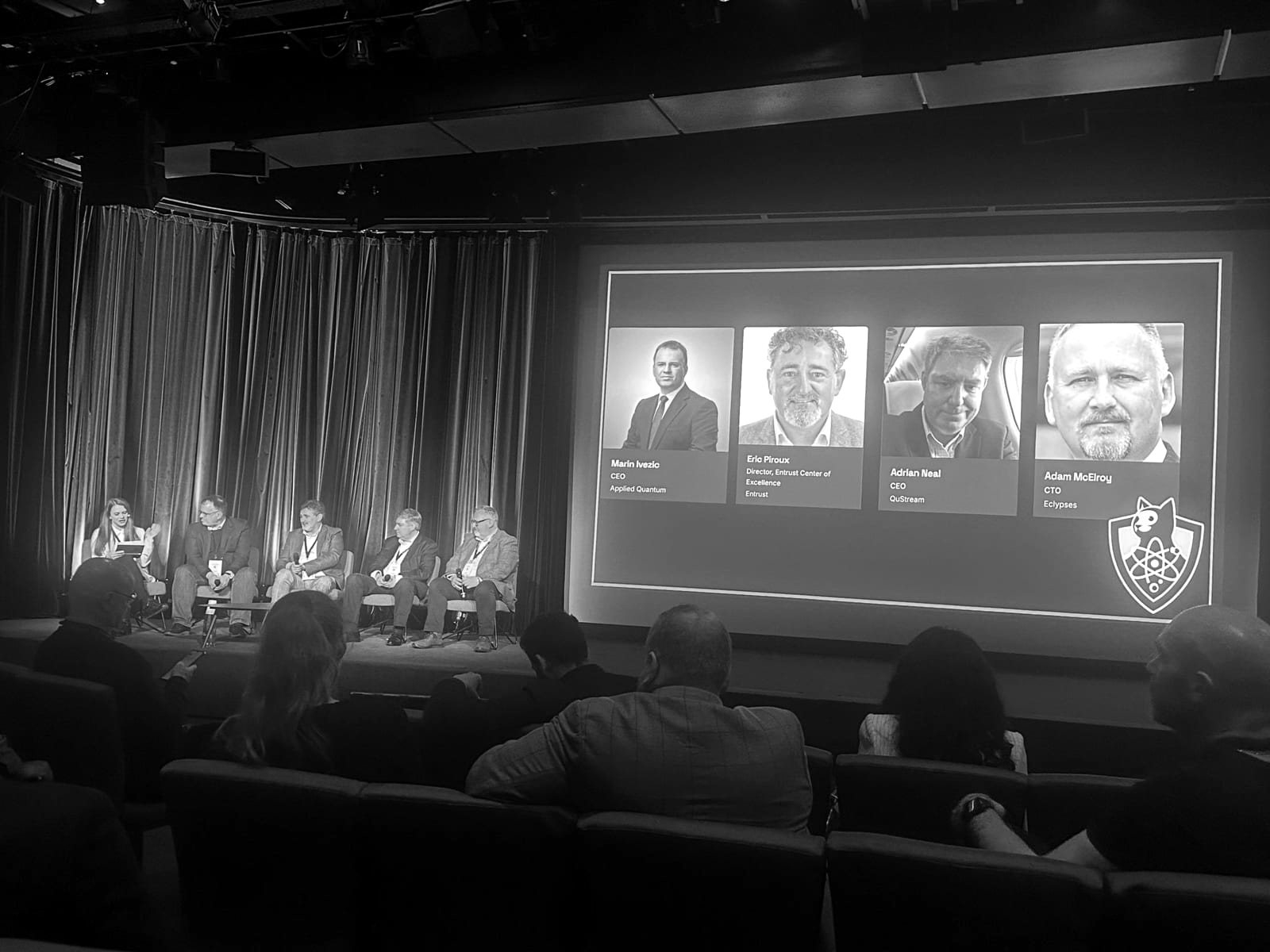
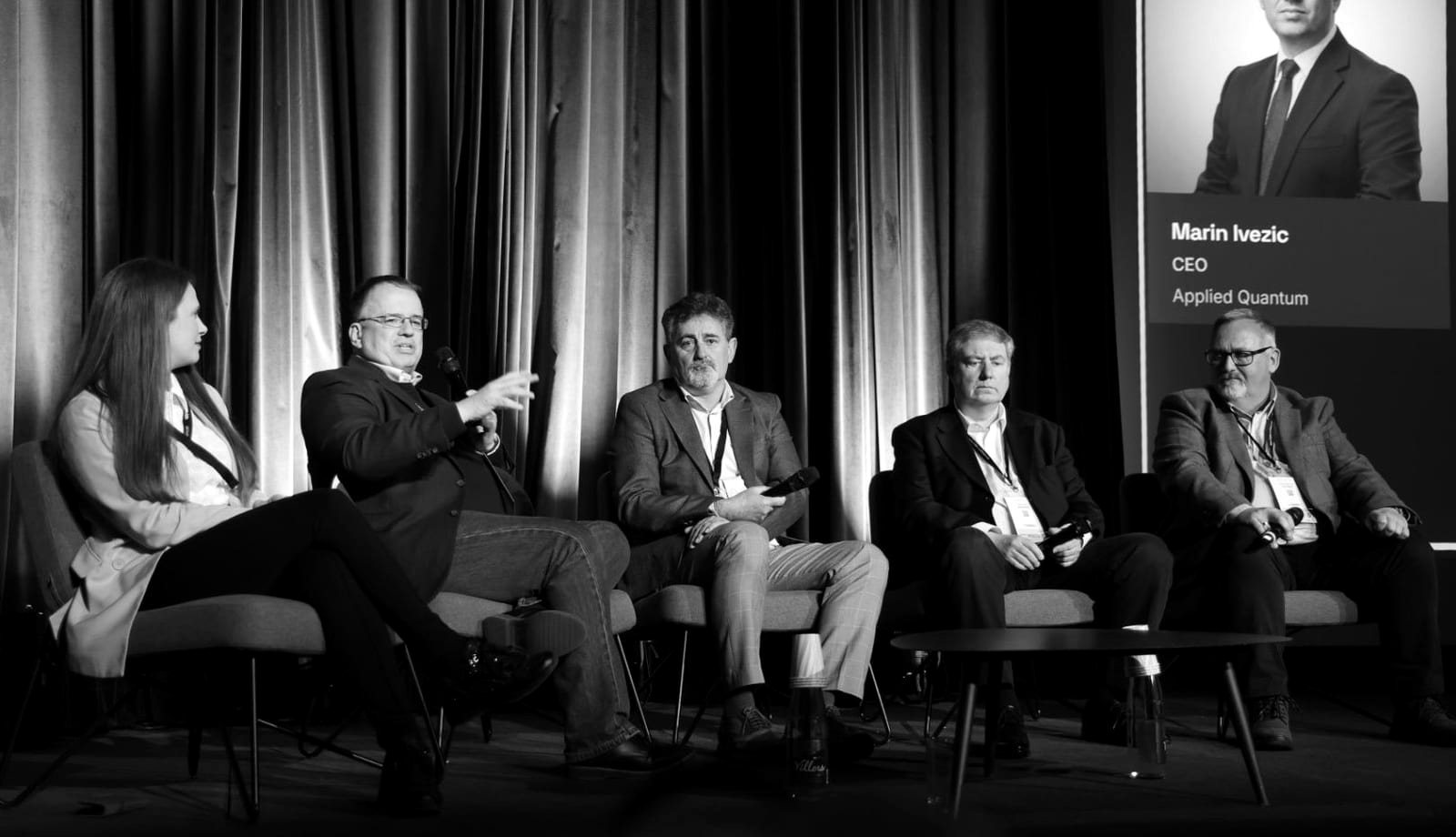
A QSECDEF symposium panel on stage in front of an audience
Practitioner panels, on the record
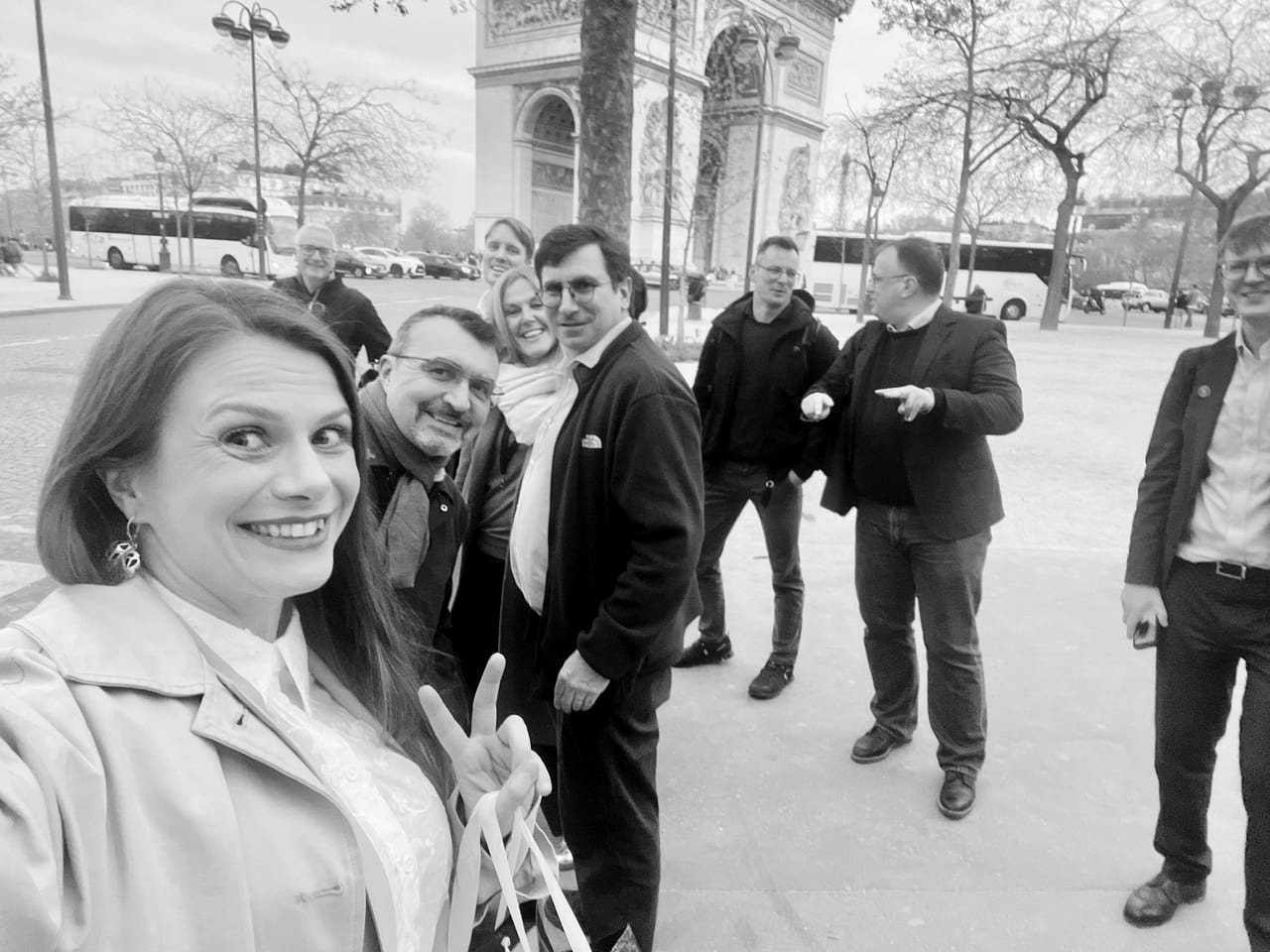
QSECDEF members and speakers together outside the Arc de Triomphe in Paris
Peers you can call afterwards
Panellists in discussion at a QSECDEF symposium
Questions taken from the floor
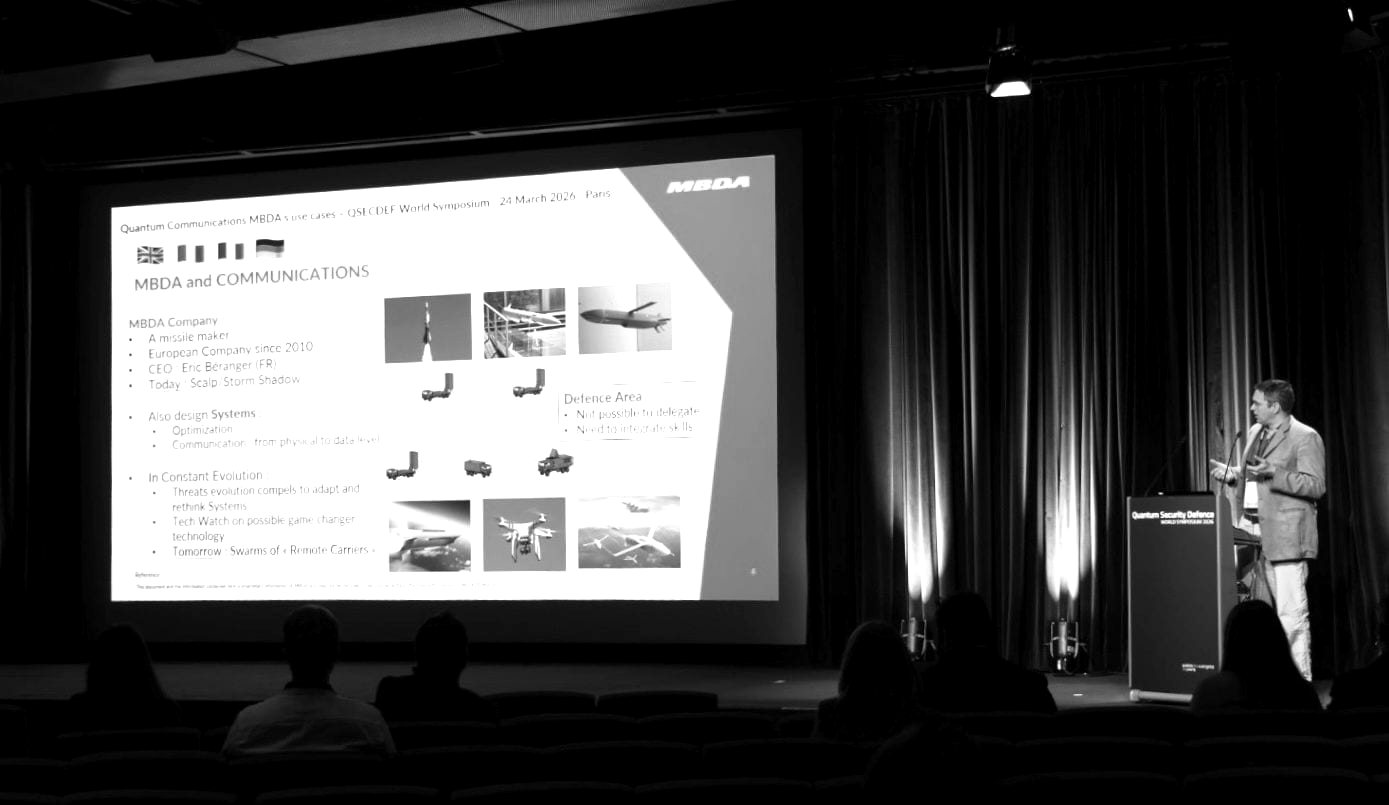
A speaker presenting slides at the QSECDEF World Symposium
Briefings on what is changing
A keynote speaker at the QSECDEF World Symposium lectern
QSECDEF World Symposium, Paris

Lectures from people doing this work

Practitioner lectures from the QSECDEF library that matter most to the space sector: quantum-secure satellite links and QKD from orbit, agency programmes, operators who have already deployed PQC, resilient PNT and export controls.

Browse all expert lectures

Expert contributors represent leading organisations worldwide

Airbus Central R&T
Aireon
Airesatech
Ait
Appliedquantum
Arise Innovations
Arobs
Arqit
Asc Csa
Atlant3D
Bank of Ireland
Barak Azar
Basener Consulting
BHO Legal
Bitcoinqs
Bloq
Buckingham
CloudTech Group
Coherent Computing
Creotech
Cryptalabs
CyberProtonics
Cysec
Cystel
Deimos Space
Department of Digitalization
Dhbw
Dlr
Eclypses
Elpromaelectronics
Engineering
Enluzstrategy
Entrokey Labs
Eptalent
ESA
Esa
Euc
EXATEL
Finqbit
Fraunhofer
Georgetown
GQI
Helix Ft
Ibm
Idquantique
Jagiellonian University
Jos Quantum
Kets Quantum
Kit
Krown Technologies
Kwantumg
Lightriderinc
Linkedin
Lnu
Mbda Systems
Meetiqm
Merqury
Metrosert
Molket
Nicolaus Copernicus University in Torun
Nokia
Orcacomputing
Osi
Pantherun
Patero
Photonics Foundry
Q Ctrl
Qryptocyber
Qssys
Qticompany
Qtlabs
Quandela
Quant X Sec
Quant.Bond
Quantivate
Quantum Computing Inc
Quantum Dice
Quantumbrilliance
Quantumprime
Quantzen
Qubridge
Qudef
Quranium
Qustream
Reddixgroup
Slater Technologies
Smartcyber Group
Smoad
Sparkle
Swiss Financial Innovation Desk
Technology Innovation Institute (TII)
Thequantuminsider
Tobias Heindel
Tu Braunschweig
University College London
University of Bremen
University of Pisa
Venari Security
Veriqloud
Viavisolutions
Vodafone
Welinq
Wizzwang
Xairos
Youtube
Quside
QIZ
Global Quantum Intelligence
HYPATIA Smart Technologies
SAS
Triarii Research

Expert Membership

Builders, consultancies and technology vendors serving the space sector: talk to us

Expert membership brings you into an open community working across sectors, opening up industry conversations, knowledge and access to experts. If you are building technology or consulting capabilities in this sector relevant to Quantum or Advanced AI, we want to hear from you.

  • Access to all Industry Conversations
  • Speaker opportunities at the annual Paris Symposium
  • Enhanced expert profile with lecture archive
  • Co-branding opportunities and social amplification
  • 25% off partner training and events

Everything you need, in one place

Our analysis and programmes for the space sector

Policy and mandates

Questions leaders ask

Does the EU Space Act apply to satellite operators yet?

No. The Commission published the proposal on 25 June 2025 as COM(2025) 335, a Regulation on the safety, resilience and sustainability of space activities in the Union. Its resilience pillar would bring tailored cybersecurity requirements for EU and non-EU operators providing space services in Europe, scaled by company size and risk profile. The text is being negotiated by the European Parliament and the Council under the ordinary legislative procedure, so the obligations and dates can still change. Build to NIS2 today, which does apply, and track the Space Act text as it moves.

Does NIS2 cover satellite operators and ground stations?

Yes, through the ground segment. Annex I of Directive (EU) 2022/2555 lists space among the sectors of high criticality and defines the entities as operators of ground-based infrastructure, owned, managed and operated by Member States or by private parties, that support the provision of space-based services, excluding providers of public electronic communications networks. Essential and important entities owe the Article 21 risk management measures, which include policies and procedures on the use of cryptography and, where appropriate, encryption. A teleport or mission control centre in the EU should assume it is in scope unless its national transposition says otherwise.

What does SPD-5 require of a US space operator?

Space Policy Directive 5 of 4 September 2020 sets principles rather than rules. Space systems should be developed and operated using risk-based, cybersecurity-informed engineering; command, control and telemetry links should be protected with effective and validated authentication or encryption designed to remain secure against existing and anticipated threats during the entire mission lifetime; ground systems should be protected; and supply chain risk should be managed. The phrase that matters for quantum is the mission lifetime one. For a spacecraft launched in 2027 the anticipated threats include a cryptographically relevant quantum computer.

Why is harvest now, decrypt later worse for satellites than for terrestrial systems?

Three reasons. The telecommand link is broadcast over radio, so anyone with a dish in the footprint can record it. The keys and authentication scheme were loaded before launch and in most fleets cannot be changed on orbit, so the same material protects the link for 15 years. And the data riding on the link is often someone else's: imagery tasked by a government, traffic from a maritime or aviation customer, telemetry that reveals the health of a national asset. Traffic recorded in 2026 from a GEO spacecraft is still protecting a live mission in 2040.

Can we change the cryptography on a satellite already in orbit?

Sometimes, and the honest answer per spacecraft is the most valuable line in your inventory. Where the on-board cryptographic unit runs in software on a processor with headroom and the mission has a signed firmware update path, a hybrid or post-quantum authentication scheme can be loaded. Where the algorithm is fixed in hardware, or the update itself must be signed with the key you want to retire, it cannot, and the mitigation moves to the ground: key hygiene, re-keying where the protocol allows it, independent encryption of the payload data and monitoring of the command path. Our PQC for Ground-to-Satellite Command and Control course works through both cases on real space-qualified processors.

What do the CCSDS security standards say about post-quantum cryptography?

Not yet enough to build to. CCSDS 355.0-B-2, the Space Data Link Security Protocol of July 2022, provides authentication and encryption of transfer frames at the data link layer, and CCSDS 352.0-B-2 of August 2019 specifies the algorithms: AES in several modes, HMAC, cipher-based authentication and digital signature based authentication. Neither Blue Book names a post-quantum algorithm. The protocol's symmetric core is in good shape against a quantum adversary with AES-256; the exposure sits in how keys are established, distributed and refreshed, and in any public-key signature used for authentication or firmware. Design new missions so the key management layer can change without touching the frame protocol.

Is QKD from space the answer? EuroQCI and Eagle-1 suggest Europe thinks so.

It is part of Europe's answer for key distribution between fixed sites, not a substitute for post-quantum algorithms. EuroQCI pairs a terrestrial fibre segment with a space segment, and Eagle-1, developed by ESA and a consortium led by SES Techcom, is due to launch in late 2026 or early 2027 for three years of in-orbit validation. QKD can establish keys over an optical link to a ground station; it does not authenticate a telecommand, sign firmware or protect a customer's VPN over your capacity. NATO's October 2026 position paper and the European agencies' joint statement both say QKD does not yet meet the bar for classified traffic. Migrate the algorithms first and treat space QKD as a future key source for specific high-assurance links.

Does CNSA 2.0 apply to commercial satellite operators?

Directly, only if you own or operate a US national security system. In practice it reaches you through the customer: a hosted payload, a ground station or a leased link that serves a national security system has to meet the CNSA 2.0 dates for its category, and those customers are starting to write it into contracts. Software and firmware signing should already prefer CNSA 2.0, with exclusive use by 2030, and new national security system acquisitions must comply from 1 January 2027. If a defence or intelligence customer is anywhere in your order book, assume the question is coming.

What does NATO say about quantum and space?

NATO's Quantum Technologies Strategy, summarised in January 2024, commits the Alliance to the transition of its cryptographic systems to quantum-safe cryptography and to research into quantum-safe communications across air, space, cyber, land and maritime domains. It also names quantum sensing for positioning, navigation and timing without GNSS. The Quantum Technology Roadmap of 29 September 2026 adds dates: an industry readiness study for quantum-resistant cryptography in Q2 2027, a refreshed action plan on the quantum threat to cryptography in Q3 2027, a Quantum Zero Beacon pilot between NATO HQ and SHAPE in Q4 2027 and an Alliance quantum standards roadmap by Q3 2029. For a SATCOM provider serving allied governments, those are the dates your customers are planning to.

Where should a satellite operator, launch provider or space agency start?

With a cryptographic inventory across all three segments: on-board cryptographic units and key loading, the ground segment, and the services you deliver; a map of how long each data type stays sensitive against the algorithms protecting it; a line per spacecraft saying whether its cryptography can change on orbit; and PQC roadmaps requested from every bus, payload, ground software and crypto module supplier. Those four give the board or mission assurance board the evidence to set priorities before the next design freeze.

What does QSECDEF offer satellite operators, ground segment providers and space agencies for free?

Everything on this page. The two-minute readiness check scores your space programme and routes you to the right next step. The free tools, including the SATCOM and C2 Cryptographic Readiness Assessor and the HNDL Risk Calculator, run in your browser with no registration. The weekly peer call runs every Tuesday at 15:00 CET and is open to anyone. Sample lectures from the 170-plus expert library are linked above, and the page is reviewed as the mandates change; the date beside the key facts is the last check.

Which QSECDEF course should a space sector team take first?

It depends on the role. Directors, programme boards and mission assurance boards start with the Certified Quantum Business Professional bootcamp, about 22 hours self-paced across ten modules. Security, ground segment and mission operations teams take Introduction to Quantum Cyber Security, four to five hours online with a QSECDEF certificate. Ground segment architects and mission assurance leads take PQC for Ground-to-Satellite Command and Control, the sector course for telecommand, telemetry and control links, with Cryptographic Resilience for Space System Mission Architecture and Quantum-Secure Satellite Telecoms as the next steps. Whoever will run the migration takes CPQCPM, the Certified Post Quantum Cryptography Programme Manager course: ten hours live online over five weeks, with the next public cohort in January 2027.

Can QSECDEF run private training or a workshop for our operator, agency or space supplier?

Yes. QSECDEF runs private CPQCPM cohorts for a single organisation, live online or in person, and private deliveries of the sector courses listed under Equip your people for your ground segment and mission assurance teams. Board and leadership workshops are built on your own exposure and obligations and end with an agreed position on quantum risk. Use the contact button in the For your organisation section and tell us your timeline.

How do we find vetted suppliers or consultants for a space sector PQC migration?

Through the QSECDEF Expert Members directory. Every listed member has been vetted, has signed the Members' Charter and has presented to the community. You can filter by consulting and services, technology vendor or enablement and investment, and send a request for further information from the member's own page. QSECDEF is vendor-neutral and sells training, not migration products, so the shortlist stays yours.

Is QSECDEF membership relevant to a satellite operator, space agency or space supplier?

Two routes. QSECDEF membership gives your team the self-paced courses, the full lecture archive, the weekly call and 25 per cent off CPQCPM and partner training. Expert Membership is for the builders, consultancies and technology vendors serving the space sector who want to be found by the people reading this page; it includes a showcase listing with an enquiry form, the Industry Conversations and speaking slots at the annual QSECDEF symposium.

Is QSECDEF selling a migration product?

No. QSECDEF is a vendor-neutral membership network. We train people and connect them with peers and peer-reviewed experts; we do not sell migration software or services.

How much time does the training take?

CPQCPM is ten hours of live instruction over five weeks, two hours a week. The Quantum Cyber Security course is 4 to 5 hours, self-paced. The business bootcamp is self-paced at your own speed. The space courses are full-day sessions of six hours each and are listed with their formats on the training pages.

Ask a practitioner, live

The free weekly call runs every Tuesday at 15:00 CET. Bring your question.

Join the Tuesday call →

Five colleagues, one in an orange hard hat, leaning over plans spread across a wooden table.

For your organisation

Need it built around your fleet, your ground segment or your supply chain?

When your board, your anchor customer or your agency needs something specific, we shape the workshop, the training or the engagement around your spacecraft, your ground segment and your launch and design calendar. Independent of any vendor.

Custom workshops

Your leadership leaves with an agreed position on quantum risk

In-person sessions for operators, agencies and suppliers covering satellite QKD, PQC for telecommand links, quantum sensing for Earth observation, quantum computing for mission planning and mission cryptographic architecture, drawn from the six-session space industry programme.

Private training

Your whole programme team trained on one plan

Private CPQCPM cohorts, live online or in person for your required delegates, with team membership for the self-paced courses.

Consulting

A migration programme specified and staffed correctly

Cryptographic inventory across the three segments, PQC migration planning, supplier review and specialist teams sourced from 1,500+ members across 900+ organisations.

Prefer email? Write to info@qsecdef.com and tell us about your timeline.

Photos: Pexels (SpaceX, Alejandro De Roa, braincontour, Francesco Ungaro, ANTONI SHKRABA production) and QSECDEF, converted to black and white or brand duotone.