Quantum Business Bootcamp
Ten modules, about 22 hours online. Week 5 covers QKD and networking, with a lecture on QKD across ground-based and space-based systems. It puts satellite QKD next to fibre so you can compare routes.
View the courseQuantum Satellite Communication
Space is where quantum links get long enough to matter. The essentials on satellite QKD, timing and the ground segment.
Quantum satellite communication sends quantum states between orbit and ground stations, so keys can be shared over distances fibre cannot reach, and today it relies on trusted satellites.
Why it matters now
January 2025
ESA and the European Commission signed their EuroQCI implementation agreement on 30 January 2025, with strong backing from all 27 EU Member States. ESA's SAGA mission is to validate space-based quantum technologies in orbit. Public money is flowing into the space segment.
2026 and 2027
ESA now says the Eagle-1 satellite is “due to launch in late 2026/early 2027”, followed by three years of in-orbit validation, and that early adopters can buy QKD ground systems to receive its signals. Ground-segment buying decisions arrive before the satellite does.
January 2024
Four European agencies jointly note that in most current implementations the satellites themselves constitute trusted nodes. A satellite is a relay, so the objection to trusted relays travels with it.
The 8 things
The essentials, in the order we would explain them to a board. Each ends with one lecture from our archive, given by a named practitioner.
In 2017 the team behind China's Micius satellite delivered entangled photon pairs to two ground stations 1,203 km apart, with link efficiency more than 12 orders of magnitude better than direct transmission through the best commercial fibre. Distance is the gain. QKD still secures the key exchange only.
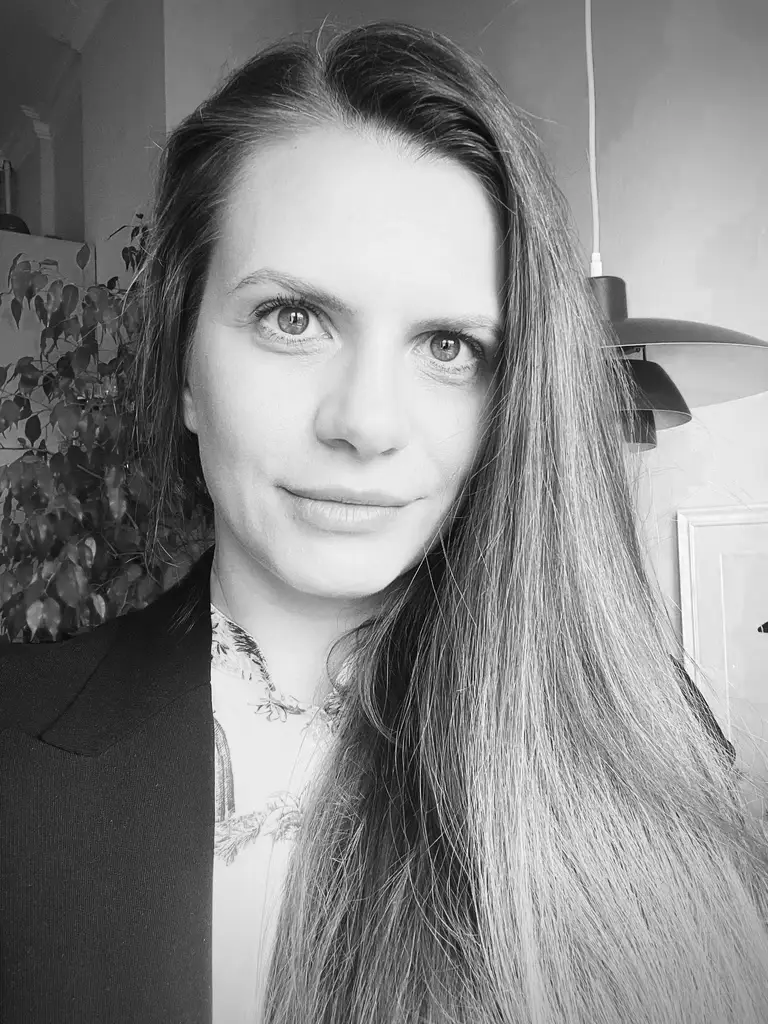 Entanglement as a Service for Satellite CommunicationsAnna Beata Kalisz Hedegaard, CEO About 40 minMembers
Current designs generally work by trusted relay: the satellite learns the keys it hands to each ground station. The same paper notes that non-geostationary satellites are available only for a short time each day and are sensitive to weather. Ask who builds, launches and operates the payload, and who can see keys in transit.
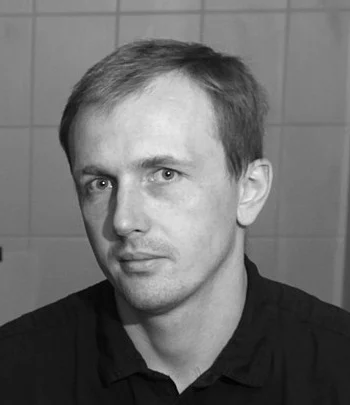 Practical Security Considerations for Quantum Secure Satellite CommunicationsPiotr Kolenderski, Professor About 40 minMembers
QSECDEF's bootcamp compares fibre, free-space, satellite and hybrid approaches, because the choice depends on distance, terrain and site ownership. Commercial fibre systems typically reach about 100 km, so longer gaps call for trusted nodes or satellites. Choose by route, not by novelty.
 DISCRETION showcase in Brussels between Portuguese Embassy and European CommissionCatarina Bastos, Head of Secure Communications and Quantum Technologies Division About 40 minMembers
ESA's January 2025 announcement gave a 2026 launch for Eagle-1, and its page now says late 2026 or early 2027. Canada's QEYSSat was announced in 2019 for a 2022 launch, and a 2025 conference abstract gives late 2026. Plan around demonstrations, not delivery dates.
 Case Study QEYS - Quantum Secure Satellite CommunicationsDr Katanya Kuntz, PhD, QEYSSat Science Team Coordinator About 40 minMembers
A lecture in our archive presents entangled-photon time transfer as a resilient option where GPS is jammed or spoofed. Positioning, navigation and timing underpins telecoms, finance and power networks. Ask every critical supplier what their timing source is, and what happens when it fails, and whether a second source exists.
 Quantum Time Transfer: using entangled photons for resilient PNT applicationsDavid Mitlyng, CEO of Xairos About 40 minMembers
A quantum payload is lasers, detectors and optics that must survive launch and thermal swings, so packaging matters as much as the physics. Dr Erik Beckert has worked at Fraunhofer IOF in Jena since 2001. Ask where parts are built and qualified.
 Automated packaging for photonic quantum systemsDr. Erik Beckert, CEO About 40 minMembers
Quantum security attracts inflated claims, and satellites add glamour. Test each claim with plain questions: which satellite, which ground stations, which protocol, which keys, and when does it launch? An answer that cannot name them is a pitch, however good the animation looks. Ask for the mission documents and read the dates before you read the claims. Our archive has two lectures with snake oil in the title.
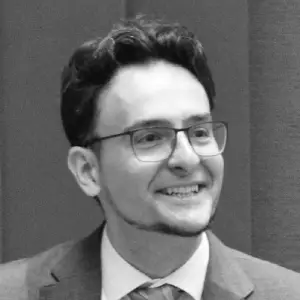 Quantum Snake Oil - What Alielments can it cure?Christopher A Vasko, Optical and Quantum Innovation Engineer About 40 minMembers
Satellite links already in the field cannot wait for orbital QKD. Inventory the cryptography on every command, control and data link, then plan post-quantum upgrades where the hardware allows. Ground stations, keys and operators stay in the attack surface whatever happens in orbit.
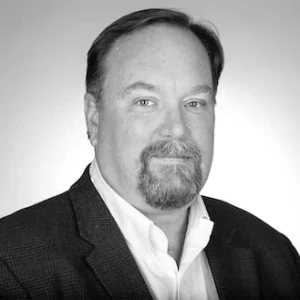 AI Supported Post Quantum CryptographyPeter Clay, Chief Information Security Officer About 40 minMembers
Expert lectures
Every quantum satellite lecture in the QSECDEF archive, from mission teams, component makers and network operators. Members first, then the rest. Pick the one closest to the decision on your desk.
LectureEntanglement as a Service for Satellite Communications
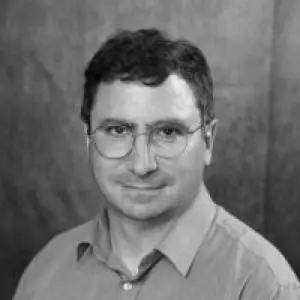
LectureQuantum Snake oil
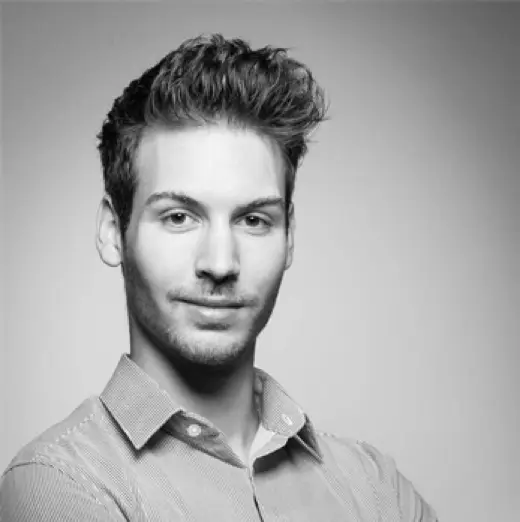
LectureQuantum Sensing for Earth Observation
LectureDISCRETION showcase in Brussels between Portuguese Embassy and European Commission
LectureQuantum Snake Oil - What Alielments can it cure?
CEO of Xairos
LectureQuantum Time Transfer: using entangled photons for resilient PNT applications
Research Project Lead Quantum Communication
LecturePractical Security Considerations for Quantum Secure Satellite Communications
LectureCase Study QEYS - Quantum Secure Satellite Communications
LectureAutomated packaging for photonic quantum systems
LectureComponents for Space and Terrestrial QKD
Writer
LectureQubits and Cosmos: How Quantum Technologies Can Help Us Understand the Universe
LecturePractical Security Considerations for Quantum Secure Satellite Communications
LecturePractical Security Considerations for Quantum Secure Satellite Communications
Chief Information Security Officer
LectureAI Supported Post Quantum Cryptography
LecturePractical Security Considerations for Quantum Secure Satellite Communications
LectureQuantum for Military Applications
View profileThe sources on this page run from 2017 to 2026, and the dates they cite keep moving: Eagle-1 now says late 2026 or early 2027 where its January 2025 announcement said 2026. A one-off course is a snapshot. Weekly learning tells you when a mission slips.

Your membership includes the introductory quantum cyber security and quantum resilient blockchain courses, plus the Business Bootcamp. Each ends in a certificate, so your team can study at its own pace and show what it completed.
See the courses
More than 170 lectures from practising experts sit in the member library. Topics run from post-quantum cryptography and QKD to sensing, PNT and quantum business. Watch when your diary allows, then return to the ones you need.
Browse the lectures
We commit to publishing a new training course every 90 days, so the programme keeps pace with the field. Your membership covers each one as it goes live, with no extra fee for the course.
See current courses
Members save 25% on partner training and certifications, including the CPQCPM Post Quantum Cryptography Programme Manager certification. The discount applies at booking, so the saving comes before you pay.
View the certification
Members receive invitations to our in-person events, including our London, Amsterdam and Berlin events, plus private members-only briefings and priority access to the QSECDEF members’ symposium 2027 in Paris.
See upcoming events
Every Tuesday at 3pm CET, a practitioner presents a live topic and takes questions. Members get priority access to the call and the recorded archive afterwards, so a missed week is never lost.
Join Tuesday's callAll four courses and 170+ lectures included
Find the right membership for you
Become a memberTraining path
Ten modules, about 22 hours online. Week 5 covers QKD and networking, with a lecture on QKD across ground-based and space-based systems. It puts satellite QKD next to fibre so you can compare routes.
View the courseQuantum Cyber Security Foundation. Four to five hours, six modules, a QSECDEF certificate, included in membership. It gives the QKD and post-quantum background first.
Social proof
Recommendations shared publicly on LinkedIn by QSECDEF members.
1,500+
40+
900+
700+

Free updates
A satellite sends single photons or entangled pairs to optical ground stations, which use the measured results to agree an encryption key. Interception disturbs the photons, so errors reveal it. In most current designs the satellite handles the key, so it acts as a trusted node. The key then protects data through a conventional cipher.
Fibre loses photons with distance and satellites avoid most of that loss: in the 2017 Micius experiment, link efficiency at 1,200 km exceeded direct fibre transmission by more than 12 orders of magnitude. Satellites also reach places without fibre. The cost is a trusted node in orbit and weather-limited availability.
Quantum time transfer is a proposed way to distribute precise timing using entangled photons, aimed at resilient positioning, navigation and timing where GPS is unavailable, such as under jamming or spoofing. The QSECDEF archive carries a lecture on it by David Mitlyng, CEO of Xairos, the company building a global timing service beyond GPS.
More than a dozen lectures in the QSECDEF archive are tagged for satellites. They cover the QEYSSat mission case study, entanglement as a service, components, photonic packaging, quantum time transfer, sensing for Earth observation and post-quantum deployment at Aireon. Members watch them on demand.
We take guidance from the following open frameworks for technical education: EQAVET, the European Quality Assurance Reference Framework for Vocational Education and Training; the European Union Council Recommendation on micro-credentials; the CAST Universal Design for Learning Guidelines; and WCAG 2.2, the web accessibility standard. Educational oversight: QSECDEF Advisory Board. Feedback, errors, omissions and updates: QSECDEF Community.