Questions leaders ask
Does NIS2 apply to a city council or a municipality?
Directly, only if your Member State says so. Directive (EU) 2022/2555 covers public administration entities of central government and, as each Member State defines it, regional government. Article 2(5) lets a Member State extend it to public administration entities at local level, and several have. A municipal water, district heating, transport or energy operator is a different matter: those are Annex I sectors in their own right, and the operator owes the Article 21 measures, including the policy on cryptography and encryption in Article 21(2)(h), whoever owns it. Read your national transposition, which was due by 17 October 2024, and note that the Commission proposed targeted amendments on 20 January 2026.
What does the Cyber Resilience Act mean for the sensors, cameras and chargers a city buys?
They are products with digital elements, so their manufacturers owe the CRA's essential cyber security requirements for anything placed on the EU market from 11 December 2027, and vulnerability and incident reporting from 11 September 2026. The Act does not name post-quantum algorithms. What it gives a city is leverage: a product with a 15-year life and no secure update path will struggle to show conformity, and a buyer is entitled to ask how the manufacturer will keep it secure through its support period. Write that question into the tender now rather than discovering the answer at acceptance.
How does the EU Digital Identity Wallet change a city's quantum exposure?
Regulation (EU) 2024/1183 requires Member States to offer wallets to citizens by the end of 2026, and service providers that must identify their customers have to accept them. For a city that means the portal, the parking permit and the social care application will increasingly be authenticated by a credential whose signatures belong to a national scheme. Your exposure moves from your own identity provider to a dependency you do not control. Record it, ask the scheme operator for its post-quantum roadmap, and keep your own PKI and signing services on a route to ML-DSA for everything the wallet does not cover.
Which records does a local authority hold that make harvest now, decrypt later a problem today?
Children's social care records in England are kept until the child's 75th birthday. Adult safeguarding, housing, benefits and council tax files run years past the last contact; council tax recovery alone has a six-year window. Identity credentials and any biometric are useful to an attacker for the holder's lifetime. Traffic copied in 2026 and read in the 2030s lands well inside every one of those windows. The National ANPR Service deletes reads after 12 months, which is a reminder that the live link from camera to back office, not just the archive, is what an adversary records.
Why are street assets harder to migrate than the back office?
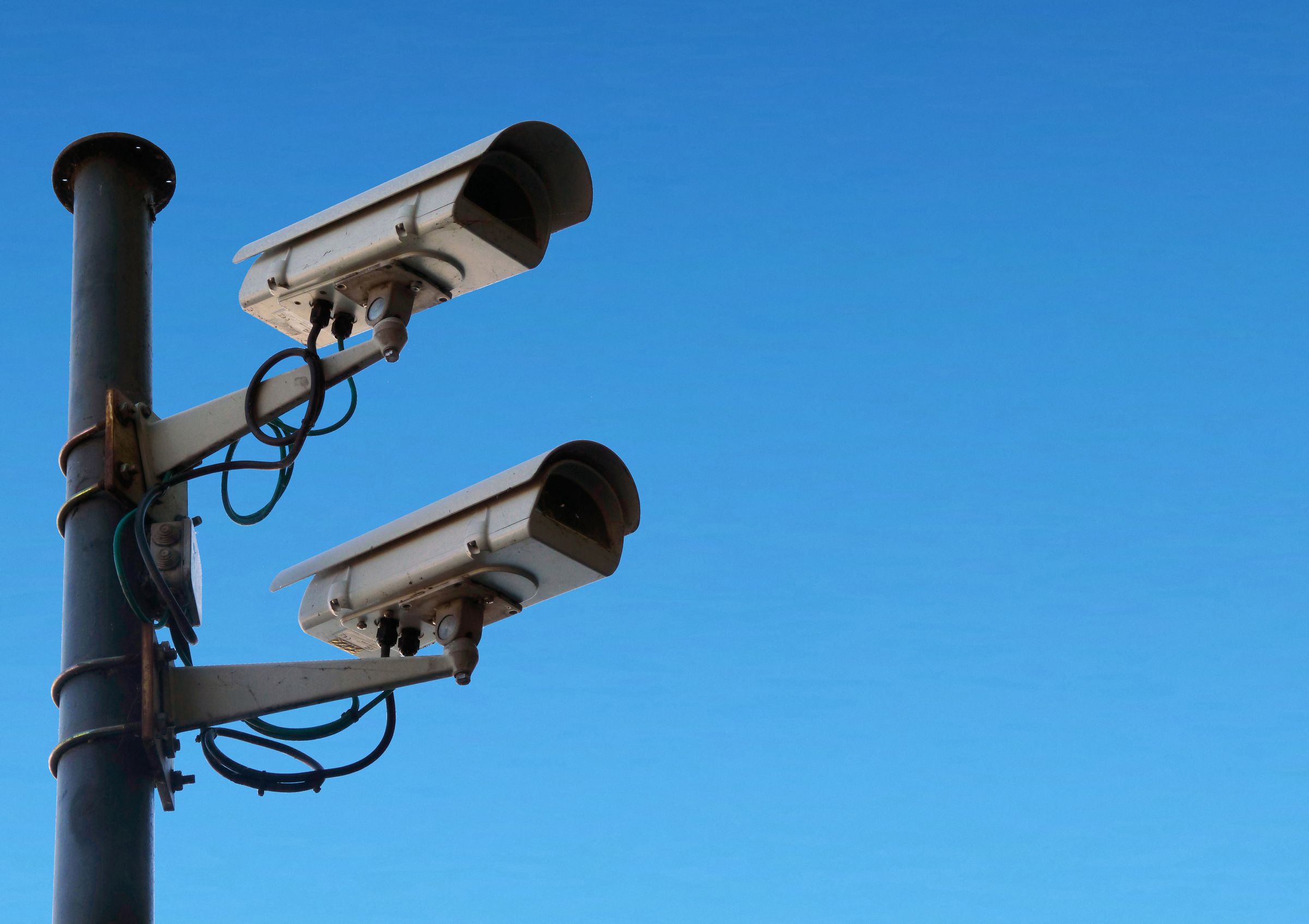
Because the back office runs on servers you can patch and the street runs on hardware you bolted to a pole. A signal controller, a lighting node or an EV charger installed in 2026 is expected to last 15 to 20 years, its cryptography is often in firmware with a fixed key store, and the NCSC singles out operational technology for exactly this reason: infrequent replacement cycles mean changes have to ride on planned maintenance. The practical answer is to classify every asset class as updatable in the field, replaceable on cycle, or isolate-and-wrap behind a gateway that can be migrated, and to fund the second category as capital rather than hoping for a firmware miracle.
What does the UK expect of a council, and by when?
The NCSC's guidance of 20 March 2025 sets the dates: discovery and an initial plan by 2028, highest-priority migrations by 2031, complete by 2035. MHCLG's Cyber Assessment Framework for local government is the place a council in England will be asked about it, through its self-assessment and independent assurance review, even though the framework does not yet name post-quantum cryptography. The Secure Connected Places playbook from DSIT and the NCSC's connected places principles cover the smart city estate. The Cyber Security and Resilience Bill, introduced on 12 November 2025, reforms the NIS Regulations 2018; a council is caught only where it runs a regulated service, but the managed service providers most councils depend on are its target.
What should a US city or county do when no federal mandate applies to it?
Borrow the federal language. Executive Order 14412 of 22 June 2026 set 31 December 2030 for PQC key establishment and 31 December 2031 for signatures on federal high value assets, and CISA's January 2026 product categories list where PQC-capable products are already on the market. Put those requirements into your own procurement, use the CISA, NSA and FBI smart cities guidance of April 2023 for the planning, supply chain and resilience framing, and look at the State and Local Cybersecurity Grant Program, which has put $1 billion in front of state, local, tribal and territorial governments since FY2022, for the funding line.
Can a city make its IoT platform or integrator migrate?
Only through the contract, so the contract is where the work is. Ask every integrator, platform and cloud provider for a written post-quantum roadmap and the division of responsibilities under the shared responsibility model, write FIPS 203, 204 and 205 support and crypto-agility into every live tender and framework call-off, and require Cyber Resilience Act conformity evidence for connected products. The Third-Party Cryptographic Exposure Model on this page scores where the exposure sits. Peers in the Industry Conversation have found that a short questionnaire sent to every supplier at once produces more honest answers than one negotiation at a time.
Is quantum key distribution useful for a city network?
For a small number of fixed links, possibly. Several cities and islands have run QKD across municipal fibre, and the lecture on Malta's country-wide network in the library shows what that takes. QKD protects a point-to-point link between two trusted sites and nothing else: not the sensor at the kerb, not a signed open dataset, not a resident's phone talking to the portal, and it needs its own authentication, which today means PQC. Treat it as a possible addition for a backbone link between data centres, not as a substitute for migrating the estate.
Where should a city start?
Name a migration lead with authority across council IT, transport, utilities and the smart city programme. Build a cryptographic inventory of the citizen portal, the data platform and the street assets they talk to. Map record types to retention periods and asset classes to replacement dates. Then send one post-quantum questionnaire to every integrator, platform and managed service provider. Those four steps give a chief executive or cabinet the evidence to set priorities and the number for the capital line.
What does QSECDEF offer city and local government authorities for free?
Everything on this page. The two-minute readiness check scores your smart city and local government programme and routes you to the right next step. The free tools, including the HNDL Risk Calculator and the OT Protocol Quantum Vulnerability Scanner, run in your browser with no registration. The weekly peer call runs every Tuesday at 15:00 CET and is open to anyone. Sample lectures from the 170-plus expert library are linked above, and the page is reviewed as the mandates change; the date beside the key facts is the last check.
Which QSECDEF course should a smart city and local government team take first?
It depends on the role. Councillors, cabinet members, mayors' offices and executive directors start with the Certified Quantum Business Professional bootcamp, about 22 hours self-paced across ten modules. Council IT and security teams and transport and utility operations take Introduction to Quantum Cyber Security, four to five hours online with a QSECDEF certificate. City data platform managers and open data leads take Quantum-Safe Public Data Infrastructure and Open Data Security, the sector course for city data platforms, open data APIs and citizen portals. Whoever will run the migration takes CPQCPM, the Certified Post Quantum Cryptography Programme Manager course: ten hours live online over five weeks, with the next public cohort in January 2027.
Can QSECDEF run private training or a workshop for our council, utility or smart city programme?
Yes. QSECDEF runs private CPQCPM cohorts for a single organisation, live online or in person, and private deliveries of the sector courses listed under Equip your people for your data platform, mobility and utility teams. Board and leadership workshops are built on your own exposure and obligations and end with an agreed position on quantum risk. Use the contact button in the For your organisation section and tell us your timeline.
How do we find vetted suppliers or consultants for a smart city and local government PQC migration?
Through the QSECDEF Expert Members directory. Every listed member has been vetted, has signed the Members' Charter and has presented to the community. You can filter by consulting and services, technology vendor or enablement and investment, and send a request for further information from the member's own page. QSECDEF is vendor-neutral and sells training, not migration products, so the shortlist stays yours.
Is QSECDEF membership relevant to a council, utility or smart city programme?
Two routes. QSECDEF membership gives your team the self-paced courses, the full lecture archive, the weekly call and 25 per cent off CPQCPM and partner training. Expert Membership is for the builders, consultancies and technology vendors serving smart cities and local government who want to be found by the people reading this page; it includes a showcase listing with an enquiry form, the Industry Conversations and speaking slots at the annual QSECDEF symposium.
Is QSECDEF selling a migration product?
No. QSECDEF is a vendor-neutral membership network. We train people and connect them with peers and peer-reviewed experts; we do not sell migration software or services and we are independent of any city's suppliers.
How much time does the training take?
CPQCPM is ten hours of live instruction over five weeks, two hours a week. The Quantum Cyber Security course is 4 to 5 hours, self-paced. The smart city courses, including the public data infrastructure and urban mobility courses, are full days of six hours, in person or online. The business bootcamp is self-paced at your own speed.
Ask a practitioner, liveThe free weekly call runs every Tuesday at 15:00 CET. Bring your question.
Join the Tuesday call →