

Trading
Short-lived sessions, but latency limits which algorithms fit.
You will know which links need performance testing before hybrid key exchange goes live.

For boards, CROs, CISOs and programme leads in financial services
Be ready when your board or supervisor asks.
In fifteen minutes you will know which of your records are already exposed, what DORA lets supervisors ask for, and the first 90 days of a plan your board can sign off.

























Step 1 of 5
An attacker does not need a quantum computer today. They copy your encrypted traffic now and read it when one arrives. If a record created in 2026 must stay confidential past that point, it is exposed already, and retention rules make that a long list in financial services.
| Record type | Typical retention | Confidential until, if created in 2026 |
|---|---|---|
| Investment firm records (MiFID II) | At least 5 years | 2031+ |
| AML and correspondent banking records (4AMLD) | 5 years after the relationship ends | 2031 to 2040s |
| Swap records (Dodd-Frank, 17 CFR Part 45) | Life of the swap plus 5 years | 2036+ for 5-year swaps |
| Mortgages and long-term credit | Life of the loan, often 25 years | 2051+ |
| Customer identity and KYC data | Relationship plus 5 years | Often 2040+ |
Retention periods from our financial services sector guide. Check the rules that apply to each entity.
Short-lived sessions, but latency limits which algorithms fit.
You will know which links need performance testing before hybrid key exchange goes live.

Nothing moves until both ends move.
You will know which schemes, correspondents and providers set your timeline, and what to ask them.

Loan books, KYC files and archives carry the harvest now, decrypt later risk.
You will know which archives to protect first, even though they are the least visible systems.
Free readiness check
Eight questions mapped to what DORA supervisors and your board can ask. You get a score, your top three priorities and the next step that closes your biggest gap. Nothing is sent anywhere.
Start the checkStep 2 of 5
NIST publishes FIPS 203, 204 and 205.
From 17 January, cryptography sits inside the ICT risk framework supervisors examine.
The EU roadmap asks organisations to start, beginning with inventory and planning.
The NCSC expects you to know your cryptography and have a plan.
EU target for high-risk systems. NIST deprecates 112-bit RSA and ECC.
NIST disallows them. EU and NCSC timelines end here.

You show: A board paper on quantum exposure and a named sponsor.
You show: A policy that names the quantum threat and the NIST standards.
You show: A cryptographic inventory, ideally a CBOM, for critical or important functions.
You show: Post-quantum roadmaps on file from critical ICT third-party providers.

UK firms. FCA PS21/3 and PRA SS1/21 set operational resilience expectations without an explicit post-quantum clause, and the NCSC timeline sets the pace. Entities licensed in the EU are directly in scope of DORA. Read the full DORA analysis.
Requirement 12.3.3 asks you to document every cipher suite and protocol in use, review the list at least every 12 months and plan for cryptographic weaknesses. It has been mandatory since 31 March 2025, so card and payment firms already owe the inventory a PQC programme starts with. PCI SSC
DORA covers insurance undertakings. Policy, claims and annuity records can stay sensitive for decades, which puts long-tail books squarely in the harvest now, decrypt later window.
The US Treasury co-chairs the G7 Cyber Expert Group with the Bank of England, and NIST's 2030 and 2035 dates are the reference your vendors and examiners will use.
Public post-quantum work in the sector, so you can benchmark where your institution stands.
Called on banks and financial firms to prioritise the move to quantum-safe cryptography, citing store now, decrypt later attacks.
Source: Europol →Banca d'Italia, Banque de France, Deutsche Bundesbank, Nexi-Colt and Swift tested post-quantum signatures on liquidity transfers in a live payment system and reported significant performance differences.
Source: BIS →Exchanged post-quantum signed and encrypted emails between Paris and Singapore over ordinary internet links, using a hybrid approach.
Source: Banque de France →Piloted quantum-safe technology for buying and selling tokenised gold, using post-quantum cryptography to move assets across ledgers.
Source: HSBC →Built a quantum-secured, crypto-agile network linking two data centres, as part of a strategy that combines post-quantum cryptography and QKD.
Source: JPMorgan →Step 3 of 5
For budget ranges, see our PQC migration cost benchmarks.
Need help delivering the plan? Our expert members are peer-reviewed suppliers, integrators and advisers. Meet the expert members →
Step 4 of 5
A migration succeeds or stalls on people. Match each role to the outcome you need from them.
$1,450 a seat · $1,087.50 for members
“My biggest takeaway… cryptographic migration is an operational execution challenge, not simply a technical upgrade.”Stephanie Jefferys, Strategic Integrator, Enterprise Transformation
QSECDEF training · CPQCPM
Your brochure, the next cohort dates and the costs are ready on the next page.
Certified Quantum Business Professional
Self-paced, no physics background. Covers PQC, policy and PQC risk and migration management.
Free first session · included in membership
Get Session 1 freeIntroduction to Quantum Cyber Security
Six modules, 4 to 5 hours, certificated.
Free first module · included in membership
Get Module 1 freeAI Security and Resilience Leadership Bootcamp
Ten weeks, live, with the CASRP credential.
Live sessions free to attend
Join the free live sessions
Team membership brings your board, programme lead and security teams up to speed together, tracks what each person has completed and certifies across the group. The three courses above are included, plus 170+ expert lectures and the weekly call, and members pay less for CPQCPM.
See team membershipStep 5 of 5
A members-only structured Q&A for CEOs, CFOs, CROs and senior executives at regulated institutions, infrastructure operators and their ICT providers. It runs under the Chatham House Rule and is facilitated by Anna Beata Kalisz Hedegaard, Founder of QSECDEF.
“The QSECDEF team helped us build the risk case for our bureau. Steve made a complex subject simple for our senior team: the risks, the reasons to act and the path to transformation. We have just completed the second pass of our CBOM and moved a stalled PQC project forward.”Ahmed Ali M'hd, Head of Security Architecture, CBC

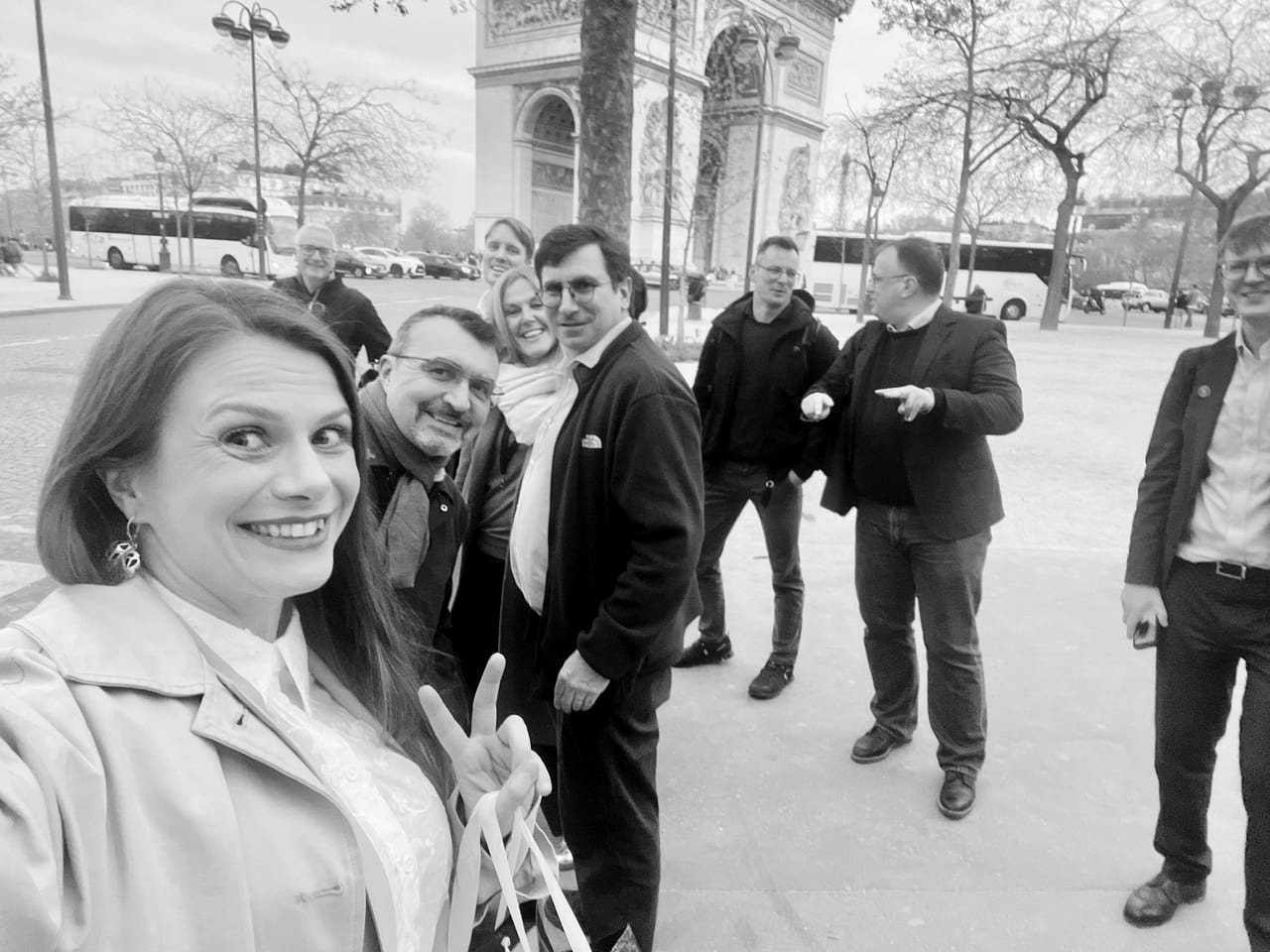


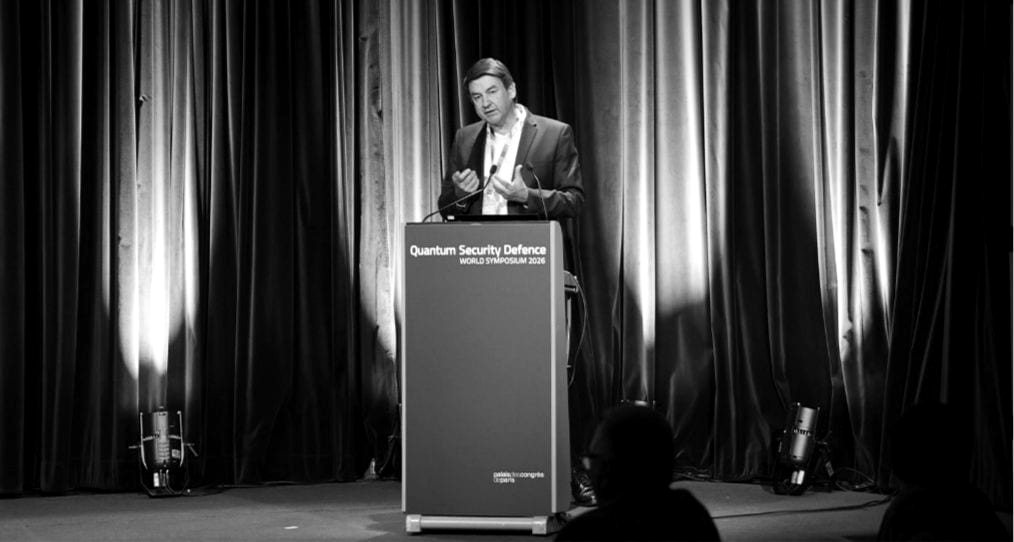
Practitioner lectures from the QSECDEF library that matter most to financial services, from a bank's own crypto-agility programme to post-quantum security in the cloud.










































Expert Membership
Expert membership brings you into an open community working across sectors, opening up industry conversations, knowledge and access to experts. If you are building technology or consulting capabilities in this sector relevant to Quantum or Advanced AI, we want to hear from you.
Not by name. DORA requires an ICT risk management framework, and Delegated Regulation (EU) 2024/1774 Article 6 requires an encryption policy that keeps pace with developments in cryptanalysis. Supervisors can reasonably ask how that policy treats the quantum threat. Article 8 asset identification and Article 28 third-party diligence also apply to cryptography.
The EU roadmap targets high-risk use cases by the end of 2030 and as many systems as feasible by 2035. NIST IR 8547 deprecates 112-bit RSA and ECC after 2030 and disallows them after 2035. The UK NCSC sets milestones at 2028, 2031 and 2035.
An adversary copies encrypted traffic or data today and stores it until a quantum computer can break the encryption. Any record that must stay confidential beyond the arrival of that computer is already at risk, which is why long retention periods matter.
With a cryptographic inventory of the systems behind critical or important functions, a map of which records must stay confidential past 2030, and post-quantum roadmaps from critical ICT third-party providers. Those three give the management body the evidence to set priorities.
Everything on this page. The two-minute readiness check scores your financial services programme and routes you to the right next step. The free tools, including the HNDL Risk Calculator and the Q-Day Timeline Risk Calculator, run in your browser with no registration. The weekly peer call runs every Tuesday at 15:00 CET and is open to anyone. Sample lectures from the 170-plus expert library are linked above, and the page is reviewed as the mandates change; the date beside the key facts is the last check.
It depends on the role. Board and executives start with the Certified Quantum Business Professional bootcamp, about 22 hours self-paced across ten modules. Security, risk and IT teams take Introduction to Quantum Cyber Security, four to five hours online with a QSECDEF certificate. AI, GRC and compliance leads take AI Security and Resilience Leadership Bootcamp, twenty live online lectures connecting AI security, resilience and post-quantum readiness. Whoever will run the migration takes CPQCPM, the Certified Post Quantum Cryptography Programme Manager course: ten hours live online over five weeks, with the next public cohort in January 2027.
Yes. QSECDEF runs private CPQCPM cohorts for a single organisation, live online or in person, and private deliveries of the sector courses listed under Equip your people for your risk, GRC and compliance teams. Board and leadership workshops are built on your own exposure and obligations and end with an agreed position on quantum risk. Use the contact button in the For your organisation section and tell us your timeline.
Through the QSECDEF Expert Members directory. Every listed member has been vetted, has signed the Members' Charter and has presented to the community. You can filter by consulting and services, technology vendor or enablement and investment, and send a request for further information from the member's own page. QSECDEF is vendor-neutral and sells training, not migration products, so the shortlist stays yours.
Two routes. QSECDEF membership gives your team the self-paced courses, the full lecture archive, the weekly call and 25 per cent off CPQCPM and partner training. Expert Membership is for the builders, consultancies and technology vendors serving financial services who want to be found by the people reading this page; it includes a showcase listing with an enquiry form, the Industry Conversations and speaking slots at the annual QSECDEF symposium.
No. QSECDEF is a vendor-neutral membership network. We train people and connect them with peers and peer-reviewed experts; we do not sell migration software or services.
Public examples include JPMorgan Chase, which built a quantum-secured crypto-agile network in 2024, and HSBC, which piloted quantum-safe tokenised gold in 2024. Central banks are active too: Banque de France and the Monetary Authority of Singapore exchanged post-quantum encrypted emails in 2024, and BIS Project Leap phase 2 tested post-quantum signatures in a live payment system with Banca d'Italia, Banque de France, Deutsche Bundesbank, Nexi-Colt and Swift.
Requirement 12.3.3 asks entities to document the cipher suites and protocols in use, review that inventory at least every 12 months and plan for emerging cryptographic weaknesses. It has been mandatory since 31 March 2025, and it gives payment firms the inventory a post-quantum programme starts with.
Yes. DORA covers insurance and reinsurance undertakings alongside banks, investment firms and payment institutions. Long-tail policy, claims and annuity records are among the data most exposed to harvest now, decrypt later.
Five numbers: inventory coverage of critical or important functions, the records that must stay confidential beyond 2030, how many critical suppliers have a post-quantum roadmap, how many key systems are crypto-agile, and budget and milestones against the 2030 and 2035 deadlines.
Discover and plan in 2026, update policy and supplier contracts and run pilots in 2027, migrate high-risk payment, messaging and long-lived data systems from 2028 to 2030, and complete the rest of the estate by 2035.
CPQCPM is ten hours of live instruction over five weeks, two hours a week. The Quantum Cyber Security course is 4 to 5 hours, self-paced. The business bootcamp is self-paced at your own speed.
The free weekly call runs every Tuesday at 15:00 CET. Bring your question.
Join the Tuesday call →
For your institution
When your board, programme team or supervisor needs something specific, we shape the workshop, the training or the engagement around your systems, your regulators and your timeline. Independent of any vendor.
Facilitated sessions for boards, risk committees and technology leadership, built on your own exposure, obligations and 2030 plan.
Private CPQCPM cohorts, live online or in person for your required delegates, with team membership for the self-paced courses.
Cryptographic inventory, PQC migration planning, supply chain review and specialist teams sourced from 1,500+ members across 900+ organisations.
Prefer email? Write to info@qsecdef.com and tell us about your timeline.
Photos: Pexels (Takeshi Arai, Karam Alani, wutthichai charoenburi, Magda Ehlers, Rômulo Queiroz, Anna Tarazevich, Markus Winkler, James Wong, panumas nikhomkhai, Leandro Alamino, Wellington Silva) and QSECDEF, converted to black and white or brand duotone.