An ambulance with flashing blue lights and an open door on a dark road at night.

For chief officers, heads of digital and communications, control room and resilience leads in police, fire, ambulance, coastguard and civil protection, and the suppliers of their radios, networks and control room systems

Quantum risk in emergency services

Be ready when the authority, the inspectorate or the national network programme asks.

In fifteen minutes you will know which incident, patient and intelligence records are already exposed to harvest now, decrypt later collection, what the TETRA disclosures of 2023 and 2025 changed, which NIS2, CER and NCSC dates apply to a blue-light service, and the first 90 days of a plan your chief officer team or authority can sign.

  • Your exposure, record type by record type
  • The dates that apply to TETRA, LTE and 5G mission-critical networks
  • A 90-day plan your chief officer team or authority can approve
  • The right training for each role, from the control room to the board
1,500+
professional members
900+
organisations represented
40+
countries
Vendor-neutral
based on evidence, not hype

Proud to recommend our expert members

Qrypto Cyber
Eclypses
Arqit
QuantBond
Krown
Applied Quantum
Quantum Bitcoin
Venari Security
QuStream
BHO Legal
Census
QSP
IONQ - ID Quantique
Patero
Entopya
Belden
Atlant3D
Zenith Studio
Qudef
Aries Partners
GQI
Upperside Conferences
Austrade
Arrise Innovations
CyberRST
Triarii Research
QSysteme
WizzWang
DeepTech DAO
Xyberteq
Viavi
Entrust
Qsentinel
Nokia
Gopher Security
Quside
QIZ
Global Quantum Intelligence
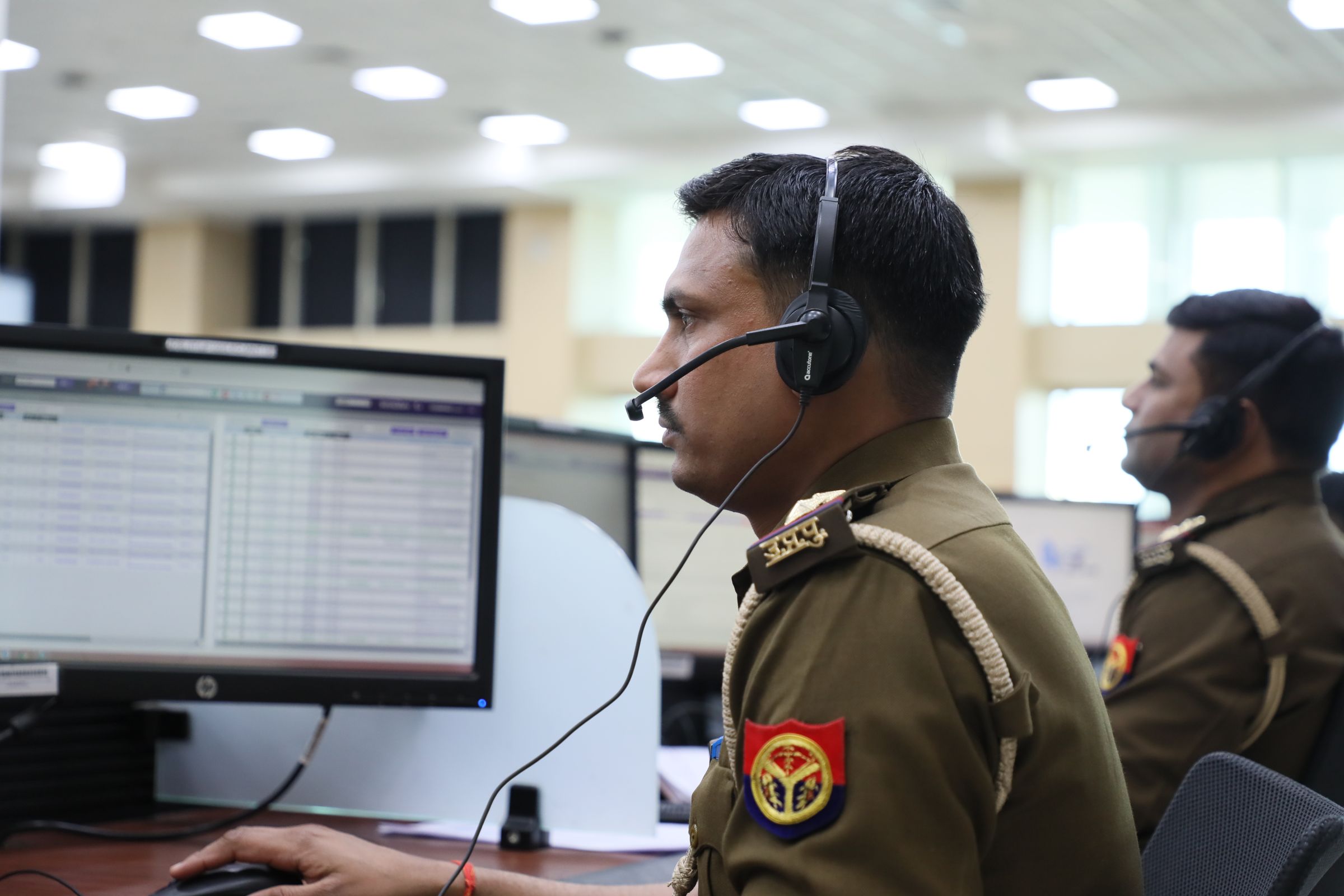
Uniformed dispatchers wearing headsets at computer screens in a large emergency call centre.
Recorded on the way to the incident. Read years later.

Step 1 of 5

Know which incident and patient records are already exposed

An adversary does not need a quantum computer to start on a blue-light service. It records encrypted radio, data and dispatch traffic now and reads it when one arrives. Emergency services hold two kinds of long-lived secret: the personal data of callers, patients, victims and witnesses, kept for years or decades under police and health retention rules, and the keys and identities of the network itself, which outlive every handset on it. A third exposure is sharper here than anywhere else. A forged dispatch, a spoofed group call or an injected status message during a live incident does its damage in minutes.

Emergency services records that must stay confidential beyond the post-quantum deadlines
Record typeHow long it is keptConfidential until, if created in 2026
Police records on serious offences and public protection matters (MoPI Group 1)Until the subject is deemed to have reached 100 years of age, reviewed every ten yearsThe 2090s for a subject in their thirties today
Children's health records, including ambulance patient records (NHS records codes, England and Wales)Until the 25th birthday, or the 26th if the patient was 17 when treatment ended2051 for a child born in 2026
Adult health records, including ambulance patient report forms8 years after the last contact; 20 years for mental health records2034, or 2046
ANPR read data in the National ANPR Service12 months nationally and 90 days locally, unless retained for an investigation2027; the live link matters more than the archive
TETRA and MCX network keys, radio identities and firmware signing keysThe life of the network; 2025 research found one network key shared across every algorithm a network supportsAirwave shutdown has no published date; ESN mobile services run to 2031

Durations from the College of Policing's Management of Police Information guidance, the Records Management Code of Practice for Health and Social Care 2022 (the England code sets the same periods), the National ANPR Standards, version 3.5, and Midnight Blue's 2025 TETRA research. Check the retention schedule your own force, service or trust publishes.

Where your exposure sits, and what you will know

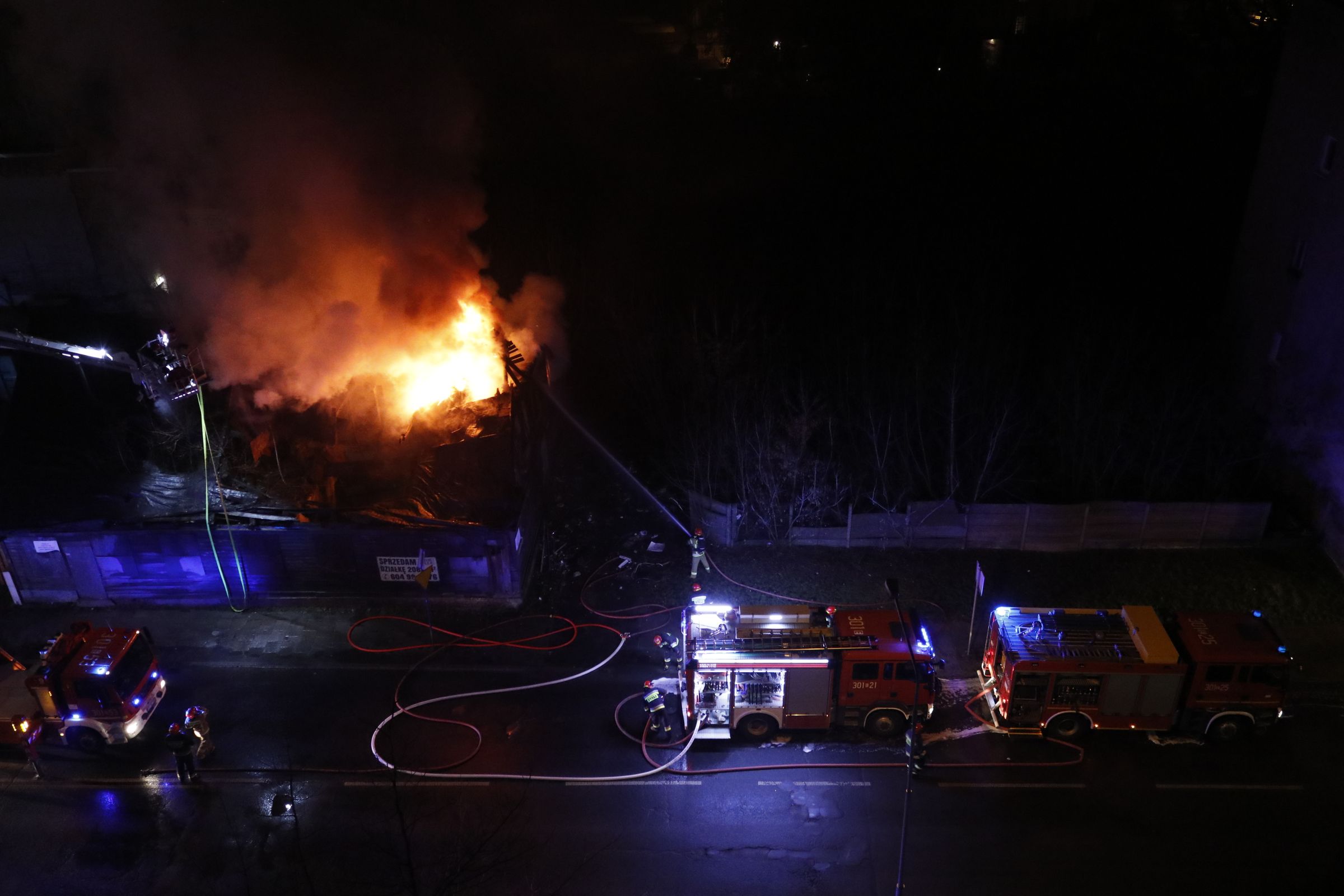
Fire engines parked on a street at night with hoses laid out, and a building burning behind them.

Control rooms and dispatch

CAD, 999 and 112 call handling, records systems and the links between them authenticate with public-key certificates and carry caller location, patient detail and intelligence in sessions that can be recorded today. Around 200 control rooms will sit on ESN in the UK alone.

You will know which dispatch, records and call-handling systems hold the longest-lived data, and which certificates and PKI roots need ML-DSA roadmaps first.

A paramedic in a white uniform holding a handheld radio inside an ambulance cab.

The networks: TETRA, LTE and 5G mission-critical

TETRA air interface encryption runs on 80-bit stream ciphers designed in the 1990s, and TEA1 was shown in 2023 to reduce to a key a laptop can brute-force. Mission-critical push-to-talk, video and data on LTE and 5G key with public-key cryptography under 3GPP TS 33.180. Nothing moves until both ends of a link and the national operator move.

You will know which keys, identities and inter-system interfaces depend on the national programme, the operator or the radio vendor, and what to ask each of them for.

A close-up of a police officer's hand holding the radio clipped to the chest of a dark uniform.

The field: handsets, body-worn devices, drones and vehicles

Body-worn video, ANPR cameras, drone command links and vehicle telematics sign and encrypt in firmware that is replaced on a five to ten year cycle. Evidence integrity rests on signatures a quantum computer will forge.

You will know which device fleets can take a new algorithm in firmware and which will be replaced before 2035 anyway, so the money goes where it changes the outcome.

Free readiness check

Score your service in two minutes

Eight questions mapped to what NIS2 and the CER Directive, the NCSC timeline, your national network programme and your authority or board will ask. You get a score, your top three priorities and the next step that closes your biggest gap. Nothing is sent anywhere.

Start the check
1Do you have a cryptographic inventory covering your control room systems, records systems, radio network interfaces and field devices?

The NCSC expects discovery complete and an initial migration plan by 2028. Nobody can prioritise TETRA, MCX or CAD without knowing which algorithm sits where.

2Have you mapped which records must stay confidential beyond 2030 against the algorithms protecting them today?

Public protection records are held until the subject is 100, children's health records to the 25th birthday. Traffic copied in 2026 and read in the 2030s falls well inside those windows.

3Do you know which TETRA algorithms your network runs, whether TEA1 is still enabled, and when the network keys were last rotated?

The 2025 research showed that a network key shared between TEA1 and a stronger cipher hands an attacker both. ETSI published every TETRA algorithm in February 2025, so the question will be asked.

4Have you asked your national network programme, operator and radio and control room vendors for their post-quantum roadmaps?

Mission-critical services only migrate when the network, the application server and the handset all do. CISA's January 2026 list still shows networking and radio hardware in transition.

5Is there a named owner and a budget line for post-quantum migration in your service?

Programmes without an owner stall at the inventory stage and miss the equipment replacement cycle.

6Has your chief officer team, authority or board been briefed on quantum risk in the last 12 months?

NIS2 makes management bodies approve and oversee cyber risk measures, and the CER Directive asked Member States to identify their critical entities by 17 July 2026.

7Do you know which neighbouring services, mutual aid partners and shared platforms your interoperability depends on, and where each stands?

Joint response runs on shared CAD, shared PKI and cross-border roaming. The slowest partner sets the pace.

8Could you change the algorithm in a fielded handset, body-worn camera or drone, including its firmware signing, without replacing it?

Crypto-agility decides whether the migration fits one replacement cycle or three.

Step 2 of 5

Know what NIS2, the CER Directive, the NCSC and your national network will expect, and when

  1. 2023

    The TETRA disclosures

    Midnight Blue publishes TETRA:BURST on 24 July: five vulnerabilities, including a TEA1 key that reduces to a trivially brute-forceable size. In November, ETSI's TETRA committee agrees to publish every air interface algorithm.

  2. 2025

    Standards and timelines land

    ETSI publishes TEA Set A and Set B in February. The NCSC sets 2028, 2031 and 2035 in March, and the EU roadmap follows in June. In August, 2TETRA:2BURST shows an end-to-end cipher reduced to 56 bits and one network key shared across algorithms.

  3. 2026

    Critical entities named

    CISA lists networking and radio hardware as still transitioning in January. Member States identify critical entities under the CER Directive by 17 July. The Commission proposes the EU Critical Communication System on 30 September, naming post-quantum encryption. NIST IR 8547 is final in October. National PQC roadmaps are due across the EU by the end of the year.

  4. 2028

    Discovery complete

    The NCSC milestone: discovery done, migration goals set, an initial plan in place and suppliers told what you need from them.

  5. 2030 to 2031

    Priority migration and the first EU interconnection

    EU high-risk use cases migrated by the end of 2030, and the first EUCCS stage starts on 1 December 2030. NIST deprecates RSA and ECC after 2030. The NCSC's highest-priority migration is complete by 2031, the year the ESN mobile services contract runs to.

  6. 2035 to 2036

    Everything else

    NIST disallows quantum-vulnerable algorithms in 2035. The NCSC timeline and the EU roadmap both end there. Every Member State is connected to EUCCS from 1 December 2036.

Key facts for emergency services, checked 30 October 2026

  • The Commission Recommendation of 11 April 2024 (C(2024) 2393) asks every Member State to adopt a national post-quantum strategy and to deploy post-quantum cryptography, hybrid where needed, across public administration systems and critical infrastructure. European Commission
  • The EU Coordinated Implementation Roadmap, published through the NIS Cooperation Group on 23 June 2025, asks Member States to start the transition and have national roadmaps in place by the end of 2026, to migrate high-risk use cases by the end of 2030 and as many systems as feasible by the end of 2035. European Commission
  • Securing Tomorrow, Today, the joint statement of cyber security agencies from EU Member States first issued in November 2024 and re-issued with further signatories in July 2025, treats the quantum threat as part of cyber security risk management now and calls for hybrid post-quantum deployment. BSI
  • The Critical Entities Resilience Directive (EU) 2022/2557 lists public administration among its eleven sectors, applies from 18 October 2024, and required Member States to adopt a national resilience strategy by 17 January 2026 and to identify their critical entities by 17 July 2026. European Commission
  • NIS2 had to be transposed by 17 October 2024 and covers public administration at central and regional level. Each Member State decides which regional bodies qualify and whether local bodies are added, and entities whose work is public security, defence or law enforcement can sit outside the Directive. European Commission
  • The Commission's proposal of 30 September 2026 for a Regulation establishing the European Union Critical Communication System, COM(2026) 1010, interconnects national critical communication systems in three stages starting on 1 December 2030, 2033 and 2036, names post-quantum encryption among the technologies the system should integrate, and estimates the EU-level cost at EUR 1.156 billion. Council of the European Union
  • Midnight Blue's TETRA:BURST, notified publicly on 24 July 2023 with the technical embargo lifted on 9 August, disclosed five vulnerabilities in the TETRA air interface, including CVE-2022-24402: a TEA1 algorithm whose 80-bit key reduces to a trivially brute-forceable size. Midnight Blue
  • 2TETRA:2BURST, presented at Black Hat USA on 7 August 2025, added CVE-2025-52941, an end-to-end encryption algorithm whose effective key drops from 128 to 56 bits, and CVE-2025-52943, a network key identical across every air interface algorithm a network supports, so a recovered TEA1 key exposes TEA2 or TEA3 traffic. Midnight Blue
  • ETSI published the TETRA encryption algorithms in February 2025: TS 104 053-1 specifies TEA Set A, the original TEA1 to TEA4, and TS 104 053-2 specifies TEA Set B, the 192-bit-key TEA5, TEA6 and TEA7 written to the Additional TETRA Encryption Algorithm Suite requirements. ETSI
  • The Home Office's Emergency Services Network page, updated 17 February 2025, counts more than 300,000 frontline users, 45,000 vehicles, over 90 aircraft and around 200 control rooms that will depend on ESN, with EE awarded the mobile infrastructure contract in December 2024 and IBM leading design, build and integration from January 2025. Home Office
  • The ESN summary business case of 27 July 2026, published 4 August 2026, puts the whole-life programme budget at GBP 19.1 billion to 2043/44 with GBP 6.1 billion spent, extends the EE/BT mobile services contract to 2031 and targets Airwave shutdown when it is safe to do so. It gives no date. Home Office
  • The NCSC's migration timelines, published 20 March 2025, ask organisations to complete discovery and an initial plan by 2028, finish the highest-priority migration by 2031 and complete migration by 2035, and name operators of critical national infrastructure as a primary audience. UK NCSC
  • CISA's product categories list of 23 January 2026 places networking hardware, such as routers, firewalls and switches, and telecommunications hardware, including radio, among the categories still transitioning to post-quantum cryptography, while cloud services, browsers and endpoint encryption already have PQC widely available. CISA
  • The final NIST IR 8547, published 27 October 2026, deprecates quantum-vulnerable public-key cryptography after 2030 and disallows it after 2035. NIST
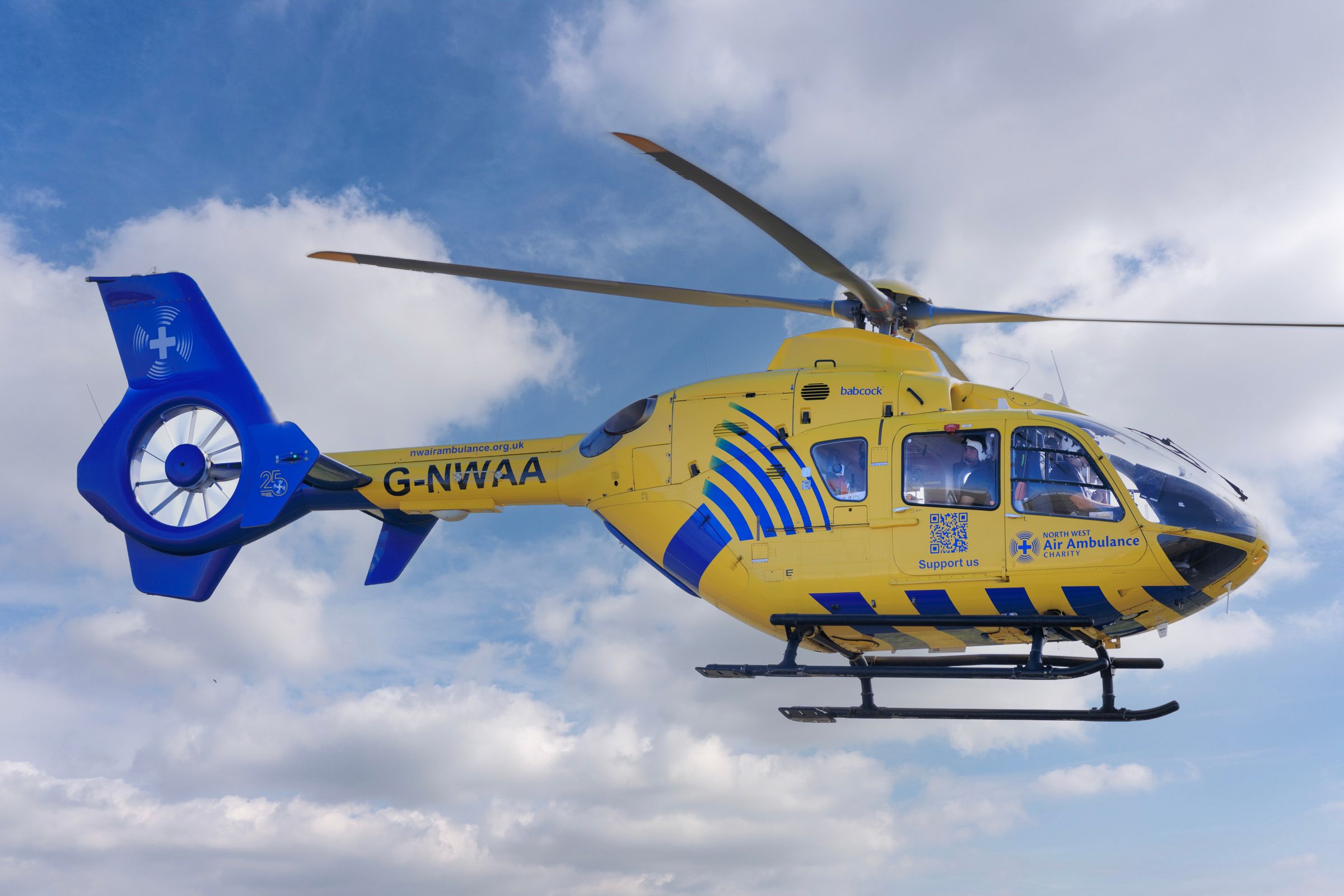
A yellow and blue air ambulance helicopter in flight against a sky with broken cloud.

The evidence you will be able to show

NCSC timeline

Discovery done before 2028

You show: A cryptographic inventory across control room, records, network interfaces and field devices, with migration goals and an initial plan.

NIS2 Article 21 and the CER Directive

Cryptography inside your risk management

You show: A policy on cryptography and encryption, a named migration lead and quantum cryptanalysis in the risk register your management body has approved.

ETSI TS 104 053 and 3GPP TS 33.180

Networks you can describe

You show: The algorithm set each network runs, TEA1 disabled, keys rotated, and the MCX key management roadmap from the national programme or operator.

Supplier roadmaps

Suppliers who have answered

You show: PQC roadmaps on file from the radio, control room, body-worn and drone vendors, with clauses in the next contract change.

Uniformed dispatchers wearing headsets at computer screens in a large emergency call centre.

UK services. Airwave still carries most blue-light voice while ESN is built. The July 2026 business case extends the EE/BT contract to 2031, sets no shutdown date and notes that the CMA charge control on Airwave ends in 2029, so plan on both networks running into the 2030s. The NCSC timeline sets the pace for everything else: discovery and a plan by 2028, highest-priority migration by 2031, complete by 2035. Police forces, fire and rescue authorities, ambulance trusts and the Secretary of State for maritime and coastal emergencies are Category 1 responders under the Civil Contingencies Act 2004. Read the NCSC position explained.

EU services: NIS2, the CER Directive and EUCCS

NIS2 applies to public administration entities of central government, to regional entities where a Member State's risk assessment says disruption would be significant, and to local bodies only where a Member State chooses. Entities working in public security, defence or law enforcement can be kept outside it, so a police force and an ambulance service in the same country may face different obligations. The CER Directive names public administration as one of eleven sectors and asked Member States to identify critical entities by 17 July 2026. The EUCCS proposal of 30 September 2026 names post-quantum encryption among the technologies the system should integrate, with interconnection in three stages from 1 December 2030; BroadWay, the Horizon 2020 pre-commercial procurement that ran from May 2018 to January 2023 with eleven buyers in eleven countries, proved the interoperable broadband model it builds on. Read the NIS2 analysis.

US services: FirstNet and CISA

FirstNet, created by the Middle Class Tax Relief and Job Creation Act of February 2012 with USD 7 billion and 20 MHz of Band 14 spectrum, carries public safety broadband in all 50 states, five territories and the District of Columbia. CISA is the Sector Risk Management Agency for the Emergency Services Sector, which covers law enforcement, fire and rescue, emergency medical services, emergency management and public works. CISA's January 2026 product categories list shows networking and radio hardware still transitioning to PQC, and NIST IR 8547, final in October 2026, deprecates RSA and ECC after 2030 and disallows them after 2035. CISA Emergency Services Sector

Suppliers of radios, control room systems and networks

ETSI published the TETRA algorithms in February 2025, so the question of which algorithm set a product runs now has a public answer. CISA's product categories list is the closest thing to a buyer's checklist for networking and telecommunications hardware. Expect NIS2 supply chain measures, ESN assurance and EUCCS accreditation to ask for PQC roadmaps on the record. Read the 5G vendor readiness analysis.

Public work in the sector

What the standards bodies, programmes and researchers have put on the record.

February 2025

ETSI TC TCCE

Publishes TS 104 053-1 and 104 053-2, the TETRA encryption algorithms TEA Set A and Set B, carrying out the November 2023 decision to open them.

Source: ETSI →
7 August 2025

Midnight Blue

Presents 2TETRA:2BURST at Black Hat USA: a weakened end-to-end cipher and a network key shared across air interface algorithms.

Source: Midnight Blue →
4 August 2026

Home Office

Publishes the 27 July 2026 ESN summary business case: GBP 19.1 billion whole-life, the EE/BT contract to 2031, Airwave shutdown when it is safe to do so.

Source: GOV.UK →
30 September 2026

European Commission

Proposes the EU Critical Communication System Regulation, with post-quantum encryption among the technologies to integrate and interconnection from 1 December 2030.

Source: Council of the European Union →

Step 3 of 5

Build a plan your chief officer team or authority can sign off in 90 days

By day 30

It has an owner and a scope

  • A PQC migration lead and an accountable sponsor on the chief officer team or authority.
  • Inventory scoped to control room and dispatch, records, the radio and MCX network interfaces and the device fleets.
  • Record types mapped to retention periods and to the algorithms in use today.
By day 60

You have the evidence

  • Discovery running and the cryptographic inventory started, with the TETRA algorithm set and key rotation confirmed.
  • A PQC questionnaire with the national network programme, the operator and every radio, control room, body-worn and drone vendor.
  • Interoperability dependencies on neighbouring services, mutual aid partners and shared platforms recorded.
By day 90

Your board has a plan to approve

  • Systems ranked by record lifetime, exposure and replacement cycle.
  • Hybrid ML-KEM piloted on one control room or records link, and crypto-agility tested on one device fleet.
  • A roadmap with 2028, 2031 and 2035 milestones, aligned to the national programme, ready for sign-off.
Who will deliver it? See step 4 →

The five numbers to show your chief officer team or authority

  1. Inventory coverageThe share of control room, records, network and field systems with a completed cryptographic inventory.
  2. Exposed recordsThe record types, and volumes, that stay confidential beyond 2030 and still sit behind RSA or ECC.
  3. Network statusWhich algorithm set each network runs, whether TEA1 is disabled and when the keys were last rotated.
  4. Supplier readinessHow many vendors, and the national programme, have a PQC roadmap on file.
  5. Plan statusBudget committed and milestones met against the 2028, 2031 and 2035 dates.

How to phase the spend, 2026 to 2035

  1. 2026Discover and ownLead, inventory, record-lifetime map, TETRA algorithm and key check and the supplier questionnaire, before the EU's end-2026 roadmap date.
  2. 2027 to 2028Contracts and pilotsPQC clauses in every radio, control room and device tender, hybrid pilots on one dispatch or records link, interoperability dependencies agreed with partners, discovery complete by 2028.
  3. 2029 to 2031Networks and priority systemsControl room PKI and records systems on ML-DSA and ML-KEM, MCX key management migrated with the national programme, EU high-risk use cases by the end of 2030, NCSC priority work by 2031.
  4. 2032 to 2035Complete the estateDevice fleets replaced or re-keyed on their natural cycle, legacy narrowband retired or ring-fenced, everything else before RSA and ECC are disallowed in 2035.

Dates from the NCSC timeline and the EU Coordinated Implementation Roadmap. Sequencing across police, fire and ambulance is the subject of our one-day Quantum-Safe Interoperability for Multi-Agency Response course. For budget ranges, see our PQC migration cost benchmarks.

Free tools to do it this quarter

Need help delivering the plan? Our expert members are peer-reviewed suppliers, integrators and advisers. Meet the expert members →

Step 4 of 5

Equip the people who will deliver it

A migration succeeds or stalls on people. Match each role, from the control room to the chief officer team, to the outcome you need from them.

For your programme lead

Your programme lead can run the migration to the 2028 and 2031 dates

  • Inventory and CBOM auditing for control room, records, network and device estates
  • Risk prioritisation by record lifetime, exposure and replacement cycle
  • Crypto-agile architecture and GRC integration for NIS2, CER and NCSC evidence
  • Supplier management and a tabletop exercise with your incident scenario

CPQCPM, Certified Post Quantum Cryptography Programme Manager. Ten hours live online over five weeks, small cohorts, delivered by Chris Basener of Argus Advisory and certified by QSECDEF. See the full course →

$1,450 a seat · $1,087.50 for members

QSECDEF training · CPQCPM

Watch the overview, then get the brochure, dates and costs

Your brochure, the next cohort dates and the costs are ready on the next page.

We use your email to send QSECDEF updates and news. See our privacy policy.

Chief officers, authority members and directors

Your leadership can challenge the plan, approve the budget and answer the inspectorate or the minister.

Certified Quantum Business Professional

Self-paced, no physics background. Covers PQC, policy and PQC risk and migration management.

Free first session · included in membership

Get Session 1 free
Security, IT and control room systems teams

Your teams understand the threat, the standards and the migration before they start.

Introduction to Quantum Cyber Security

Six modules, 4 to 5 hours, certificated.

Free first module · included in membership

Get Module 1 free
Communications engineers and network security leads

Your TETRA, MCPTT and 5G MCX estate has a migration path aligned to ESN, FirstNet or your national programme.

PQC Migration for Emergency Communications: TETRA, LTE, and 5G

Full day, 6 hours, professional level. Covers TETRA air interface encryption and the TEA algorithms, LTE MCPTT key management, 5G MCX security, ESN and FirstNet migration and the ETSI and 3GPP trajectory.

Dates and pricing on the course page

See the course
Fire engines parked on a street at night with hoses laid out, and a building burning behind them.

Training the whole service? Put everyone on one plan.

Team membership brings your chief officers, programme lead, control room and security teams up to speed together, tracks what each person has completed and certifies across the group. The courses above are included, plus 170+ expert lectures and the weekly call, and members pay less for CPQCPM.

See team membership

Step 5 of 5

Compare notes with peers working the same threat picture

A members-only structured Q&A for chief constables, chief fire officers, ambulance chief executives, heads of digital and communications and the senior officials of national public safety network programmes. It runs under the Chatham House Rule and is facilitated by Anna Beata Kalisz Hedegaard, Founder of QSECDEF.

  • Where TETRA and LTE critical communications stand against current quantum threat assessments, and what the 2023 and 2025 TETRA disclosures mean for risk modelling
  • Peer experience of engaging national network programmes and radio vendors on PQC: what to ask, and which answers to be sceptical of
  • Which NIS2, CER and national obligations apply to a blue-light service, and on what enforcement timeline
  • How to make the communications security case to elected officials, authority members and police and crime commissioners who hold the budget
  • Where multi-agency interoperability depends on synchronised migration across police, fire and ambulance, and where it is misaligned today
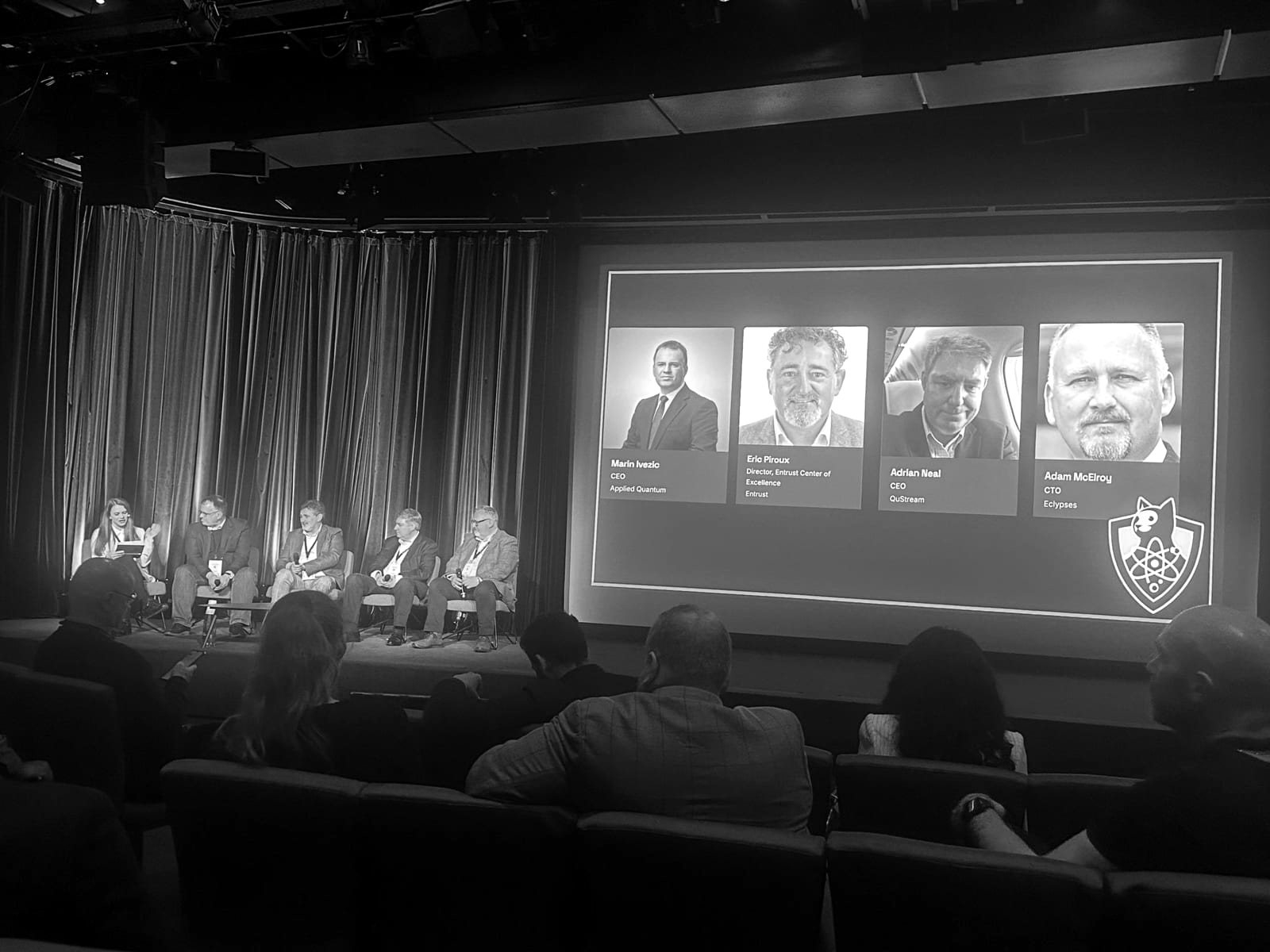
A QSECDEF symposium panel on stage in front of an audience
Practitioner panels, on the record
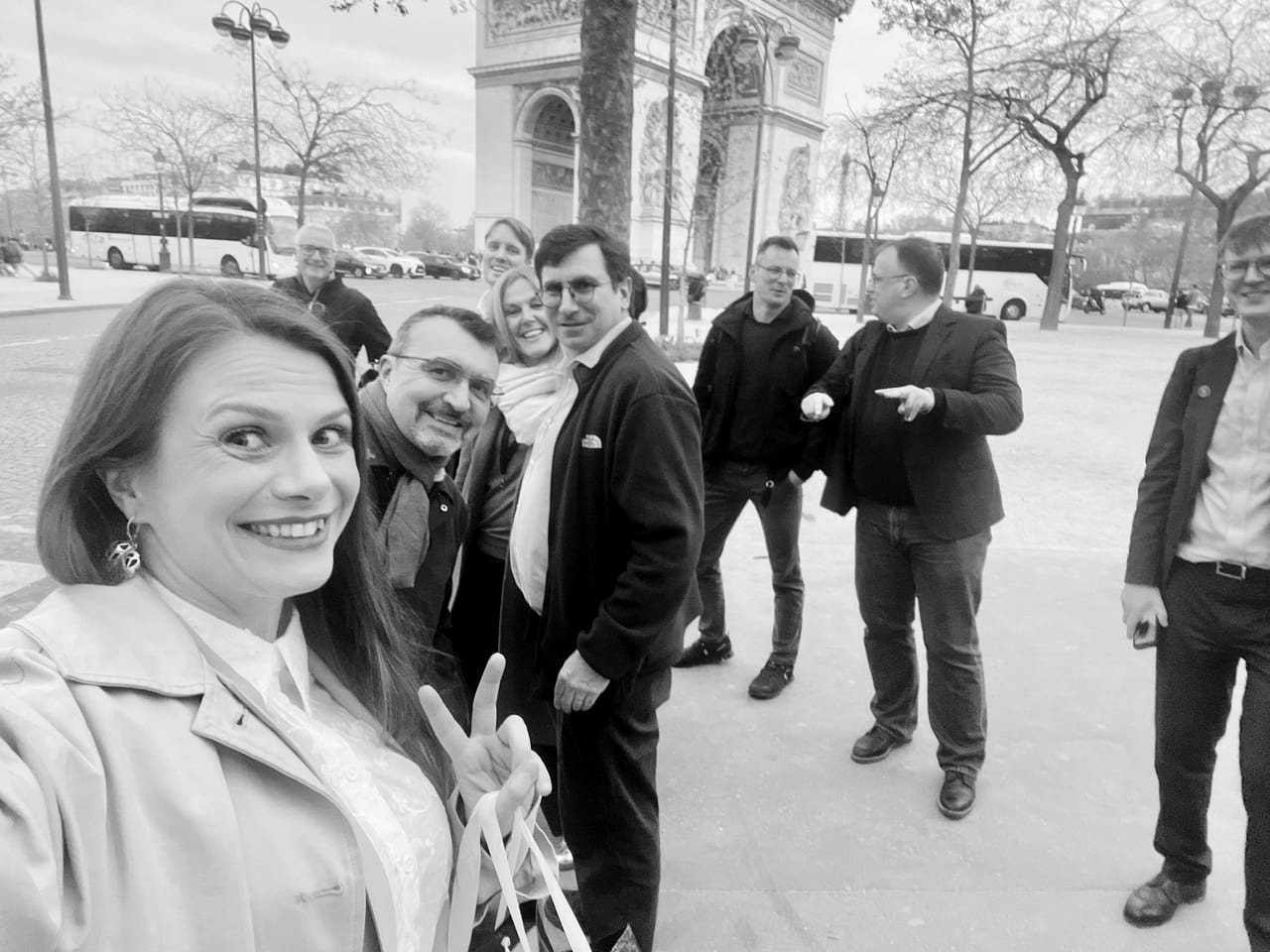
QSECDEF members and speakers together outside the Arc de Triomphe in Paris
Peers you can call afterwards
Panellists in discussion at a QSECDEF symposium
Questions taken from the floor
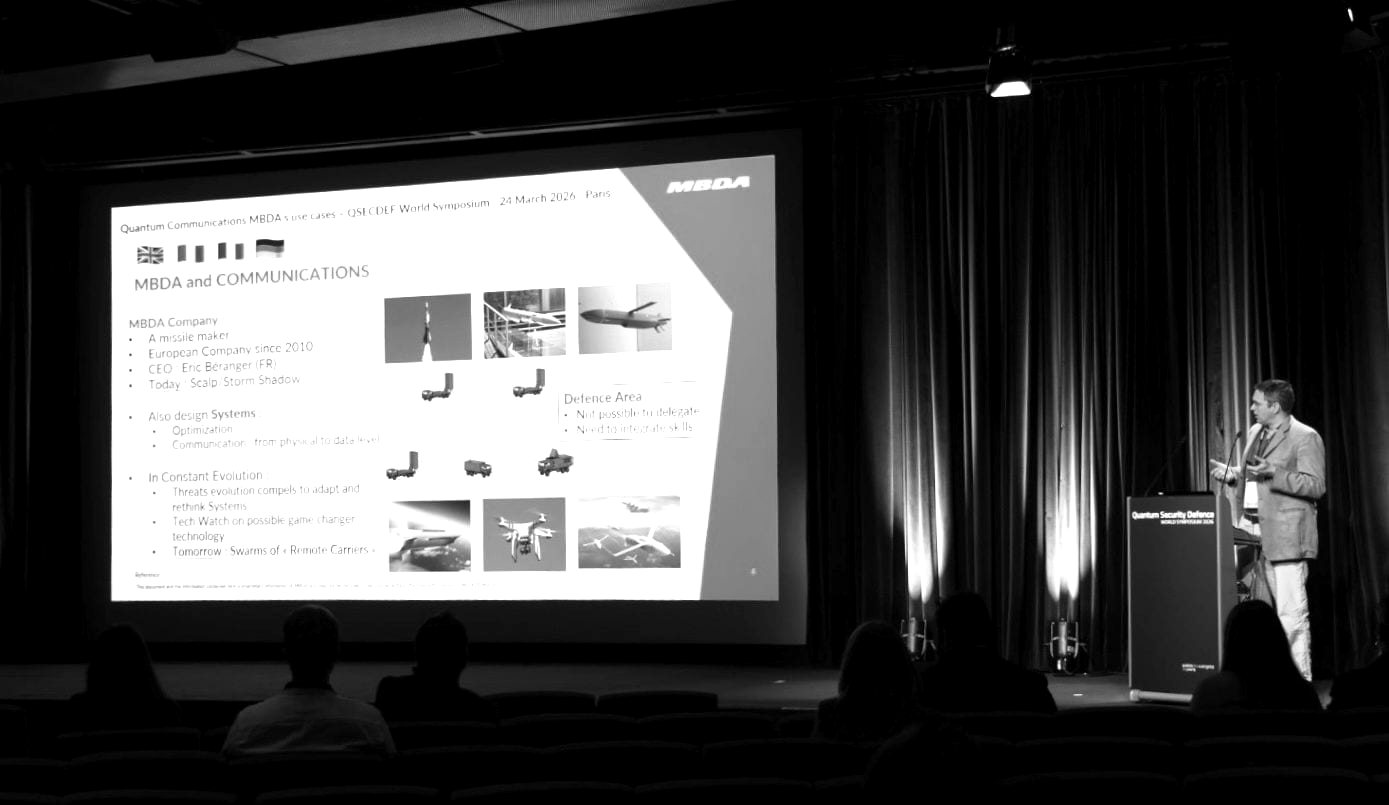
A speaker presenting slides at the QSECDEF World Symposium
Briefings on what is changing
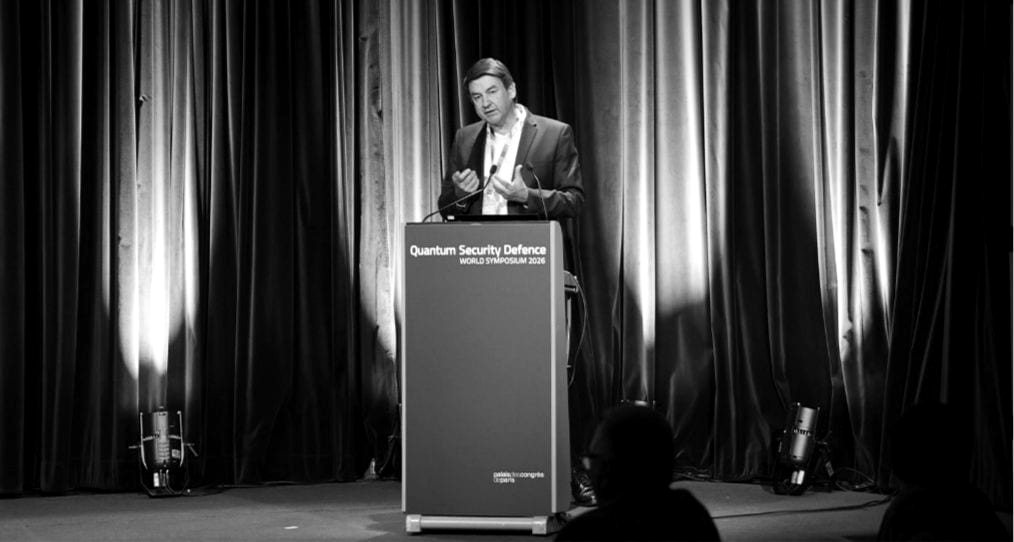
A keynote speaker at the QSECDEF World Symposium lectern
QSECDEF World Symposium, Paris

Lectures from people doing this work

Practitioner lectures from the QSECDEF library that matter most to emergency services: quantum security for 5G and mission-critical networks, PQC in private networking, resilient timing, and national quantum-secured infrastructure.

Browse all expert lectures

Expert contributors represent leading organisations worldwide

Airbus Central R&T
Aireon
Airesatech
Ait
Appliedquantum
Arise Innovations
Arobs
Arqit
Asc Csa
Atlant3D
Bank of Ireland
Barak Azar
Basener Consulting
BHO Legal
Bitcoinqs
Bloq
Buckingham
CloudTech Group
Coherent Computing
Creotech
Cryptalabs
CyberProtonics
Cysec
Cystel
Deimos Space
Department of Digitalization
Dhbw
Dlr
Eclypses
Elpromaelectronics
Engineering
Enluzstrategy
Entrokey Labs
Eptalent
ESA
Esa
Euc
EXATEL
Finqbit
Fraunhofer
Georgetown
GQI
Helix Ft
Ibm
Idquantique
Jagiellonian University
Jos Quantum
Kets Quantum
Kit
Krown Technologies
Kwantumg
Lightriderinc
Linkedin
Lnu
Mbda Systems
Meetiqm
Merqury
Metrosert
Molket
Nicolaus Copernicus University in Torun
Nokia
Orcacomputing
Osi
Pantherun
Patero
Photonics Foundry
Q Ctrl
Qryptocyber
Qssys
Qticompany
Qtlabs
Quandela
Quant X Sec
Quant.Bond
Quantivate
Quantum Computing Inc
Quantum Dice
Quantumbrilliance
Quantumprime
Quantzen
Qubridge
Qudef
Quranium
Qustream
Reddixgroup
Slater Technologies
Smartcyber Group
Smoad
Sparkle
Swiss Financial Innovation Desk
Technology Innovation Institute (TII)
Thequantuminsider
Tobias Heindel
Tu Braunschweig
University College London
University of Bremen
University of Pisa
Venari Security
Veriqloud
Viavisolutions
Vodafone
Welinq
Wizzwang
Xairos
Youtube
Quside
QIZ
Global Quantum Intelligence
HYPATIA Smart Technologies
SAS
Triarii Research

Expert Membership

Builders, consultancies and technology vendors serving emergency services: talk to us

Expert membership brings you into an open community working across sectors, opening up industry conversations, knowledge and access to experts. If you are building technology or consulting capabilities in this sector relevant to Quantum or Advanced AI, we want to hear from you.

  • Access to all Industry Conversations
  • Speaker opportunities at the annual Paris Symposium
  • Enhanced expert profile with lecture archive
  • Co-branding opportunities and social amplification
  • 25% off partner training and events

Everything you need, in one place

Our analysis and programmes for emergency services

Policy and mandates

Questions leaders ask

What did TETRA:BURST and 2TETRA:2BURST find?

TETRA:BURST, published by Midnight Blue on 24 July 2023, disclosed five vulnerabilities in the TETRA air interface. The critical ones were CVE-2022-24402, a TEA1 algorithm whose 80-bit key reduces to a size that can be brute-forced in minutes on commodity hardware, and CVE-2022-24401, a keystream generator that relies on unauthenticated network time and allows decryption oracle attacks. 2TETRA:2BURST, presented at Black Hat USA on 7 August 2025, moved to end-to-end encryption and key management: CVE-2025-52941, an end-to-end algorithm whose effective key drops from 128 to 56 bits, CVE-2025-52943, a network key identical across every air interface algorithm a network supports, and CVE-2025-52944, message injection even with authentication enabled. None of this needed a quantum computer. It shows how long a weakness can sit inside a public safety network before anyone outside the vendors can look.

Has ETSI fixed TETRA, and are TEA5, TEA6 and TEA7 quantum-safe?

ETSI's TETRA committee agreed in November 2023 to publish every air interface algorithm, and did so in February 2025: TS 104 053-1 for TEA Set A, the original TEA1 to TEA4, and TS 104 053-2 for TEA Set B, the TEA5, TEA6 and TEA7 ciphers with 192-bit keys. Symmetric ciphers with 192-bit keys are not the part of the stack a quantum computer breaks first. The exposure is in everything that authenticates and distributes keys, in the IP links between sites and systems, and in a network that still has TEA1 enabled alongside a stronger cipher. Ask your vendor and your national programme which set your network runs, with the published specifications in hand.

Does NIS2 apply to police, fire and ambulance services?

It depends on how your Member State drew the lines. NIS2 covers public administration entities of central government, regional entities that a Member State's risk assessment identifies as significant, and local bodies only where a Member State opts them in. Entities whose activities are in national security, public security, defence or law enforcement can be excluded. In practice an ambulance service may be a health sector entity under Annex I while the police force next door sits outside NIS2 and inside national law enforcement rules instead. Whichever applies, Article 21 asks for policies on cryptography and encryption, and Article 20 puts the management body in charge of approving and overseeing them. The Directive had to be transposed by 17 October 2024.

What does the Critical Entities Resilience Directive change for emergency services?

The CER Directive (EU) 2022/2557 names public administration among its eleven sectors, alongside health, digital infrastructure, transport, energy and space. It applies from 18 October 2024, asked Member States to adopt a national resilience strategy by 17 January 2026 and to identify their critical entities by 17 July 2026. An identified critical entity must assess its risks and take resilience measures across physical and cyber dependencies. If your service or the network it depends on has been named, the dependency on cryptography that a quantum computer will break belongs in that assessment.

Where does the UK Emergency Services Network stand?

The Home Office page updated in February 2025 counts more than 300,000 frontline users, 45,000 vehicles, over 90 aircraft and around 200 control rooms that will depend on ESN. EE was awarded the mobile infrastructure contract in December 2024 and IBM leads design, build and integration from January 2025. The summary business case of 27 July 2026 puts the whole-life budget at GBP 19.1 billion to 2043/44 with GBP 6.1 billion spent, extends the EE/BT contract to 2031 and targets Airwave shutdown when it is safe to do so, without naming a year. Plan for TETRA and mission-critical LTE running side by side into the 2030s, and ask the programme how post-quantum key management fits the ESN releases.

Is mission-critical push-to-talk on LTE and 5G quantum-safe?

Not yet. 3GPP standardised MCPTT in Release 13 in 2016 and MCVideo and MCData in Release 14, with security in TS 33.180. Those services establish identity and keys with public-key cryptography, which is exactly what a cryptographically relevant quantum computer breaks. The 3GPP security groups are working on post-quantum options for the 5G system, and CISA's January 2026 product categories list still places networking and radio hardware among the categories in transition. The migration will come from the national network operator and the application vendors; your job is to know your dependencies and ask for dates.

Why does harvest now, decrypt later matter for a blue-light service?

Because the data lives longer than the algorithm. Police records on serious offences and public protection matters are retained until the subject is deemed to be 100. Children's health records, including the ambulance patient record, are kept to the 25th birthday. Investigation and intelligence material identifies victims, witnesses, informants and officers for a lifetime. Traffic recorded in 2026 and read in the 2030s lands well inside those windows. The National ANPR Service, by contrast, deletes reads after 12 months, which is a reminder that the live link, not just the archive, is what an adversary records.

Where should an emergency service start?

With four things. A cryptographic inventory of control room and dispatch systems, records systems, the interfaces to the radio and MCX networks and the device fleets. A map of which records must stay confidential beyond 2030 against the algorithms protecting them. Confirmation of which TETRA algorithm set the network runs, whether TEA1 is disabled and when the keys were last rotated. And roadmaps requested from the national programme, the operator and every radio, control room, body-worn and drone vendor. Those four give the chief officer team or authority the evidence to set priorities.

Is quantum key distribution an option for control room backbones?

Possibly for a fixed fibre link between two sites, and several of our lectures cover national QKD networks. It does not authenticate, does not sign firmware or evidence, and does not run on a handset, a body-worn camera or a drone. The NCSC and the EU roadmap both point to post-quantum algorithms as the baseline. Treat QKD as a complement for one high-assurance link, not a substitute for the migration, and run the QKD Network Readiness Qualifier before anyone writes it into a tender.

What does QSECDEF offer police, fire and ambulance services for free?

Everything on this page. The two-minute readiness check scores your service and routes you to the right next step. The free tools, including the HNDL Risk Calculator and the Third-Party Cryptographic Exposure Model, run in your browser with no registration. The weekly peer call runs every Tuesday at 15:00 CET and is open to anyone. Sample lectures from the 170-plus expert library are linked above, and the page is reviewed as the mandates change; the date beside the key facts is the last check.

Which QSECDEF course should an emergency services team take first?

It depends on the role. Chief officers, authority members and directors start with the Certified Quantum Business Professional bootcamp, about 22 hours self-paced across ten modules. Security, IT and control room systems teams take Introduction to Quantum Cyber Security, four to five hours online with a QSECDEF certificate. Communications engineers and network security leads take PQC Migration for Emergency Communications: TETRA, LTE, and 5G, the sector course for TETRA, MCPTT and 5G MCX. Whoever will run the migration takes CPQCPM, the Certified Post Quantum Cryptography Programme Manager course: ten hours live online over five weeks, with the next public cohort in January 2027.

Can QSECDEF run private training or a workshop for our service, programme or supplier?

Yes. QSECDEF runs private CPQCPM cohorts for a single organisation, live online or in person, and private deliveries of the sector courses listed under Equip your people for your communications and control room teams. Board and leadership workshops are built on your own exposure and obligations and end with an agreed position on quantum risk. Use the contact button in the For your organisation section and tell us your timeline.

How do we find vetted suppliers or consultants for an emergency services PQC migration?

Through the QSECDEF Expert Members directory. Every listed member has been vetted, has signed the Members' Charter and has presented to the community. You can filter by consulting and services, technology vendor or enablement and investment, and send a request for further information from the member's own page. QSECDEF is vendor-neutral and sells training, not migration products, so the shortlist stays yours.

Is QSECDEF membership relevant to a police, fire or ambulance service?

Two routes. QSECDEF membership gives your team the self-paced courses, the full lecture archive, the weekly call and 25 per cent off CPQCPM and partner training. Expert Membership is for the builders, consultancies and technology vendors serving emergency services who want to be found by the people reading this page; it includes a showcase listing with an enquiry form, the Industry Conversations and speaking slots at the annual QSECDEF symposium.

Is QSECDEF selling a migration product?

No. QSECDEF is a vendor-neutral membership network. We train people and connect them with peers and peer-reviewed experts; we do not sell migration software or services.

How much time does the training take?

CPQCPM is ten hours of live instruction over five weeks, two hours a week. The Quantum Cyber Security course is 4 to 5 hours, self-paced. The business bootcamp is self-paced at your own speed. The emergency services courses are one-day workshops of six hours, listed with their formats on the training pages.

Ask a practitioner, live

The free weekly call runs every Tuesday at 15:00 CET. Bring your question.

Join the Tuesday call →
Hands holding pencils over engineering drawings and sticky notes on a wooden table, seen from above.

For your organisation

Need it built around your service, your control rooms or your network?

When your chief officer team, your authority or your national programme needs something specific, we shape the workshop, the training or the engagement around your systems, your retention rules and your equipment cycle. Independent of any vendor.

Custom workshops

Your leadership leaves with an agreed position on quantum risk

In-person sessions for police, fire, ambulance and national network programmes covering TETRA, LTE and 5G migration, dispatch and control room security, multi-agency interoperability, drone and autonomous systems security and quantum optimisation for resource deployment, drawn from the emergency services workshop programme.

Private training

Your whole programme team trained on one plan

Private CPQCPM cohorts, live online or in person for your required delegates, with team membership for the self-paced courses.

Consulting

A migration programme specified and staffed correctly

Cryptographic inventory, PQC migration planning, supplier review and specialist teams sourced from 1,500+ members across 900+ organisations.

Prefer email? Write to info@qsecdef.com and tell us about your timeline.

Photos: Pexels (Mikhail Nilov, 112 Uttar Pradesh, Przemysław Cyruliński, Kindel Media, john mckenna, Maël BALLAND, Anna Shvets) and QSECDEF, converted to black and white or brand duotone.