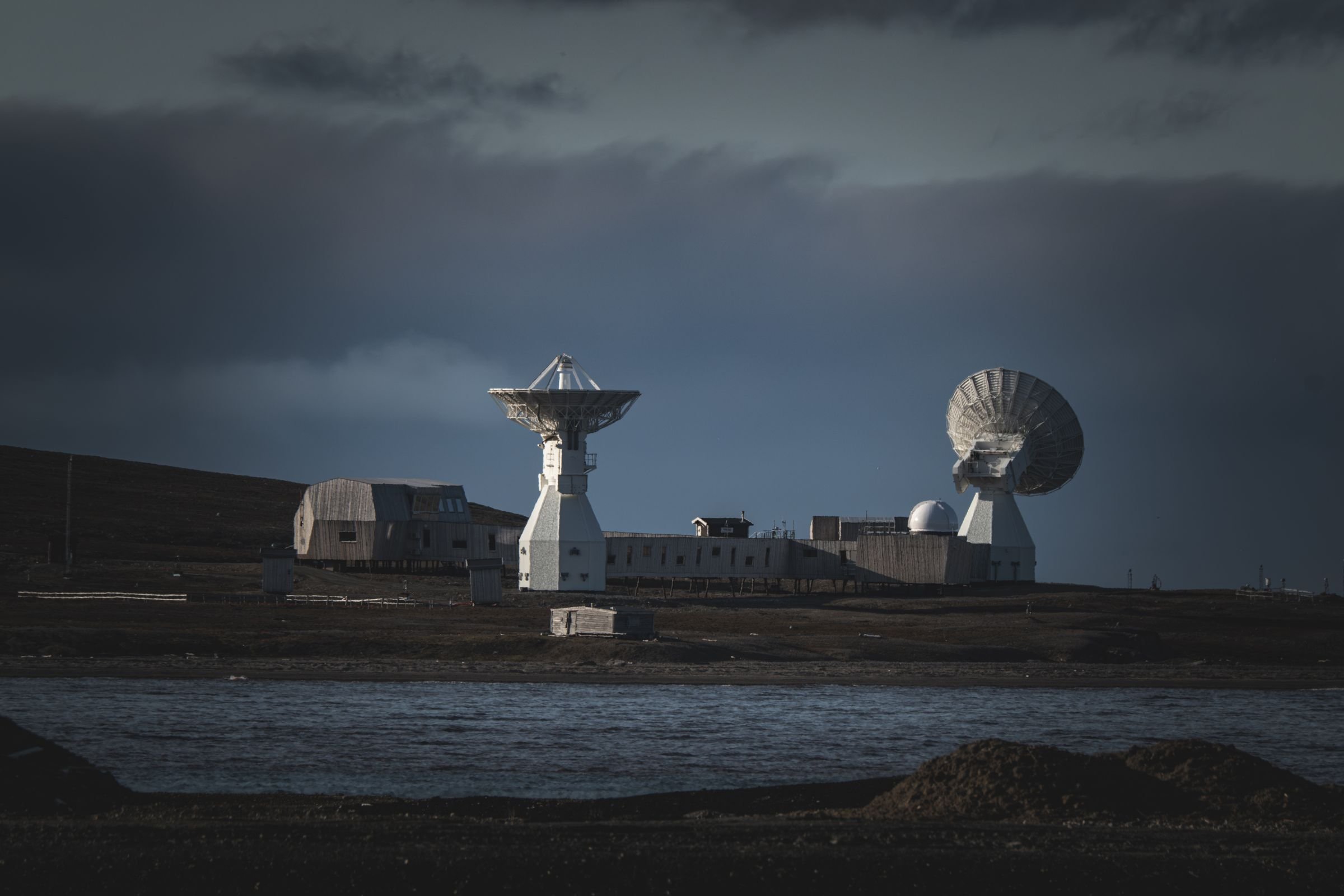
Satellite ground station dishes under a dark night sky

For defence CISOs, programme security leads, prime and sub-tier supplier security teams and national security technical leads

Quantum risk in defence and national security

Be ready when the programme board, the National Manager or your prime asks.

In fifteen minutes you will know which classified and controlled data is already exposed to harvest now, decrypt later collection, which CNSA 2.0 dates have passed and which are next, what flows down to your suppliers, and the first 90 days of a plan your accountable owner can sign.

  • Your exposure, data lifetime by data lifetime
  • The CNSA 2.0 dates that apply to each system
  • A plan the SRO or programme board can approve
  • The right training for each role
1,500+
professional members
900+
organisations represented
40+
countries
Vendor-neutral
based on evidence, not hype

Proud to recommend our expert members

Qrypto Cyber
Eclypses
Arqit
QuantBond
Krown
Applied Quantum
Quantum Bitcoin
Venari Security
QuStream
BHO Legal
Census
QSP
IONQ - ID Quantique
Patero
Entopya
Belden
Atlant3D
Zenith Studio
Qudef
Aries Partners
GQI
Upperside Conferences
Austrade
Arrise Innovations
CyberRST
Triarii Research
QSysteme
WizzWang
DeepTech DAO
Xyberteq
Viavi
Entrust
Qsentinel
Nokia
Gopher Security
Quside
QIZ
Global Quantum Intelligence
Two radar domes on a rocky hillside at twilight
Collected today. Read later.

Step 1 of 5

Know which classified data is already exposed

A hostile service does not need a quantum computer to start. It records your encrypted traffic now and reads it when one arrives. Defence is the sector where that gap bites hardest: a classified record created in 2026 may need to stay secret for 25, 50 or 75 years, and a weapon system fielded this decade will still be flying, sailing or driving in the 2050s. If the data outlives the algorithm protecting it, it is exposed already.

Defence and national security data that must stay confidential beyond the post-quantum deadlines
Data typeHow long it stays sensitiveConfidential until, if created in 2026
Classified records, US (EO 13526 section 3.3)Automatic declassification at 25 years; agency exemptions to 50 years2051, or 2076 if exempted
Human source and WMD design information (EO 13526 section 3.3(h))Exempt beyond 50 years; up to 75 with ISCAP approval2076 to 2101
Information that would impair cryptologic systems or SIGINT methodsExempt from the 25-year rule (EO 13526 section 3.3(b))Beyond 2051
UK departmental records, including security and intelligence files (Public Records Act 1958 section 3(4))Transfer at 20 years, retained longer with Secretary of State approval2046, often far later
Platform and weapon system technical dataThe platform's service life, often 30 years or more2056+

Durations from Executive Order 13526 and the Public Records Act 1958. Platform lives are typical, not statutory. Map your own classification guides and retention schedules.

Featured video

STO Summer School: Dual-use quantum technologies

ChannelNATO Science & Technology Organization

We are delighted to collaborate and share our knowledge with STO Summer School on Dual-use quantum technologies. Play the video to find out more.

Pressing play loads the video from YouTube in privacy-enhanced mode.

Where your exposure sits, and what you will know

An operator seated at a wall of screens in a dimly lit control room

C2 and secure communications

Command and control, SATCOM and tactical data links authenticate and key with public-key cryptography. Collection against them is routine, and nothing moves until both ends of a link move.

You will know which links depend on an ally, a coalition partner or a vendor's timeline, and what to ask them for.

A fighter jet parked inside an arched hangar

Primes and the supply chain

CNSA 2.0 reaches the sub-tier through firmware signing, PKI and the products primes buy. Most sub-tier suppliers have not been told.

You will know which contracts and product categories carry a CNSA 2.0 date, and what flow-down your primes will ask for.

An array of large satellite dishes in a green field

PNT and sensing

Positioning, navigation and timing relies on signals that can be denied or spoofed, and quantum sensing changes what an adversary can detect. The same technology family that threatens your cryptography is being fielded as a sensor.

You will know where quantum-safe cryptography protects your PNT and sensor feeds, and where only the physics changes the picture.

Free readiness check

Score your programme in two minutes

Eight questions mapped to what the CNSA 2.0 timeline, your programme board and your prime will ask. You get a score, your top three priorities and the next step that closes your biggest gap. Nothing is sent anywhere.

Start the check
1Do you have a cryptographic inventory for your national security systems and the systems that hold controlled or classified data?

CNSA 2.0 planning starts from knowing which algorithm sits in which product, and Executive Order 14412 orders CISA to define a cryptographic bill of materials.

2Have you placed every system in its CNSA 2.0 product category, with its support-and-prefer and exclusive-use dates?

Software and firmware signing, web and cloud were due to prefer CNSA 2.0 by 2025. Networking equipment is due in 2026. The dates differ by category.

3Have you mapped which data must stay secret beyond 2030 against the algorithms protecting it today?

Classified records with 25-year or longer protection periods are exposed now to harvest now, decrypt later collection.

4Have you asked your primes or sub-tier suppliers for their CNSA 2.0 and PQC roadmaps, and put flow-down in contracts?

Most sub-tier suppliers have not been told what CNSA 2.0 means for their products. The gap surfaces at acceptance, not at award.

5Is there a named owner and a budget line for post-quantum migration?

Programmes without an owner stall at the inventory stage and miss the acquisition cycle.

6Has the accountable owner, SRO or programme board been briefed on quantum risk in the last 12 months?

Under UK Secure by Design the SRO is accountable for cyber secure outcomes through the capability's life. US agencies had 30 days from June 2026 to name a PQC migration lead.

7Do you know where the other end of each C2, SATCOM and coalition link stands on PQC?

Secure communications only migrate when both ends do. Allied interoperability sets the pace, not your own roadmap.

8Could you change the algorithm in a fielded system, including its firmware signing, without re-engineering it?

Crypto-agility decides whether migration fits one upgrade cycle or three.

Step 2 of 5

Know what the EU roadmap, CNSA 2.0, NATO and your prime will expect, and when

  1. 2022

    The clock starts

    NSM-10 sets 2035 as the US target. NSA publishes CNSA 2.0 in September with the algorithms and dates.

  2. 2025

    First dates pass

    Software and firmware signing, web browsers and servers and cloud services should support and prefer CNSA 2.0. The UK NCSC publishes its timeline in March and the EU its coordinated PQC roadmap in June.

  3. 2027

    New acquisitions comply

    EU Member States should have national PQC roadmaps and their first transition steps in place by the end of 2026. From 2027, operating systems should prefer CNSA 2.0 and new US national security system acquisitions must be CNSA 2.0 compliant.

  4. 2030

    Signing and networking exclusive

    EU high-risk use cases, including critical infrastructure, migrated by the end of 2030. Software and firmware signing and traditional networking equipment use CNSA 2.0 only. US high value assets use PQC key establishment. NIST deprecates RSA and ECC.

  5. 2033

    The rest exclusive

    Web, cloud, operating systems, niche equipment and custom or legacy applications on CNSA 2.0 only.

  6. 2035

    RSA and ECC disallowed

    NSM-10 completion target. NIST disallows quantum-vulnerable algorithms. The UK NCSC timeline and the EU roadmap, with as many systems as feasible migrated, both end here.

Key facts for defence and national security, checked 30 October 2026

  • The Commission Recommendation of 11 April 2024 (C(2024) 2393) asks every Member State to adopt a national post-quantum strategy and to deploy post-quantum cryptography, hybrid where needed, across public administration systems and critical infrastructure. European Commission
  • The EU Coordinated Implementation Roadmap, published through the NIS Cooperation Group on 23 June 2025, asks Member States to start the transition and have national roadmaps in place by the end of 2026, to migrate high-risk use cases by the end of 2030 and as many systems as feasible by the end of 2035. European Commission
  • Securing Tomorrow, Today, the joint statement of cyber security agencies from EU Member States first issued in November 2024 and re-issued with further signatories in July 2025, treats the quantum threat as part of cyber security risk management now and calls for hybrid post-quantum deployment. BSI
  • CNSA 2.0, published by NSA in September 2022, names ML-KEM-1024, ML-DSA-87, LMS and XMSS for signing, AES-256 and SHA-384 or SHA-512 for national security systems. NSA
  • The CNSA 2.0 FAQ sets exclusive-use dates of 2030 for software and firmware signing and traditional networking equipment, and 2033 for web, cloud, operating systems, niche equipment and custom or legacy applications. NSA
  • NSM-10 of 4 May 2022 set the goal of mitigating as much quantum risk as feasible by 2035 and made the NSA Director, as National Manager, responsible for migration guidance and a deprecation timeline for national security systems. The White House
  • Executive Order 14412 of 22 June 2026 requires PQC key establishment on federal high value assets by 31 December 2030 and PQC signatures by 31 December 2031, and orders a proposed FAR rule requiring contractors to meet PQC-compliant FIPS by 31 December 2030. GovInfo
  • The final NIST IR 8547, published 27 October 2026, deprecates quantum-vulnerable public-key cryptography after 2030 and disallows it after 2035, and says that window does not alter the earlier deadlines for high value assets. NIST
  • The CMMC programme rule (32 CFR Part 170) took effect on 16 December 2024 and the DFARS acquisition rule on 10 November 2025, phasing CMMC into DoD contracts from that date. Federal Register
  • NATO's Quantum Technology Roadmap of 29 September 2026 lists the adoption of post-quantum cryptography standards as ongoing, schedules the Quantum Zero Beacon pilot between NATO HQ and SHAPE for Q4 2027, an industry readiness study for quantum-resistant cryptography for Q2 2027 and a refreshed action plan on the quantum threat to cryptography for Q3 2027. NATO
  • UK MOD Industry Security Notice 2023/09 of 21 July 2023 applies Secure by Design to networks, platforms and weapon systems, makes the SRO accountable for cyber secure outcomes and makes supply chain management one of its seven principles. UK MOD
A naval frigate at sea with a helicopter hovering alongside

The evidence you will be able to show

CNSA 2.0 FAQ

Every system in its product category

You show: A register that maps each system and product to its CNSA 2.0 category, with the dates that have passed and the dates that are next.

EU roadmap, NSM-10 and EO 14412

A named migration lead and a plan

You show: A PQC migration lead, a cryptographic inventory and a transition plan with the EU's end-2026 and 2030 milestones and the US 2030 and 2031 milestones for the most sensitive systems.

CMMC and DFARS

Suppliers who have answered

You show: CNSA 2.0 and PQC roadmaps on file from each prime or sub-tier supplier, and flow-down clauses in the contracts that matter.

Secure by Design, ISN 2023/09

An SRO who owns the risk

You show: Quantum cryptanalysis in the capability's risk register, with an accountable owner and a through-life plan.

A fighter jet parked inside an arched hangar

UK defence. Secure by Design has applied to new MOD projects since ISN 2023/09 in July 2023, and it names the SRO as accountable for cyber secure outcomes through the capability's life. Suppliers are assured through the Cyber Security Model and Def Stan 05-138, now at Issue 4. The NCSC timeline sets the pace: discovery and a plan by 2028, highest-priority migration by 2031, complete by 2035. Read the NCSC position explained.

US defence contractors: CMMC and the FAR

CMMC Level 2 assesses you against NIST SP 800-171; it does not yet grade your post-quantum progress. Executive Order 14412 changes the direction of travel by ordering a proposed FAR rule that would require contractors to meet PQC-compliant FIPS by 31 December 2030. Treat the CBOM you build for CNSA 2.0 as the evidence that rule will ask for. Read the CMMC readiness analysis.

NATO and allied interoperability

NATO's 2024 strategy commits the Alliance to quantum-safe cryptography and to research into the transition across air, space, cyber, land and maritime domains. For a national programme that means coalition links migrate on the slowest ally's schedule unless the dependency is named early. NATO

EU suppliers: the roadmap, national agencies and NIS2

The EU's coordinated roadmap of June 2025 asks every Member State to have a national PQC plan by the end of 2026 and to migrate high-risk use cases by the end of 2030. National agencies are ahead of it: BSI's TR-02102-1 and ANSSI's position paper both call for hybrid post-quantum schemes, and ANSSI requires hybrid constructions for the security visas it issues during the transition. NIS2 does not apply to public administration entities working in national security or defence, but a defence supplier that is also an essential or important entity in an Annex I or II sector, such as manufacturing or digital infrastructure, owes the Article 21 cryptography and encryption measures in its own right. Read the NIS2 analysis.

Step 3 of 5

Build a plan your SRO or programme board can sign off in 90 days

By day 30

It has an owner and a scope

  • A PQC migration lead and an accountable sponsor on the programme board.
  • Inventory scoped to C2, secure communications, firmware signing and systems holding classified or controlled data.
  • Data types mapped to protection periods and to the algorithms in use today.
By day 60

You have the evidence

  • Discovery running and the cryptographic inventory started, with CNSA 2.0 categories assigned.
  • A CNSA 2.0 and PQC questionnaire with every prime, sub-tier supplier and link provider.
  • Interoperability dependencies on allies and coalition partners recorded.
By day 90

Your board has a plan to approve

  • Systems ranked by data lifetime, exposure and CNSA 2.0 date.
  • Hybrid ML-KEM key exchange or LMS firmware signing piloted on one system.
  • A roadmap with 2027, 2030 and 2033 milestones, ready for sign-off.
Who will deliver it? See step 4 →

The five numbers to show your programme board

  1. Inventory coverageThe share of national security systems and classified-data systems with a completed cryptographic inventory.
  2. Exposed dataThe data types, and volumes, that must stay secret beyond 2030 and still sit behind RSA or ECC.
  3. Supplier readinessHow many primes, sub-tier suppliers and link providers have a CNSA 2.0 roadmap on file.
  4. Dates passedHow many systems sit in a CNSA 2.0 category whose support-and-prefer date has already gone.
  5. Plan statusBudget committed and milestones met against the 2027, 2030 and 2033 dates.

How to phase the spend, 2026 to 2035

  1. 2026Discover and categoriseOwner, inventory, data-lifetime map, CNSA 2.0 categories and the supplier questionnaire, before the EU's end-2026 roadmap date and the 2027 US acquisition rule.
  2. 2027Contracts and pilotsCNSA 2.0 compliance in every new acquisition, flow-down clauses in supplier contracts, hybrid pilots on one external link.
  3. 2028 to 2030Signing, networking and C2Firmware signing and networking equipment on CNSA 2.0 only, high value assets on PQC key establishment, C2 and SATCOM links migrated with their counterparts. EU high-risk use cases complete by the end of 2030.
  4. 2031 to 2035Complete the estateWeb, cloud, operating systems and legacy applications by 2033; everything else before RSA and ECC are disallowed in 2035.

Dates from the CNSA 2.0 FAQ. For budget ranges, see our PQC migration cost benchmarks.

Free tools to do it this quarter

Need help delivering the plan? Our expert members are peer-reviewed suppliers, integrators and advisers. Meet the expert members →

Step 4 of 5

Equip the people who will deliver it

A migration succeeds or stalls on people. Match each role to the outcome you need from them.

For your programme lead

Your programme lead can run the migration to the CNSA 2.0 dates

  • Inventory and CBOM auditing for national security and classified-data systems
  • Risk prioritisation by data lifetime, exposure and CNSA 2.0 category
  • Crypto-agile architecture and GRC integration for Secure by Design and CMMC evidence
  • Supplier management and a tabletop exercise with your scenario

CPQCPM, Certified Post Quantum Cryptography Programme Manager. Ten hours live online over five weeks, small cohorts, delivered by Chris Basener of Argus Advisory and certified by QSECDEF. See the full course →

$1,450 a seat · $1,087.50 for members

QSECDEF training · CPQCPM

Watch the overview, then get the brochure, dates and costs

Your brochure, the next cohort dates and the costs are ready on the next page.

We use your email to send QSECDEF updates and news. See our privacy policy.

SROs, directors and programme boards

Your accountable owners can challenge the plan and approve the budget with confidence.

Certified Quantum Business Professional

Self-paced, no physics background. Covers PQC, policy and PQC risk and migration management.

Free first session · included in membership

Get Session 1 free
Security, COMSEC and IT teams

Your teams understand the threat, the NIST standards and CNSA 2.0 before they start.

Introduction to Quantum Cyber Security

Six modules, 4 to 5 hours, certificated.

Free first module · included in membership

Get Module 1 free
C2 architects and secure communications leads

Your C2 and SATCOM architecture has a quantum-safe migration path your allies can interoperate with.

Securing C2 (Command and Control) Systems

Covers PQC migration for JADC2 architectures, SATCOM link protection, Link 16 and Link 22 authentication and crypto-agility in C2 message handling.

Dates and pricing on the course page

See the course
An operator seated at a wall of screens in a dimly lit control room

Training the whole programme team? Put everyone on one plan.

Team membership brings your SRO, programme lead and security teams up to speed together, tracks what each person has completed and certifies across the group. The courses above are included, plus 170+ expert lectures and the weekly call, and members pay less for CPQCPM.

See team membership

Step 5 of 5

Compare notes with peers working the same threat picture

A members-only structured Q&A for chiefs of staff, senior officers, defence ministry officials, intelligence directors and the security leads of primes and their suppliers. It runs under the Chatham House Rule and is facilitated by Anna Beata Kalisz Hedegaard, Founder of QSECDEF.

  • An honest read on where defence and intelligence peers place CRQC timelines, and where the estimates still diverge
  • Where classified communications are most exposed, given the algorithms in use and the resource estimates now in the open literature
  • Peer experience of the CNSA 2.0 migration across allied organisations: what is on schedule, what is behind and why
  • Where allied interoperability needs synchronised timelines, and where they are misaligned today
  • Which categories of intelligence collected today carry the longest harvest now, decrypt later exposure
A QSECDEF symposium panel on stage in front of an audience
Practitioner panels, on the record
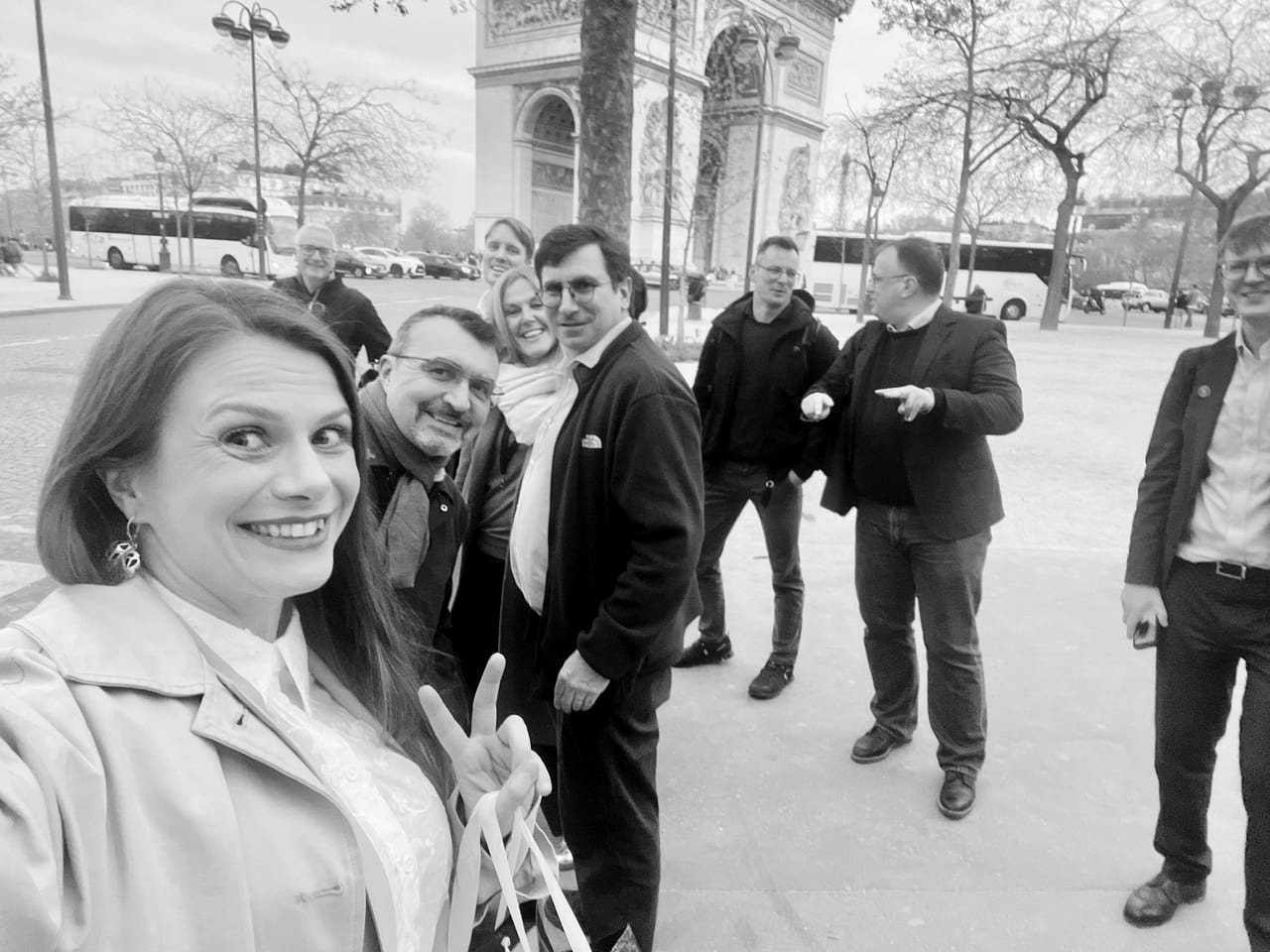
QSECDEF members and speakers together outside the Arc de Triomphe in Paris
Peers you can call afterwards
Panellists in discussion at a QSECDEF symposium
Questions taken from the floor
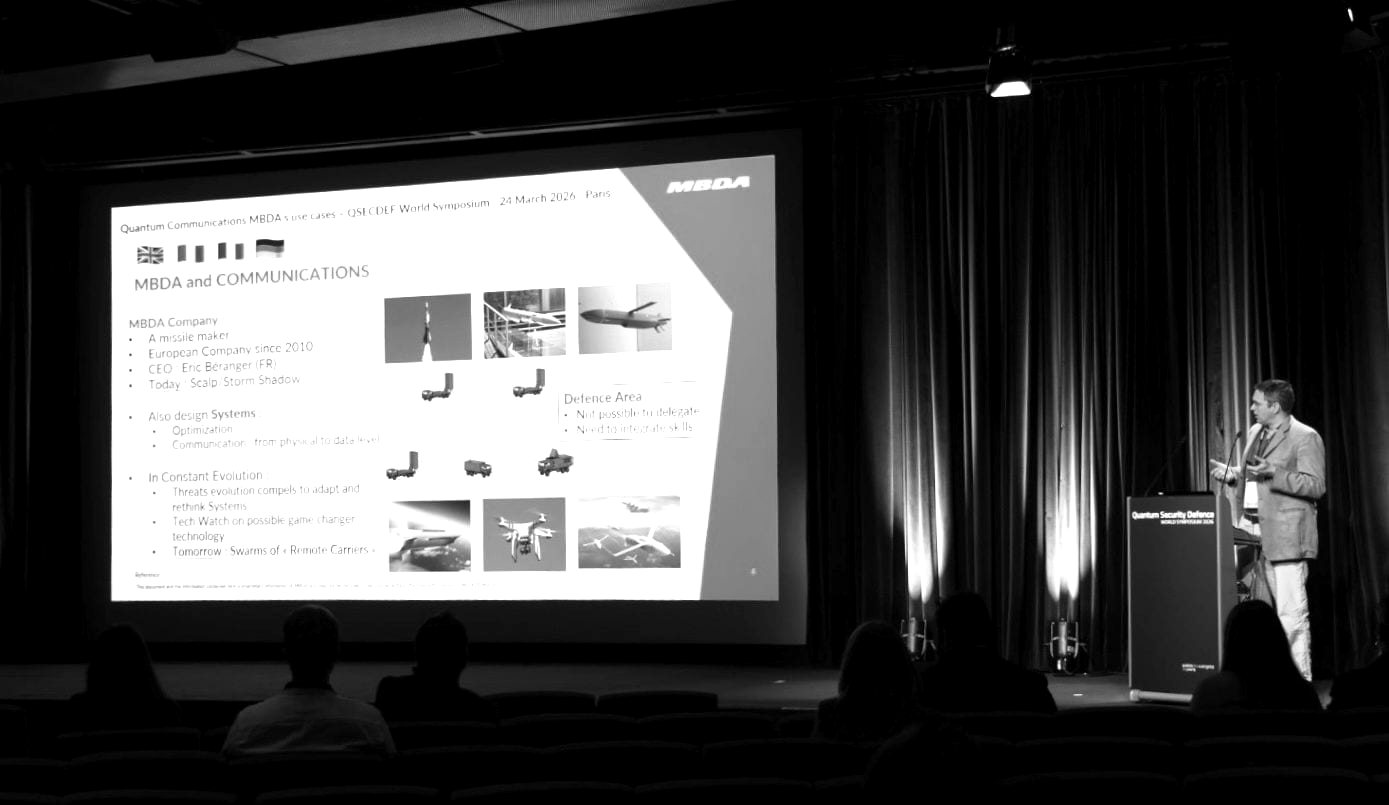
A speaker presenting slides at the QSECDEF World Symposium
Briefings on what is changing
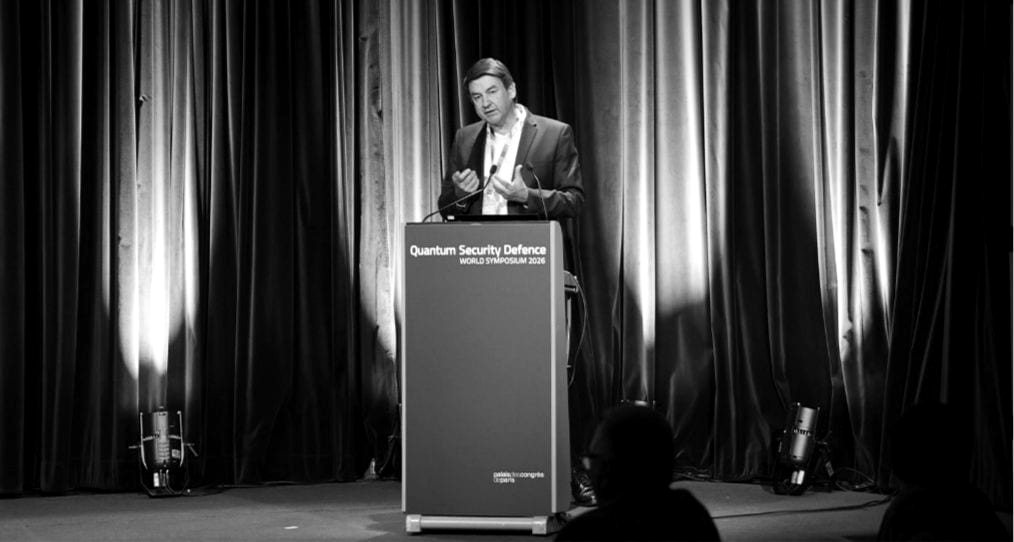
A keynote speaker at the QSECDEF World Symposium lectern
QSECDEF World Symposium, Paris

Lectures from people doing this work

Practitioner lectures from the QSECDEF library that matter most to defence and national security: quantum for military applications, quantum-secured satellite links, resilient PNT, cryptanalysis and export controls.

Browse all expert lectures

Expert contributors represent leading organisations worldwide

Airbus Central R&T
Aireon
Airesatech
Ait
Appliedquantum
Arise Innovations
Arobs
Arqit
Asc Csa
Atlant3D
Bank of Ireland
Barak Azar
Basener Consulting
BHO Legal
Bitcoinqs
Bloq
Buckingham
CloudTech Group
Coherent Computing
Creotech
Cryptalabs
CyberProtonics
Cysec
Cystel
Deimos Space
Department of Digitalization
Dhbw
Dlr
Eclypses
Elpromaelectronics
Engineering
Enluzstrategy
Entrokey Labs
Eptalent
ESA
Esa
Euc
EXATEL
Finqbit
Fraunhofer
Georgetown
GQI
Helix Ft
Ibm
Idquantique
Jagiellonian University
Jos Quantum
Kets Quantum
Kit
Krown Technologies
Kwantumg
Lightriderinc
Linkedin
Lnu
Mbda Systems
Meetiqm
Merqury
Metrosert
Molket
Nicolaus Copernicus University in Torun
Nokia
Orcacomputing
Osi
Pantherun
Patero
Photonics Foundry
Q Ctrl
Qryptocyber
Qssys
Qticompany
Qtlabs
Quandela
Quant X Sec
Quant.Bond
Quantivate
Quantum Computing Inc
Quantum Dice
Quantumbrilliance
Quantumprime
Quantzen
Qubridge
Qudef
Quranium
Qustream
Reddixgroup
Slater Technologies
Smartcyber Group
Smoad
Sparkle
Swiss Financial Innovation Desk
Technology Innovation Institute (TII)
Thequantuminsider
Tobias Heindel
Tu Braunschweig
University College London
University of Bremen
University of Pisa
Venari Security
Veriqloud
Viavisolutions
Vodafone
Welinq
Wizzwang
Xairos
Youtube
Quside
QIZ
Global Quantum Intelligence
HYPATIA Smart Technologies
SAS
Triarii Research

Expert Membership

Builders, consultancies and technology vendors serving defence and national security: talk to us

Expert membership brings you into an open community working across sectors, opening up industry conversations, knowledge and access to experts. If you are building technology or consulting capabilities in this sector relevant to Quantum or Advanced AI, we want to hear from you.

  • Access to all Industry Conversations
  • Speaker opportunities at the annual Paris Symposium
  • Enhanced expert profile with lecture archive
  • Co-branding opportunities and social amplification
  • 25% off partner training and events

Everything you need, in one place

Our analysis and programmes for defence and national security

Policy and mandates

Questions leaders ask

What is CNSA 2.0 and who has to comply with it?

CNSA 2.0 is the NSA's Commercial National Security Algorithm Suite 2.0, published in September 2022. It names the quantum-resistant algorithms for US national security systems: ML-KEM-1024 for key establishment, ML-DSA-87 for signatures, LMS and XMSS for software and firmware signing, AES-256 and SHA-384 or SHA-512. It binds owners and operators of national security systems, and reaches any vendor whose product goes into one, which is how it lands on primes and their sub-tier suppliers.

What are the CNSA 2.0 deadlines?

The CNSA 2.0 FAQ sets two dates per product category. Software and firmware signing: support and prefer by 2025, exclusive by 2030. Web browsers, servers and cloud services: 2025 and 2033. Traditional networking equipment such as VPNs and routers: 2026 and 2030. Operating systems: 2027 and 2033. Niche equipment: 2030 and 2033. Custom applications and legacy equipment: update or replace by 2033. New national security system acquisitions must be CNSA 2.0 compliant from 1 January 2027, and the overall NSM-10 target is 2035.

Does CNSA 2.0 apply to defence contractors and sub-tier suppliers?

Directly, only if you own or operate a national security system. In practice it reaches you through your prime: any product, firmware or PKI component that ends up in a national security system has to meet the CNSA 2.0 dates for its category, and primes are starting to flow that down in contracts and acceptance criteria. Our sub-tier supplier guide covers what to do when your prime has not told you yet.

What does the EU require, and by when?

Two documents. The Commission Recommendation of 11 April 2024 asks each Member State to adopt a national post-quantum strategy and to deploy PQC, hybrid where needed, across public administration and critical infrastructure. The Coordinated Implementation Roadmap of 23 June 2025, agreed through the NIS Cooperation Group, sets the dates: national roadmaps and first steps by the end of 2026, high-risk use cases migrated by the end of 2030, and as many systems as feasible by the end of 2035. Defence ministries sit outside NIS2, but national roadmaps, procurement rules and the agencies that certify cryptographic products apply those dates to defence programmes and suppliers.

What do BSI and ANSSI require that the NSA does not?

Hybrid. CNSA 2.0 treats hybrid constructions as an interim option; BSI's TR-02102-1 and ANSSI's position papers call for post-quantum algorithms to be combined with a classical scheme, and ANSSI requires hybrid constructions for the security visas it issues during the transition. A supplier selling into both markets needs a product that can run hybrid for European certification and pure ML-KEM-1024 and ML-DSA-87 for US national security systems. The Dutch PQC Migration Handbook from AIVD, CWI and TNO is the most practical step-by-step guide published by a European agency.

Does CMMC require post-quantum cryptography?

Not today. CMMC Level 2 assesses the 110 NIST SP 800-171 requirements, and Level 3 adds SP 800-172 controls; neither grades post-quantum progress. The programme rule took effect on 16 December 2024 and the DFARS acquisition rule on 10 November 2025. Executive Order 14412 of June 2026 is the signal to watch: it orders a proposed FAR rule requiring contractors to meet PQC-compliant FIPS by 31 December 2030.

Why does harvest now, decrypt later matter more in defence than elsewhere?

Because the data lives longer. Under Executive Order 13526, classified records are declassified at 25 years by default, with exemptions to 50 or 75 years for human sources, WMD design information and cryptologic methods. UK records transfer at 20 years and security and intelligence files are often retained far longer. Traffic recorded in 2026 and read in the 2030s still falls well inside those windows.

How exposed are command and control and secure communications?

C2, SATCOM and tactical data links authenticate and establish keys with public-key cryptography, so recorded traffic is readable once a cryptographically relevant quantum computer exists. The added problem is interoperability: a link only migrates when both ends do, which puts allies, coalition partners and link providers on your critical path. The SATCOM and C2 readiness assessor gives you a first score in ten questions.

What does NATO say about quantum?

NATO's Quantum Technologies Strategy, summarised in January 2024, lists the transition of the Alliance's cryptographic systems to quantum-safe cryptography as a desired outcome, commits to research into quantum-safe communications across air, space, cyber, land and maritime domains, names quantum sensing for positioning, navigation and timing without GNSS, and establishes a Transatlantic Quantum Community. The Quantum Technology Roadmap of 29 September 2026 turns that into dates: a Quantum Zero Beacon pilot between NATO HQ in Brussels and SHAPE in Mons for Q4 2027, an industry readiness study for quantum-resistant cryptography in Q2 2027, a refreshed action plan on the quantum threat to cryptography in Q3 2027 and an Alliance quantum standards roadmap by Q3 2029, with adoption of post-quantum standards listed as ongoing.

What does UK Secure by Design require of defence programmes and suppliers?

Industry Security Notice 2023/09 of 21 July 2023 applies Secure by Design to the acquisition, development and maintenance of networks, applications, platforms and weapon systems for the MOD. The Senior Responsible Owner is accountable for cyber secure outcomes through the capability's life, continuous risk management replaces point-in-time accreditation, and engaging and managing the supply chain is one of the seven principles. Suppliers are assured through the Cyber Security Model and Def Stan 05-138.

Is QKD the answer for defence?

Not on its own. QKD can establish keys over a dedicated optical or satellite channel, and several of our lectures cover defence deployments, but it does not authenticate, does not sign firmware and does not run on a tactical radio. CNSA 2.0 and the NCSC both point to post-quantum algorithms as the baseline. Treat QKD as a complement for specific high-assurance links, not as a substitute for the migration. NATO's October 2026 position paper on QKD, and the earlier joint paper from BSI, ANSSI and their Dutch and Swedish counterparts, both set out why QKD does not yet meet the bar for classified traffic.

Where should a defence organisation or supplier start?

With a cryptographic inventory of C2, secure communications, firmware signing and the systems holding classified or controlled data; a map of which data must stay secret beyond 2030 against the algorithms protecting it; each system placed in its CNSA 2.0 category; and roadmaps requested from every prime, sub-tier supplier and link provider. Those four give the SRO or programme board the evidence to set priorities.

What does QSECDEF offer defence organisations and suppliers for free?

Everything on this page. The two-minute readiness check scores your defence and national security programme and routes you to the right next step. The free tools, including the SATCOM and C2 Cryptographic Readiness Assessor and the HNDL Risk Calculator, run in your browser with no registration. The weekly peer call runs every Tuesday at 15:00 CET and is open to anyone. Sample lectures from the 170-plus expert library are linked above, and the page is reviewed as the mandates change; the date beside the key facts is the last check.

Which QSECDEF course should a defence and national security team take first?

It depends on the role. SROs, directors and programme boards start with the Certified Quantum Business Professional bootcamp, about 22 hours self-paced across ten modules. Security, COMSEC and IT teams take Introduction to Quantum Cyber Security, four to five hours online with a QSECDEF certificate. C2 architects and secure communications leads take Securing C2 (Command and Control) Systems, the sector course for command and control, SATCOM and tactical links. Whoever will run the migration takes CPQCPM, the Certified Post Quantum Cryptography Programme Manager course: ten hours live online over five weeks, with the next public cohort in January 2027.

Can QSECDEF run private training or a workshop for our ministry, armed force or defence supplier?

Yes. QSECDEF runs private CPQCPM cohorts for a single organisation, live online or in person, and private deliveries of the sector courses listed under Equip your people for your C2 and secure communications teams. Board and leadership workshops are built on your own exposure and obligations and end with an agreed position on quantum risk. Use the contact button in the For your organisation section and tell us your timeline.

How do we find vetted suppliers or consultants for a defence and national security PQC migration?

Through the QSECDEF Expert Members directory. Every listed member has been vetted, has signed the Members' Charter and has presented to the community. You can filter by consulting and services, technology vendor or enablement and investment, and send a request for further information from the member's own page. QSECDEF is vendor-neutral and sells training, not migration products, so the shortlist stays yours.

Is QSECDEF membership relevant to a ministry, armed force or defence supplier?

Two routes. QSECDEF membership gives your team the self-paced courses, the full lecture archive, the weekly call and 25 per cent off CPQCPM and partner training. Expert Membership is for the builders, consultancies and technology vendors serving defence and national security who want to be found by the people reading this page; it includes a showcase listing with an enquiry form, the Industry Conversations and speaking slots at the annual QSECDEF symposium.

Is QSECDEF selling a migration product?

No. QSECDEF is a vendor-neutral membership network. We train people and connect them with peers and peer-reviewed experts; we do not sell migration software or services.

How much time does the training take?

CPQCPM is ten hours of live instruction over five weeks, two hours a week. The Quantum Cyber Security course is 4 to 5 hours, self-paced. The business bootcamp is self-paced at your own speed. The defence and intelligence courses are listed with their formats on the training pages.

Ask a practitioner, live

The free weekly call runs every Tuesday at 15:00 CET. Bring your question.

Join the Tuesday call →

Colleagues in a strategy meeting at a table by a window

For your organisation

Need it built around your programme or your supply chain?

When your programme board, your prime or your ministry needs something specific, we shape the workshop, the training or the engagement around your systems, your classification regime and your acquisition cycle. Independent of any vendor.

Custom workshops

Your leadership leaves with an agreed position on quantum risk

In-person sessions for defence and intelligence organisations covering PQC migration, C2 security, supply chain verification, QKD, QRNG and quantum sensing, drawn from the 24-session defence programme and the eleven-session national intelligence programme.

Private training

Your whole programme team trained on one plan

Private CPQCPM cohorts, live online or in person for your required delegates, with team membership for the self-paced courses.

Consulting

A migration programme specified and staffed correctly

Cryptographic inventory, PQC migration planning, supply chain review and specialist teams sourced from 1,500+ members across 900+ organisations.

Prefer email? Write to info@qsecdef.com and tell us about your timeline.

Photos: Pexels (Francesco Ungaro, Diogo Miranda, Magda Ehlers, AMORIE SAM, Germannavyphotograph, Miguel Cuenca, Der_ Hördt, Vlada Karpovich) and QSECDEF, converted to black and white or brand duotone.