
National Quantum Strategy: What Gets Measured and What Gets Done
More than thirty national quantum strategies have been published. Fewer than a third have produced funded programmes with measurable outcomes against their stated objectives. The gap between a strategy document and a functioning programme is a set of decisions about governance, measurement, and accountability that most strategy documents sidestep. This conversation is for the officials and advisors responsible for the next generation of national quantum strategy: those who want to close that gap rather than repeat it.
Event Details
- Who else is in the room
- Senior level executive peers, industry leaders, experts in risk, technology and business. Specifically: government officials, parliamentary advisors, and policy researchers with direct responsibility for national quantum strategy formation, evaluation, or the programmes that flow from it.
- Access
- Members only. Bundled with Expert Membership. Included with Expert Member tier
- Sponsor
- Organised by QSECDEF
- Facilitator
-
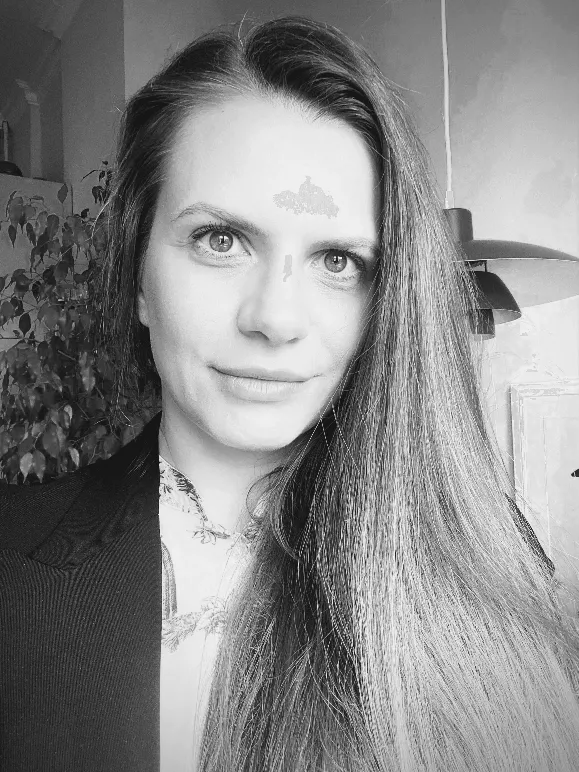 Anna Beata Kalisz Hedegaard Quantum Security Defence
 - Rules of engagement
- Chatham House Rule Chatham House Rule. Discussion is on the record; attribution is not. Participants may share what was said but not who said it.
- Format
- Roundtable Flexible between roundtable, structured Q&A or in-person hosted dinner
- Who Should Join
- This conversation is for government officials, parliamentary advisors, and policy researchers who are actively shaping the next generation of national quantum strategy or evaluating the performance of existing programmes. Officials at national funding agencies, innovation bodies, and strategic technology review offices with quantum mandates will find it directly useful. It is not for the commercial quantum sector seeking visibility into government procurement intentions. Participants are expected to be inside the strategy formation or evaluation process with the authority to act on comparative intelligence.












About This Conversation
Why this matters now
The second wave of national quantum strategies, revised UK, EU, US, and Australian frameworks published from 2023 onward, have had enough time to produce initial implementation data. The question for 2026 is no longer which countries have a strategy but which strategies are generating results. ENISA's 2023 analysis of EU member state quantum readiness found significant variation in implementation progress across states with formally equivalent strategies. The IMF and OECD have both flagged quantum as a strategic economic competitiveness variable, not merely a security issue. Officials responsible for the next strategy cycle are in a position to learn from the first cohort. Most have not had the opportunity to do that comparison directly.
Outcomes
What you will leave with
- A comparative assessment of the governance structures that have produced measurable outcomes in first-wave national quantum programmes, versus those that have produced well-written documents
- Practical benchmarking criteria: the indicators that best predict whether a national quantum programme will deliver operational systems within a five-year horizon
- A shared framework for the sovereign capability boundary question, what must a nation be able to do independently, and what is strategically safe to source from allied partners
- Peer experience from officials in multiple jurisdictions on the industrial policy instruments that have accelerated delivery: procurement commitments, research grants, talent pipeline schemes
- An honest account of the workforce gap: where it is a genuine programme constraint versus where it is used as institutional cover for other failures
Your Facilitator
Anna Beata Kalisz Hedegaard
Founder, QSECDEF
Anna Beata Kalisz Hedegaard has over 15 years of international experience in deep-tech, telecommunications, and defence communications networks. Her expertise spans intellectual property, advanced communications systems, and quantum secure communications. She has lived and worked across Poland, Denmark, the United States, Malaysia, the Netherlands, and Germany. Anna holds dual Master of Science degrees in Theoretical Cosmology from the University of Southern Denmark and Electrical Engineering from Wright State University, USA. She is the founder and board member of Quantum Security Defence.
View full profileExpert Membership
Industry Conversations are exclusive to Expert Members
Expert membership brings you into a closed community of senior security practitioners. Industry Conversations are included in the membership. Individual tickets are not available.
- Access to all Industry Conversations
- Speaker opportunities at the annual Paris Symposium
- Enhanced expert profile with lecture archive
- Advisory board nomination eligibility
- Co-branding opportunities and social amplification