
Quantum Migration for Cloud Infrastructure: The KMS and Hyperscale Decisions That Cannot Wait for Perfect Standards
Cloud infrastructure executives are managing a migration problem with an unusual structure: the standards are finalised, the vendors are moving at different speeds, and the customers are asking questions that the infrastructure teams do not yet have clean answers to. Key management services, service mesh encryption, and data-at-rest protection are all in scope. The decisions about where to move first, how to manage the transition period, and which vendor commitments to trust are happening now, with incomplete information. This conversation is for the executives making those calls.
Event Details
- Who else is in the room
- Senior level executive peers, industry leaders, experts in risk, technology and business. Specifically: cloud infrastructure executives, data centre CTOs, and senior security architects at hyperscale providers, colocation operators, and major enterprise cloud consumers.
- Access
- Members only. Bundled with Expert Membership. Included with Expert Member tier
- Sponsor
- Organised by QSECDEF
- Facilitator
-
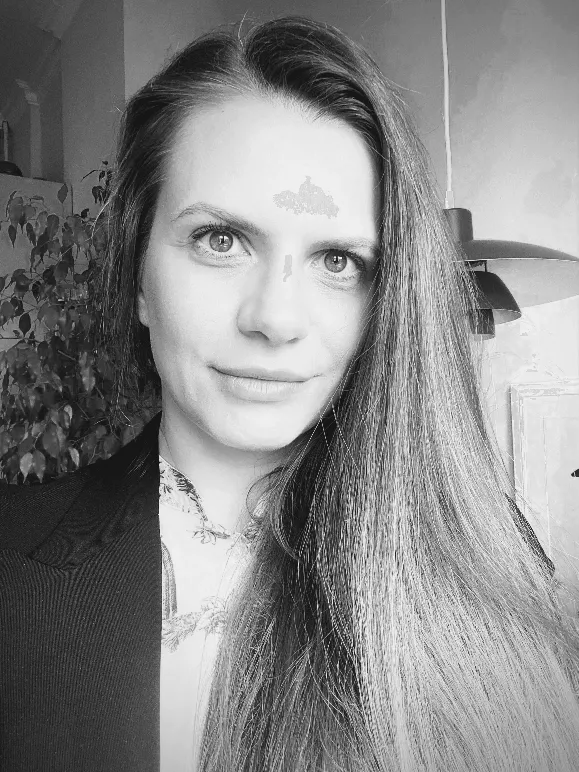 Anna Beata Kalisz Hedegaard Quantum Security Defence
 - Rules of engagement
- Chatham House Rule Chatham House Rule. Discussion is on the record; attribution is not. Participants may share what was said but not who said it.
- Format
- Roundtable Flexible between roundtable, structured Q&A or in-person hosted dinner
- Who Should Join
- This conversation is for cloud infrastructure executives, data centre CTOs, and senior security architects at hyperscale and enterprise cloud providers, colocation operators, and major cloud consumers. It is relevant to those with direct responsibility for KMS, HSM infrastructure, and data-at-rest encryption decisions. It is not for cloud sales or commercial teams without a technical security mandate. Participants are expected to have working knowledge of key management architecture and cryptographic operations.








About This Conversation
Why this matters now
NIST's August 2024 finalisation of FIPS 203, 204, and 205 gave cloud providers a standards baseline to build against. Major cloud providers have begun announcing PQC migration timelines, but deployment is uneven across service tiers and geographies. The harvest-now-decrypt-later threat is particularly acute for cloud infrastructure: hyperscale data centres hold large volumes of enterprise data encrypted at rest, much of which has retention horizons that extend beyond credible CRQC timelines. The customer-side question is arriving faster than the infrastructure answer: enterprise customers are now asking cloud providers for PQC readiness attestations in procurement processes.
Outcomes
What you will leave with
- A frank comparative view from cloud and data centre peers of where PQC migration is actually progressing and where it is stalled: KMS, service mesh, and data-at-rest protection
- Practical framing for the customer-side question: how to respond to enterprise PQC readiness requests in procurement, and what level of commitment the infrastructure actually supports
- A shared view of the vendor dependency problem: where cloud providers are dependent on upstream hardware vendors (HSM manufacturers, cryptographic module suppliers) who are not yet PQC-ready at the certification level
- Peer experience on the transition architecture problem: running hybrid classical-PQC configurations during the migration window, and the operational complexity that introduces
- The governance framing: how to present the cloud PQC migration to a board that understands data breach risk but has not yet connected it to cryptographic obsolescence
Your Facilitator
Anna Beata Kalisz Hedegaard
Founder, QSECDEF
Anna Beata Kalisz Hedegaard has over 15 years of international experience in deep-tech, telecommunications, and defence communications networks. Her expertise spans intellectual property, advanced communications systems, and quantum secure communications. She has lived and worked across Poland, Denmark, the United States, Malaysia, the Netherlands, and Germany. Anna holds dual Master of Science degrees in Theoretical Cosmology from the University of Southern Denmark and Electrical Engineering from Wright State University, USA. She is the founder and board member of Quantum Security Defence.
View full profileExpert Membership
Industry Conversations are exclusive to Expert Members
Expert membership brings you into a closed community of senior security practitioners. Industry Conversations are included in the membership. Individual tickets are not available.
- Access to all Industry Conversations
- Speaker opportunities at the annual Paris Symposium
- Enhanced expert profile with lecture archive
- Advisory board nomination eligibility
- Co-branding opportunities and social amplification