Quantum and AI: What Security and Governance Leaders Need to Resolve Before the Frameworks Catch Up
The AI governance agenda and the quantum security agenda are converging on the same systems, the same data, and often the same leadership teams. AI models trained on data encrypted with pre-quantum algorithms, inference infrastructure protected by RSA or ECC, and AI governance frameworks written without a quantum threat model: all three create exposure that neither agenda has fully addressed. This conversation is for the executives who have accountability across both.
Event Details
- Who else is in the room
- Senior level executive peers, industry leaders, experts in risk, technology and business. Specifically: CISOs, CTOs, Chief AI Officers, and AI governance leaders at organisations with AI systems in production and quantum security on the risk register.
- Access
- Members only. Bundled with Expert Membership. Included with Expert Member tier
- Sponsor
- Organised by QSECDEF
- Facilitator
-
 Anna Beata Kalisz Hedegaard Quantum Security Defence
 - Rules of engagement
- Chatham House Rule Chatham House Rule. Discussion is on the record; attribution is not. Participants may share what was said but not who said it.
- Format
- Roundtable Flexible between roundtable, structured Q&A or in-person hosted dinner
- Who Should Join
- This conversation is for CISOs, CTOs, and AI governance leaders at organisations where AI systems are in production and where quantum security has entered the risk register. It is most relevant to leaders at regulated firms in financial services, healthcare, and critical infrastructure, where both AI governance obligations and quantum security obligations carry regulatory weight. It is not for organisations still building the case for AI adoption. Participants are expected to hold responsibility for both agendas, or for the intersection.

About This Conversation
Why this matters now
The EU AI Act entered force in August 2024, with risk management obligations under Articles 9 and 17 applying to high-risk AI systems. The Act's risk management requirements do not explicitly address cryptographic vulnerability, creating a gap between AI governance obligations and quantum security obligations that sits in the CISO's remit. Meanwhile, AI training infrastructure typically holds model weights and training datasets under long-retention policies. Those datasets, encrypted today with pre-quantum algorithms, are harvest-now-decrypt-later candidates if they carry commercial or national security value. NIST's August 2024 finalisation of post-quantum standards removed the last reason to defer a cryptographic review of AI infrastructure.
Outcomes
What you will leave with
- A shared map of where the AI governance and quantum security agendas overlap in practice: which AI system categories carry the highest cryptographic risk, and which governance frameworks are already moving to address it
- A practical framework for conducting a cryptographic risk review of AI infrastructure (model weights, training data, inference endpoints, API layers) using the organisation's existing security tooling
- Peer experience from CISOs and CTOs who have navigated the challenge of placing quantum risk inside an AI governance framework that was not designed to hold it
- Clarity on the vendor side: which AI infrastructure and cloud providers have committed to PQC migration timelines for their AI services, and what that commitment actually means for the organisations using those services
- The specific governance questions that sit at the intersection: who owns quantum risk for AI systems, and how is that accountability documented for regulators
Your Facilitator
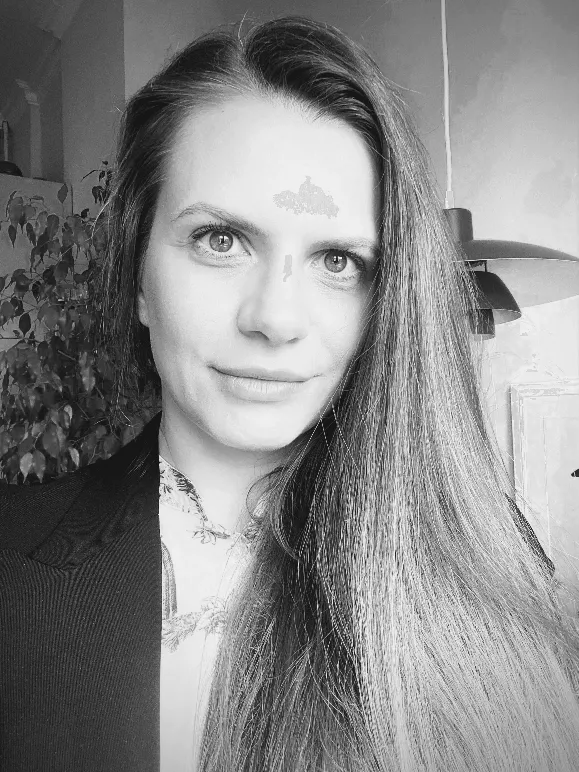
Anna Beata Kalisz Hedegaard
Founder, QSECDEF
Anna Beata Kalisz Hedegaard has over 15 years of international experience in deep-tech, telecommunications, and defence communications networks. Her expertise spans intellectual property, advanced communications systems, and quantum secure communications. She has lived and worked across Poland, Denmark, the United States, Malaysia, the Netherlands, and Germany. Anna holds dual Master of Science degrees in Theoretical Cosmology from the University of Southern Denmark and Electrical Engineering from Wright State University, USA. She is the founder and board member of Quantum Security Defence.
View full profileExpert Membership
Industry Conversations are exclusive to Expert Members
Expert membership brings you into a closed community of senior security practitioners. Industry Conversations are included in the membership. Individual tickets are not available.
- Access to all Industry Conversations
- Speaker opportunities at the annual Paris Symposium
- Enhanced expert profile with lecture archive
- Advisory board nomination eligibility
- Co-branding opportunities and social amplification