
Beyond AI Reality: Managing Innovation Quantum Risk & Opportunity
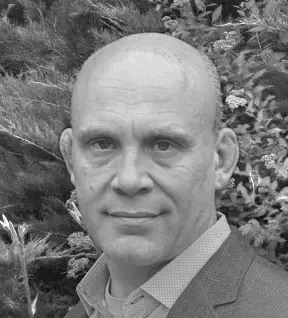
Bill Wisotsky Principal Quantum Systems Architect
Expert lecture
Watch this full lecture and over 100 other expert presentations on quantum technologies with a QSECDEF membership.
About Bill Wisotsky
Bill Wisotsky serves as the Principal Quantum Systems Architect within Research and Development at SAS and leads initiatives to integrate quantum computing into applied real-world business solutions. In this role he also establishes partnerships with quantum companies and Universities and develops quantum-classical hybrid algorithms.
Bill has been with SAS since 2002 as part of US Professional Services. Throughout this tenure Bill nurtured his interest in quantum technologies by actively pursuing coursework, attending seminars, and experimenting with various quantum platforms. His hands-on exploration led to the development of several small-scale proofs of concept, which ultimately catalyzed the launch of the Applied Quantum Initiative at SAS.
He recently was named a 2025 CEO Award of Excellence Winner and is an inventor on quantum patents.
Bill began his academics at SUNY Albany, graduating in 1994. He has MA Degrees in both Experimental and Biopsychology from LIU and CUNY respectively. While pursuing a Ph.D. in Behavioral Neuroscience at CUNY, he conducted biophysics research on neural pathways in the human visual system using visual evoked potentials. It was during this time, while studying photon absorption in the retina, that he first encountered the principles of quantum physics. Concepts like superposition and entanglement, initially explored out of necessity, quickly sparked a deep and lasting fascination.
This curiosity evolved into a passion as Bill ultimately delved into the emerging field of quantum computing. He immersed himself in the theoretical foundations and practical applications of quantum mechanics in computation, laying the groundwork for what would become a defining focus of his career.
Full Article
As organisations continue to absorb the operational and cultural shock of AI, another technology is steadily moving from the margins towards the strategic agenda. Quantum computing is not yet a mainstream enterprise capability, but it is close enough to matter. The real question for leaders is no longer whether quantum deserves attention. It is how to approach it with discipline, realism and a clear sense of business value.
That is why Bill Wisotsky’s perspective is so useful.
In a technology climate that rewards noise, certainty and inflated claims, Bill brought something rarer to the discussion - practical judgement. From his vantage point at SAS, quantum is not a branding exercise or a futuristic talking point. It is an emerging capability that must be tested against real business problems, real technical limits and real organisational constraints. That makes his view especially relevant for leaders trying to separate meaningful preparation from premature excitement.
The wider context, of course, cannot be ignored. AI has already changed the mood inside many organisations. It has accelerated innovation, but it has also exposed weak governance, inconsistent data foundations and widespread fatigue. Many leadership teams are still dealing with the consequences of moving too quickly in one area while lacking the structure to support it properly.
Quantum is arriving against that backdrop. It is not entering a calm, well-ordered system. It is entering businesses that are already under pressure to modernise, secure and prioritise at speed.
That is precisely why quantum needs to be approached differently.
What stands out in Bill’s contribution is his refusal to treat quantum as universally relevant. In fact, one of the most important questions he raises is also one of the simplest - do we actually need quantum here?
It is a deceptively powerful question. Too often, emerging technologies are introduced into organisations through the language of inevitability. Leaders are told they must engage, invest and accelerate before they are left behind. But not every problem is a quantum problem. Many are still best solved through classical methods. Others may eventually benefit from hybrid approaches that combine classical and quantum techniques. The point is not to force quantum into the enterprise story before it has earned its place. The point is to understand where it may eventually provide genuine advantage.
That kind of restraint is not caution in the negative sense. It is strategic maturity.
One of the clearest lessons from the AI cycle is that poor discipline at the start creates operational confusion later. When organisations pursue technology for symbolic reasons rather than practical ones, they often end up with fragmented pilots, inflated expectations and little enduring value. Bill’s perspective offers an antidote to that pattern. It suggests that the path forward begins not with ambition alone, but with careful problem selection, technical honesty and structured collaboration.
That last point matters greatly. Quantum experimentation does not happen in a vacuum. Some organisations come to it with strategic alignment, internal capability and a realistic view of what current systems can and cannot do. Others are still at the stage of exploratory interest. Bill’s comments make clear that readiness is uneven, and that meaningful progress depends as much on the organisation as on the technology itself.
This is an important distinction. Leaders often assume that emerging technology adoption is mainly constrained by external maturity - whether the tools are ready, whether the platforms are stable, whether the ecosystem has developed far enough. Those questions matter, of course. But Bill’s perspective suggests that internal readiness is just as significant. Without the right teams, expectations and structures, even sensible experimentation can drift. His emphasis on data makes the point even sharper.
If AI exposed how fragile enterprise data foundations can be, quantum will only intensify the need for rigour. Bill highlighted the practical considerations involved when organisations begin using quantum in cloud-based or external environments. Data does not simply appear in a safe, abstract form ready for advanced computation. It has to be prepared, reduced, transformed and controlled. Personal identifiers may need to be removed. Algorithms have to be placed carefully. Decisions must be made about how much information is shared and where exposure begins and ends.
This is where serious quantum discussion becomes much more interesting than the headlines suggest. The challenge is not simply computational novelty. It is architecture, governance and accountability. It is about whether an organisation can experiment without losing control of the surrounding conditions.
There is also something quietly important in Bill’s observation that current hardware limitations shape how experimentation happens. Because today’s quantum machines are still constrained, organisations often work with transformed or compressed versions of data rather than vast raw data sets. That is not a solution to every governance or privacy concern, but it does impose a degree of discipline. In effect, the immaturity of the hardware can encourage a more careful and bounded approach to use.
Leaders should pay attention to that. Not because technical limitations are desirable in themselves, but because they create a useful reminder - quantum progress at this stage is about focused exploration, not wholesale adoption.
Another of Bill’s most valuable contributions is his recognition that quantum requires different habits of thought. This is not simply a more advanced form of conventional analytics. It often demands that teams move beyond classical data science assumptions and approach problems in a different way, sometimes with a stronger grounding in physics. That has immediate implications for talent strategy.
Too many organisations still assume that emerging technology can be absorbed into existing structures with minimal adaptation. Sometimes that is true. Often it is not. Bill’s comments point towards the need for multidisciplinary teams that bring together software developers, engineers, physicists and business specialists. Quantum is not just another tool to be handed to an established function. In some cases, it requires a different intellectual posture altogether.
That should shape how leaders think about capability building. The question is whether the business has access to technical expertise. It is whether it is creating the right conditions for new forms of expertise to work together meaningfully. In practice, that may matter more than early access to any single platform.
For senior leaders, the implication is straightforward. They do not need to become experts in quantum mechanics, but they do need enough literacy to ask better questions. They need to understand what kinds of problems are being explored, what current limitations look like, where data risks sit and how realistic the path to value actually is. Above all, they need to resist the temptation to lead through theatre.
That may be Bill’s most important lesson. In emerging technology, seriousness is often mistaken for excitement. But the organisations that benefit most are rarely the ones making the loudest claims. They are usually the ones doing the quieter work - defining use cases carefully, building the right partnerships, managing data responsibly and learning where quantum fits before trying to announce that it changes everything.
If AI was the first great test of whether organisations could absorb a powerful new capability without losing control of governance and decision-making, quantum may be the second. This time, however, leaders have the advantage of recent memory. They have already seen what happens when technology moves faster than structure, and when enthusiasm outpaces readiness.
What Bill Wisotsky offers is a grounded way forward. Quantum should not be ignored. Nor should it be romanticised. It should be examined, tested and challenged in the context of real enterprise problems. That is a less dramatic story than the usual one told about quantum. It is also much more useful.
In the years ahead, the winners are unlikely to be those who simply attach themselves to the language of disruption. They will be those who approach quantum with the patience to ask where it matters, the discipline to test it properly and the leadership maturity to prepare their organisations before the pressure to act becomes overwhelming.
That is not caution. It is competence.

Frequently Asked Questions
- Who is Bill Wisotsky?
- Bill Wisotsky serves as the Principal Quantum Systems Architect within Research and Development at SAS and leads initiatives to integrate quantum computing into applied real-world business solutions. In this role he also establishes partnerships with quantum companies and Universities and develops.
- What is the lecture "Beyond AI Reality: Managing Innovation Quantum Risk & Opportunity"?
- This presentation by Bill Wisotsky at Quantum Security Defence covers key concepts, challenges, and developments in quantum computing.
- What is quantum computing?
- Quantum computing uses superposition and entanglement to perform certain computations substantially faster than classical computers. Key applications include optimisation, simulation, and cryptanalysis.
Access All Expert Lectures
Watch over 100 expert presentations, attend weekly live webinars, and connect with specialists across 40+ countries.